Congress Could Postpone the Electoral College To Prevent Election Chaos
Voting during COVID means "we are not going to know who won this on election night," Utah's Republican gubernatorial nominee warns. Postponing post-election deadlines can help.


Voting during COVID means "we are not going to know who won this on election night," Utah's Republican gubernatorial nominee warns. Postponing post-election deadlines can help.
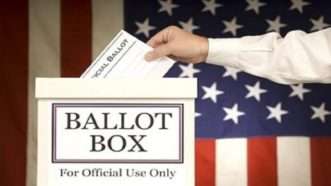
Political philosopher Jason Brennan explains why.

Hostility to political opponents sustains what's left of the legacy parties.

Even if all presidential votes were cast through the mail and sent on the same day, they would amount to 30 percent of a single day's volume.

America's general election is facing both logistical and political hurdles, creating a feedback loop that threatens to derail the legitimacy of the results.

President Trump threatens to delay the election over at-home voting, but a bigger problem looms: States haven’t prepared for a huge influx of mail-in ballots.
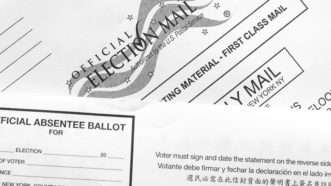
New York City's primary election fiasco reveals gross incompetence rather than fraud.

Unpacking TikTok freakouts, mail-in voting controversies, and money printers going brrr, on the Reason Roundtable podcast.

And no, mail-in voting is not more vulnerable to fraud than absentee voting. It's actually the exact same thing.

A president who can attach his own new conditions to federal grants to states could use that power to undermine state autonomy on many issues - especially now that federal spending has been massively expanded during the coronavirus crisis.

From our modern vantage point, it's easy to scorn some decisions that suffrage movement leaders made. Suffrage adds context.

Fining non-voters would show that government is all about forcing people to do things just to make politicians happy.

You have this Democrat or this other Democrat. What other options do you need?

Letting any single state go first is a mistake. But a national primary would be problematic too. Luckily, those aren't the only two options.
When politicians call to punish “disinformation,” we should worry about what that definition encompasses.

The Court argues that Amendment 4's language covers financial obligations, not just terms of imprisonment and supervised release.

It will be published by Oxford University Press in April.

A proposition approved last week will require a majority of city voters to approve any future stadium project that uses more than $5 million in public money.

Voters won’t have to worry as much about having to choose between similar candidates or “throwing away” votes on third-party choices.

Written ruling says the state is violating the rights of voters as well as the presidential candidates.


This is a giant step in advancing Prime Minister Nardendra Modi's vision of India as a Hindu nation.

Even if the president's motives were partisan, a more plausible cover story would have been enough to pass judicial muster.


Incarcerated people are already paying their debt to society. What good does it do the rest of the population to take away their right to have a say?
A new symposium outlines several ideas for improving our democratic system. All are worth considering. But none are likely to be as good as expanding opportunities for people to "vote with their feet."

We trust young people to make a lot of weighty decisions. Voting should be one of them.
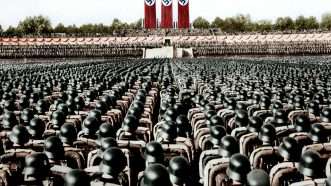
If its recent record is any indication, Winston Churchill might have been wrong about democracy.

There are more forms of hepatitis than there are major parties in America.
A Canadian Supreme Court decision striking down a law denying the right to vote to expats who have resided abroad for over five years raises broader questions about democratic theory.
The Introduction to the revised second edition summarizes the rest of the book, and is available for free.

A Republican representative lost his seat in the new instant runoff system, so he sued.

Given only two candidates from the same party, millions just don't choose at all.
Few will agree with Cambridge political scientist David Runciman's proposal to lower the voting age to 6. But standard reasons for rejecting the idea raise serious questions about many adult voters, too.
Bush lost because voters punished him for the recession of the early 1990s - an event he did not cause. This is just one example of a broader phenomenon of voters rewarding and punishing politicians for things they do not control.

But not according Texas Attorney General Ken Paxton.

GOP Rep. Bruce Poliquin fails to get a majority vote. Jared Golden joins the House's new Democratic majority.

Also, are people putting on disguises so they can vote more than once?

Bruce Poliquin is currently ahead. But a new requirement that he get a majority vote could unseat him.
Plus: The FDA will ban flavored e-cigarette sales at most places, and Chris Christie is being floated as Jeff Sessions' replacement.

Meanwhile, Fargo citizens adopt a different way to choose winners of citywide races.

When it comes to predicting the outcome of an election, bettors are better.
Values are important. But so is factual knowledge about public policy. In some ways, the significance of values actually makes the problem of voter ignorance more pressing, not less so.

It is not yet clear who will win. But widespread political ignorance already ensures many of us will be losers.
Celebrate your independence with a subscription to Reason magazine, your most trusted source of honest, insightful news and analysis.