
The NFL Chooses States, Not the CFTC, in Fight Over Prediction Market Regulation
The league's amicus brief warns about game integrity and underage betting, but the NFL has a financial stake in keeping prediction markets under state control.

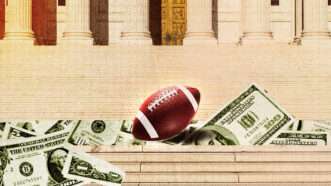
The league's amicus brief warns about game integrity and underage betting, but the NFL has a financial stake in keeping prediction markets under state control.
A just released episode of the Blessings of Liberty podcast.
The petitioners appear to lose a vote they might need in Suncor Energy v. Boulder County.

Newsom's expert panel has two months to consider new AI rules, including "kill switches," that could spread nationwide.

Challenging his conviction for illegal gun possession, Curtis Squire argues that the Commerce Clause cannot justify bans on intrastate, noncommercial conduct.
Just because marijuana is legal under state law does not mean marijuana is legal -- a useful reminder.

The Court rightly ruled the executive branch has no authority to restrict mail-in voting.
It seeks to usurp state and congressional power over election administration.

The unusual victory arises from a connection to the Contracts Clause.

Plus: SCOTUS allows Trump’s White House ballroom construction to proceed.
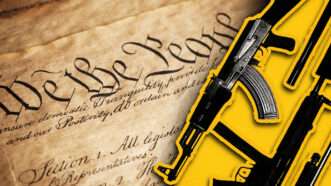
During the last century, the Commerce Clause has replaced the Taxing Clause as an excuse for federal legislation.
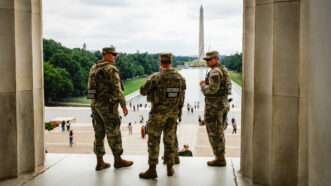
As the National Guard deployment stretches into its second year, questions remain about why the $55 million-per-month show of force is necessary at all.
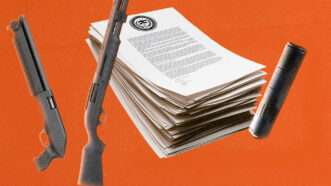
When Congress eliminated taxes on suppressors, short-barreled rifles, and short-barreled shotguns, it also eliminated the constitutional justification for regulating them.
A renewed suit seeking to leverage the Clean Air Act in pursuit of lucrative government contracts.
In the upcoming climate change case the Supreme Court should reject the industry and Trump Administration arguments for preemption-by-penumbra.

A preliminary injunction will keep Kalshi and Polymarket active in the state after a district judge found federal law preempts the state's ban.
It explains why Trump is wrong and how federalism can help counter his efforts to subvert the 2026 midterm elections.

The book is an important new account of the early constitutional and political history of American migration policy.
Courts allow litigants to commandeer state and local governments under the Endangered Species Act.
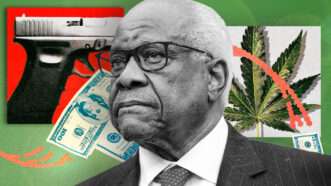
Even under the Supreme Court's highly elastic understanding of that clause, Thomas says, such laws do not qualify as regulation of interstate commerce.

Two Canadian provinces - Alberta and Quebec - may hold secession referenda in the near future. The issues at stake have broader implications for the morality of secession and other matters.
Since it lost its first case on technical procedural grounds, the company plans to try again.
A webinar discussion of whether we are seeing conservation commandeering.

The country should rediscover its decentralized roots to revive freedom and national pride.

That defense applies only when an officer "reasonably" believed he was acting within his federal authority.
The appellate court rightly concludes that Gordon-Darby's lawsuit had multiple legal problems.

Bootleggers, Baptists, and the fight over who gets to write America's self-driving car rules.
So the Ninth Circuit held yesterday.
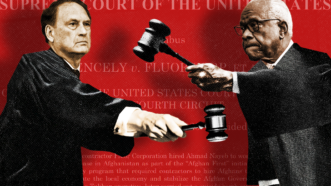
Plus: Does Trump expect to lose the birthright citizenship case?
The decision is at odds with a recent ruling by the Fifth Circuit.

A pending case will test whether courts are willing to enforce the anticommandeering doctrine in the context of environmental protection.
The ruling holds the law exceeds Congress' authority under the tax power and the Necessary and Proper Clause. But it does not consider the Commerce Clause.
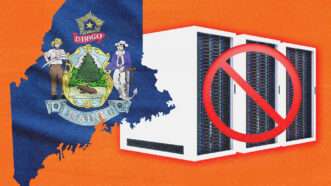
A week after Bernie Sanders introduced legislation to pause AI data center construction indefinitely, Maine is poised to institute the first statewide ban.

The National AI Policy Framework is a return to the administration's pro-AI position.
A Federalist Society forum on the first big case of OT 2026.
Whether the issue is immigration enforcement or environmental law, states are not obligated to enforce federal laws.
Judge McCafferty refuses to stay her unconstitutional injunction, and it appears the state AG's office is still failing to raise its strongest constitutional defense.
The Supreme Court granted certiorari in Suncor Energy v. County Commissioners of Boulder County
It explains how sanctuary policies are justified on both constitutional and moral grounds.
A combination of legal action and political resistance helped deal Trump a defeat.
Trump's call to "nationalize elections" leads prominent election law scholar Rick Hasen to reverse his longstanding support for such a policy.

It's a bad idea, just like it was a bad idea five years ago when Democrats proposed something similar.
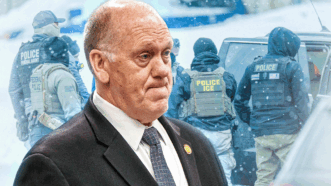
Although a federal judge declined to issue a preliminary injunction requested by Minnesota and the Twin Cities, the plaintiffs should still prevail on their claims that the federal government’s actions there are unconstitutional.
There may be lots of things wrong with the way the Trump Administration is handling immigration enforcement in Minneapolis, but commandeering is not among them.
The "Live Free or Die" state effectively acquiesces to unconstitutional commandeering of the state government under the Clean Air Act.
The article describes the suit, and explains why it deserves to prevail.
Celebrate your independence with a subscription to Reason magazine, your most trusted source of honest, insightful news and analysis.




