
Nobody Trusts Congress, but Americans Keep Reelecting the Same People
Increasingly like-minded communities make incumbent lawmakers safer than ever.

Increasingly like-minded communities make incumbent lawmakers safer than ever.

After being arrested for doing journalism, Priscilla Villarreal has taken her fight to the courts.

Washington's Covenant Homeownership Program excludes certain applicants on the basis of race.

Federal agents are allowed to search private property without a warrant under this Prohibition-era Supreme Court precedent.
A recent website "upgrade" is not an improvement.

The Republican presidential candidate’s views do not reflect any unifying principle other than self-interest.

Can't Americans all just get along? Maybe we can't—and perhaps we shouldn't have to.

The Institute for Justice partners with an independent eye doctor to challenge state regulations that protect hospital monopolies and restrict patient access.

Law professor Ann Southworth offers a balanced take on the fallout from the Supreme Court's Citizens United decision.
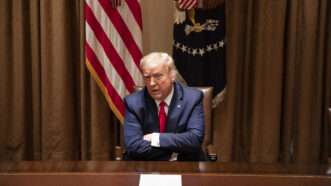
Whether through policy or prosecution, the president's ability to punish his political enemies should be sharply constrained.
A forthcoming paper from a Justice on the Ohio Supreme Court on constitutional interpretation in Ohio.

"Invoking the innocence of children is not...a magic incantation sufficient for legislatures to run roughshod over the First Amendment rights of adults."

Media hysteria and overzealous governments have led many to believe that childhood independence is a form of abuse.

Harris' plan to extend at-home care to Medicare recipients is yet another example of wasteful spending.

Kate Barr is running for state senate in North Carolina, hoping to raise awareness about the effects of gerrymandering.

The state's powerful coastal land-use regulator is arguing its awesome development-stopping powers applies to rocket launches as well as housing.

AFIP is an "unnecessary bureaucracy" that stifles economic freedom, says Milei's government.
Another interesting aside in the Royal Canin oral argument.
An amusing and potentially revealing exchange in a recent oral argument.

Drew Johnson wants to help define the post-Trump GOP.

The state has been demanding that TV stations remove political ads in support of a reproductive freedom amendment on the ballot this year.

Healthcare promises always come with high costs.

As it stands, the program effectively redistributes money from younger and poorer people to richer people.

Legal scholar Michael Ramsey points out another way courts could reject Trump's plan to use the act as a tool for peacetime mass deportation.
These policies may sound good on paper—but they would be disastrous in reality.
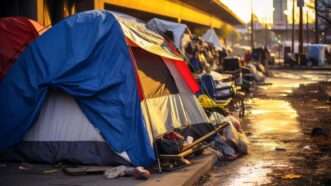
Despite homelessness being on the rise, local governments keep cracking down on efforts to shelter those without permanent housing.

Plus: FEMA threat-related arrest, incentives for babymaking, "men" for Harris/Walz, and more...
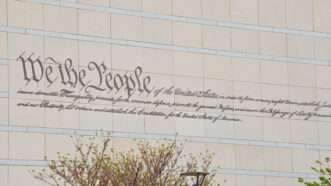
How U.S. presidents habitually use—and abuse—pronouns to deceive.

Few problems can be resolved by grandstanding politicians threatening new penalties.

The plan is illegal. But courts might refuse to strike it down based on the "political questions" doctrine.

Can't Americans all just get along? Maybe we can't—and perhaps we shouldn't have to.

Americans are turning to home-cooked meals, but state regulators are making it harder for small food businesses to survive.

Mason Murphy says Officer Michael Schmitt violated his rights by punishing him for constitutionally protected speech.

It's fundamentally different from what Republicans have tried to do, but similar enough to be worrisome.

The court found scientific opinion about "shaken baby syndrome" has changed, and a man sentenced to 35 years in prison deserves a new trial.
A successful appointments clause challenge to Regional Fishery Management Councils. (Updated to fix block quotes)
Remembering the first time a partisan Senate minority blocked a judicial nomination that enjoyed majority support.

Donald Trump's plan for massive tariff increases is particularly dangerous because the White House could likely implement it without any new congressional authorization.

Max Boot's biography of Ronald Reagan is deeply researched and informative, but it sometimes stumbles when it tries to use the past to make sense of the present.
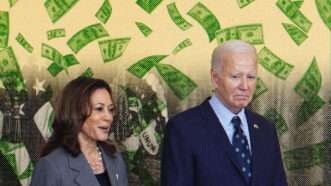
When they entered the White House, the budget deficit was a pandemic-influenced $2.3 trillion, and it was set to fall to $905 billion by 2024. It's now twice what it was supposed to be.

"Right now, we need to get ourselves at least to a balanced budget, and that involves cutting a lot of the third rails of American politics," the Libertarian presidential nominee tells Reason.


The Supreme Court is considering whether a rule targeting "ghost guns" exceeds the agency's statutory authority.

Ryan Walters' strict stipulations make it clear he’s steering Oklahoma schools to purchase Donald Trump’s Bibles at a hefty cost.

Why is making spirits for personal use any of the government’s business in the first place?

Celebrate your independence with a subscription to Reason magazine, your most trusted source of honest, insightful news and analysis.




