Trump's Tariffs Are Politically Toxic
Voters hate the tariffs—and elected Republicans aren't even trying to defend the president's signature policy anymore.

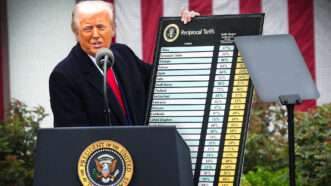
Voters hate the tariffs—and elected Republicans aren't even trying to defend the president's signature policy anymore.
Courts should still strike down the Section 338 tariffs and import bans that remain in place.

Against the argument for "infant industry" protectionism
The import taxes fit a pattern of dubious legal rationales for the president's protectionist policies.
The new Harvest Fuel Relief program is the latest payment to farmers squeezed by the president’s own war and tariffs.
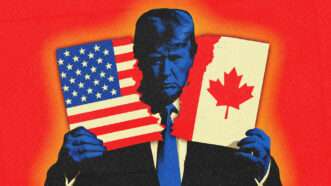
The tariffs are illegal for multiple different reasons.

Plus: Trump's tariffs lose support among his own voters, a five-day White House press secretary, and Elizabeth Warren's crusade against corporate mergers

Republicans who want to speak to voters' anger over higher prices without criticizing the president who's caused them are in a bind.
Entitlement spending, defense spending, and interest payments on the debt continue to climb.
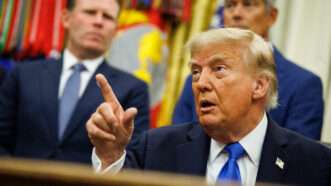
A new poll shows that Americans are soundly rejecting the Trump administration's big government policies.
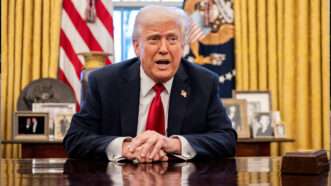
Trump launched his third round of broad tariffs after his first two attempts ran into legal trouble.
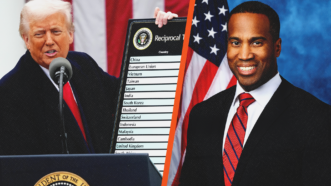
Rep. John James admits that Trump's tariffs are hurting Michigan businesses. His solution? Make them fill out more paperwork.

From Maine to Michigan, voters are fed up with tariffs and trade wars.
Many of the same constitutional and other constraints apply as with tariffs.

In a recent talk, he decried a situation where "everything is an emergency."
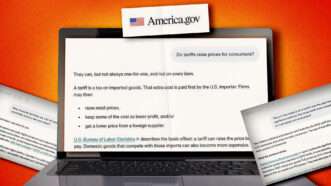
America.gov says that tariffs "can raise the price buyers pay. Domestic goods that compete with those imports can also become more expensive."
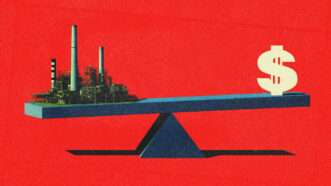
U.S. steel prices have surged, while overall manufacturing employment has fallen.

A BLT looks simple, but bacon rules, lettuce labor shortages, and tomato tariffs show how government meddling can make even lunch more expensive.
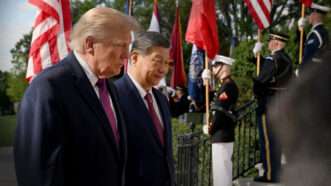
China does present some real national security challenges. But the Trump administration's policies have made it harder to address those, all while damaging American prosperity.

It was a direct result of President Donald Trump's trade war, as even the Department of Agriculture now admits.
The paper provides an overview of the legal vulnerabilities of the Trump tariffs against Canadian goods, and what can be done to prevent a recurrence of his abuses.

He who dies with the most hoarded cash does not, in fact, win.
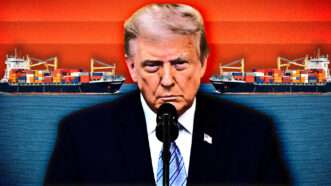
Trump's zero-sum trade talk is wrongheaded and authoritarian.
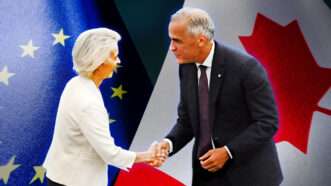
As Ottawa’s trade war with the U.S. worsens, Brussels proposes closer trade, security, and technology ties, including an unprecedented "associate member” status.

The bill, which passed the House and Senate, would let Trump impose tariffs up to 100 percent on certain countries, but it fails to properly define which.
I will be one of the speakers.
Tariffs won’t begin to fund the effort to purchase voters’ good will.
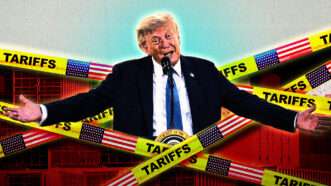
Their brief says the president is asserting "essentially boundless" authority to impose "economy-wide tariffs untethered from the statute Congress enacted."
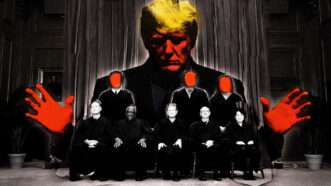
The president's latest tirade against recalcitrant justices reflects his open contempt for judicial review.
The Cato Institute, Michael McConnell, and I filed an amicus brief in litigation challenging Trump's massive Section 301 tariffs, which use "forced labor" as a pretext for sweeping protectionism.
Why the major questions and nondelegation doctrines bolster the legal case against Trump's Section 338 tariffs.

Facing a 25 percent tariff threat, Seoul agreed to bankroll nuclear reactors and a Texas gas plant. The cost is already climbing past budget.

Economists Stephen Moore and Scott Lincicome debate tariffs as a foreign policy tool.

Canada's retaliatory tariffs include the little metal band that holds an eraser onto a pencil.

By quickly endorsing Trump's ridiculous plan to bribe voters in the midterms, J.D. Vance reveals something about the future of Trumpism. There isn't one.
The brief explains why the Section 122 tariffs are illegal and run afoul of the major questions and nondelegation doctrines.
The move further escalates this harmful and illegal trade war with a vital ally.

The ban was accompanied by a new set of tariffs targeting Canadian motorboats, cheese, and other products in the latest expansion of an absurd trade war.
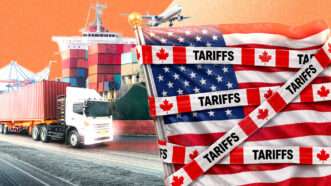
Plus: Capitalism blaming, desalination innovation, Houthis fire on Saudi Arabia, and more...
Labor Day is a great time to remember that we can make workers vastly better off by empowering more of them to vote with their feet, both within countries and through international migration.
Americans have been widening the prosperity gap with our neighbors for years.
Some Democrats are licking their chops over other economic powers that Trump has claimed for the presidency.
As the president liberalized the market for beef, he also imposed new 50 percent tariffs on some $20 billion worth of Canadian goods. Americans will suffer.

American consumers and businesses are being taken advantage of by Canadians who are…offering to sell us aluminum, oil, and wood? How?
U.S. tariffs hurt Americans. Retaliatory tariffs will hurt Canadians.

Robby Soave and Christian Britschgi discuss tariffs, tech moral panics, social media harms, video games, Dolly Parton, Tim Curry, AI-written journalism, and America’s $40 trillion debt.
It will take more than three months to fix the problems plaguing the American beef industry.
Plus: Trump's trade war with Canada, the growing backlash against data centers, and calls to censor journalists in Britain


New from Reason: a look into what Javier Milei has accomplished and what it will take to make the most of Argentina’s window for real change. Out now for subscribers.