
Is Alito Making the Same Mistake as Ginsburg by Refusing To Retire?
The conservative justice is sticking around on the Supreme Court. Will conservatives come to regret it?

The conservative justice is sticking around on the Supreme Court. Will conservatives come to regret it?
But the legal fighting will continue in the lower courts.
Plus: A 911 glitch, the disappearance of the menhaden, the deportation of a Navy sailor's dad, and more...

Despite the Supreme Court's best efforts to rein them in, federal regulators continue to abuse their authority under the Clean Water Act.

A major separation-of-church-and-state case lands at the Supreme Court.

The agency’s attempt to intimidate David Streever is at the center of a First Amendment case.
Less than two months after losing at SCOTUS, Trump tries again with more misguided executive orders.

Is it named after the father of geometry or a Cleveland suburb? Both.
In one case after another, the president has tried to cut the courts out of the picture painted by the Framers.
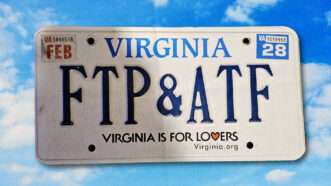
A federal appeals court ruled that Curtis Whateley's anti-police vanity plate was private speech protected by the First Amendment. Virginia says it will seek review from the Supreme Court.

Property rights are no less worthy of protection just because intangible property is at stake.

Appealing to national security is not a "get-out-of-law-free card," a federal court ruled last week.
During the last century, the Commerce Clause has replaced the Taxing Clause as an excuse for federal legislation.
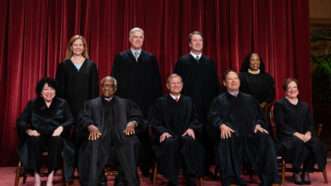
A detailed Marquette Law School poll finds public views of the Court are modestly negative, but most major recent decisions enjoy majority public support.

The two measures combine unconstitutional provisions with performance art.
A new podcast from the National Constitution Center
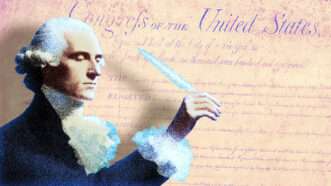
The “father of the Constitution” worried about federal and state overreach.
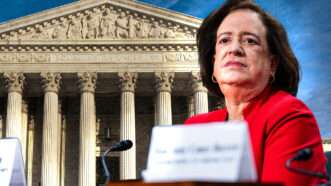
The liberal justice wants the Supreme Court’s harshest progressive critics to chill out.
In the upcoming climate change case the Supreme Court should reject the industry and Trump Administration arguments for preemption-by-penumbra.

The judge concluded that a high school student's privacy interests trumped freedom of the press.
The prominent liberal legal scholar and former ACLU leader outlines how the Court has often checked Trump, but also critiques it for going against precedent.

The president's latest round of broad import taxes, like the previous two, treats his statutory authority as an afterthought.
It responds to a creative court-packing proposal put forward by Andy Craig.
In recent remarks before the Ninth Circuit Judicial Conference, Justice Kagan rejects the conventional liberal narrative about the Supreme Court.

The FCC chairman thinks the "public interest" standard is a license to interfere with freedom of the press.

What’s at stake in Ream v. U.S. Department of the Treasury.
The death of Humphrey's Executor was foretold, but some of the consequences may not have been anticipated.

The justices said the "open fields" doctrine, a sweeping exception to constitutional privacy protections, does not apply in the Keystone State.

Ken Jouppi's Eighth Amendment challenge asks the Court to decide whether a fine must be proportional to the gravity of the crime.

Plus: a few words about The Odyssey

An old drug conviction could still stop you from waxing eyebrows, cutting hair, or giving massages.

In a decision written by a Joe Biden nominee, the appeals court addresses a long-simmering issue that the Supreme Court will consider during its next term.

Leonard Hoffmann and his neighbors in North Dakota went to court to fight for fair market value—as the Constitution promises—after WBI Energy Transmission said it would take their land at a discount.
Justice Kagan tells Congress she prefers to call it the "emergency docket."

Gov. J.B. Pritzker signed a bill that promises property owners will receive the surplus proceeds when the government seizes their home to satisfy a tax debt.
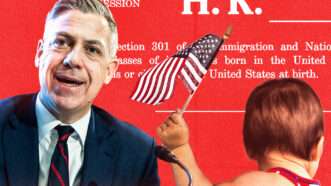
Plus: An unconstitutional war is back on.
From executive power to civil liberties, what to make of a momentous year at SCOTUS?

The judge contradicted Supreme Court precedents by ruling that a student's "privacy interests" trumped "the severe constitutional presumption" against prior restraints.

Half a century after approving coercive plea bargaining, the Supreme Court is beginning to recognize its costs.
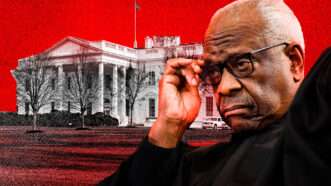
The conservative justice pushed for greater executive authority even in cases in which Trump won.
Three different VC bloggers were among the speakers: Jonathan Adler, Keith Whittington, and myself.

Neil Gorsuch proposes an alternative to a Fourth Amendment standard that has proven to be an unreliable safeguard against government snooping.
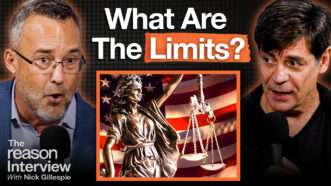
Clark Neily discusses the Supreme Court, executive authority, and why federal prosecutors wield too much power.

After upholding the Second Amendment rights of drug users and carry permit holders, the justices will address the constitutionality of "assault weapon" bans.
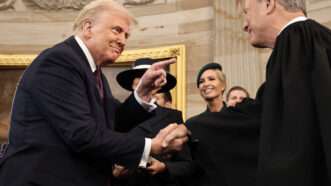
Why Trump lost big in the Supreme Court cases he cared the most about

Plus: World Cup tourists embrace America, the Supreme Court expands gun rights, and Europe's resistance to air conditioning
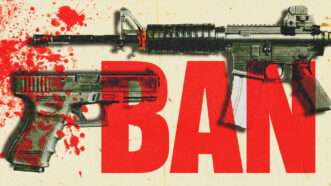
Assistant Attorney General Harmeet Dhillon argues that both laws are unconstitutional because they prohibit arms in common use for lawful purposes.
Celebrate your independence with a subscription to Reason magazine, your most trusted source of honest, insightful news and analysis.




