
Justice Alito Gives a Fuller Explanation of His Suncor Recusal
One of several worthwhile tidbits in Justice Alito's Wall Street Journal interview.

One of several worthwhile tidbits in Justice Alito's Wall Street Journal interview.

Private investors are already pouring billions into America’s nuclear sector. The Trump administration wants a piece of the credit.
In which I reject the suggestion that my arguments do not support the respondent's position before the Supreme Court
Upcoming events at Penn Carey Law and CWRU at which I will discuss what we learned from oral argument in the Supreme Court's first case of the term.

A high-concept misfire deliberately designed to test the patience of viewers.

Bloomberg reports on why Justice Alito decided to recuse from the first case of the Supreme Court's term.
For twenty-five years I never had to think about freedom-of-information requests, but in the last year I have been the subject of two such requests.
The petitioners appear to lose a vote they might need in Suncor Energy v. Boulder County.

It was a direct result of President Donald Trump's trade war, as even the Department of Agriculture now admits.
Michigan sued fossil fuel companies under an imaginative antitrust theory that the district court could not accept.
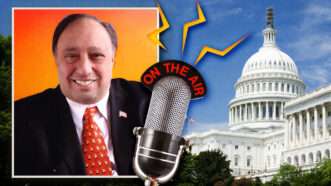
The push to mandate AM radios has brought Ted Cruz together with Bernie Sanders.

New cars in the E.U. must now have cameras that track drivers' eyes and flag distractions.

Facing a 25 percent tariff threat, Seoul agreed to bankroll nuclear reactors and a Texas gas plant. The cost is already climbing past budget.
A potentially significant rebuke of one of the more controversial and unusual elements of the Trump Administration's energy policy.

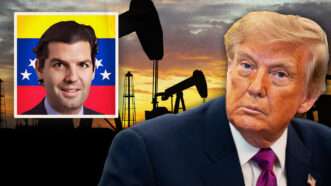
Alejandro Betancourt has become the key go-between for the Trump administration, Venezuela’s new regime, and American oil companies.

It will take more than three months to fix the problems plaguing the American beef industry.

Despite the Supreme Court's best efforts to rein them in, federal regulators continue to abuse their authority under the Clean Water Act.
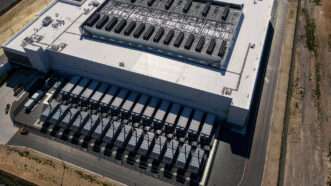
Their few defenders often misunderstand their benefits.
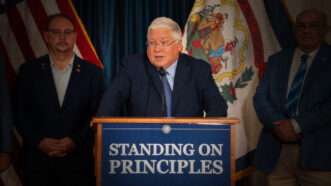
The state's plan to attract large infrastructure projects is full of administrative hurdles and concedes many of the bad arguments made by NIMBY critics.

A comptroller audit says New York State's recycling data are unreliable.
Energy Secretary Chris Wright claims that more oil left the Middle East in a day than before the war. But the industry isn’t buying it—and gas prices are still high.
German energy company RWE decided "there is no path forward to permit these projects in the U.S. for the foreseeable future."
An analysis of the use of subjective language in scientific papers.
The bipartisan backlash against data centers reaches the Lone Star State.
In the upcoming climate change case the Supreme Court should reject the industry and Trump Administration arguments for preemption-by-penumbra.

We’re locked in a cycle: The president threatens to resume the war, he claims Iran backed down, and then he gets frustrated with Iran again.

A new bipartisan bill would ban manufacturers from selling cars in the U.S. if more than 15 percent of shares are Chinese-owned.

The government is charging Samuel Tunick for telling them a code that would erase all the data on his phone—after they tried to take it on false pretenses.
The episode illustrates the president's routine weaponization of government against his enemies.


Armed conflict and violence remain the primary drivers of acute food insecurity.
The legal arguments put forward by the EPA are weak and unpersuasive, and could undermine the Administration's position in other climate litigation.

In a committee hearing yesterday, Alexandria Ocasio-Cortez complained about data centers' impacts on rural areas and industrial parks.
Zion Lights discusses what environmentalists get wrong about nuclear power and why abundant energy is key to human prosperity.

The U.S.-Iranian peace memorandum has broken down, and violence is slowly ramping back up to a full-on war. Four Americans paid the price this weekend.
Yet another broken campaign promise.
Presidents have repeatedly used the SPR to manipulate markets and shield consumers from the consequences of bad policies.
Despite decades of panic, a new reactor has been approved for the first time in 10 years.

Gov. Kathy Hochul’s one-year moratorium buys time for the state to create a convoluted regulatory regime.
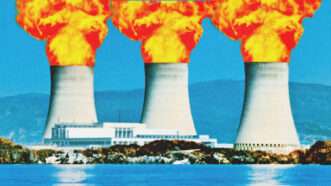
The agency pretends to loosen scientifically unjustified regulations but does nothing of the sort.

America's most business-friendly states are proof that permitting reform works. Still, they have a bad habit of handing out tax breaks to favored industries.

A new GAO report attributes the delays to onerous regulations and poor coordination among government agencies.

Plus: World Cup tourists embrace America, the Supreme Court expands gun rights, and Europe's resistance to air conditioning

The continent’s political class needs to get over its aversion to life-saving technology.
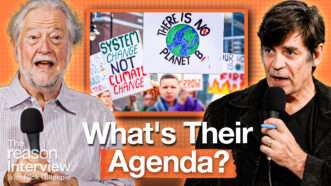
Aaron Brown discusses how research gets distorted, why sensational claims spread so quickly, and how to think more critically about the numbers behind the headlines.
Celebrate your independence with a subscription to Reason magazine, your most trusted source of honest, insightful news and analysis.




