
Nobody Wants To Be the Pro-Tech Candidate in This New York Race That Could Flip the House
Republican incumbent Mike Lawler and Democratic challenger Cait Conley are trying to tie each other to the AI industry and data centers.

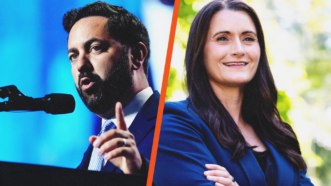
Republican incumbent Mike Lawler and Democratic challenger Cait Conley are trying to tie each other to the AI industry and data centers.

Let's unpack the latest dystopian tech news—and German cops' dystopian response.
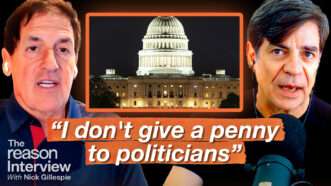
Billionaire entrepreneur Mark Cuban discusses breaking up Big Medicine, why he wants to abolish political parties, and how Ayn Rand shaped his views on capitalism.

Car-tracking cameras, like cellphones, generate vast amounts of sensitive data.

AI executives are planning for a public revolt after a major attack. A federal power grab is the wrong response.

The AI company's decision might be a justifiable idea. But it appears it was made for the wrong reason.

Robby Soave and Christian Britschgi weigh in on the Russian plague, whether superintelligence is sentient, and Tucker Carlson's shaky grasp of history.
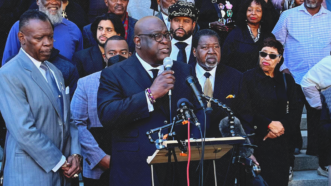
Unions rallied against a D.C. robotaxi bill that already favors them. Riders would pay for their win in higher fares and more dangerous roads.
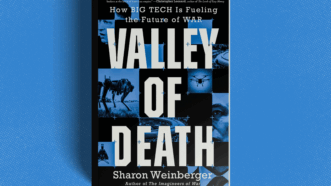
An influx of military spending has been moving tech companies away from serving consumers and back toward chasing government contracts.

The senator wants to “triple union density by 2035” and pay for a host of social welfare programs with new taxes on data centers and AI companies.
Nobel Prize–winning economist James Heckman discusses what really drives economic mobility, the failures of universal preschool, and how AI is transforming his research.

Plus: Ketamine deep dive, failed Oura IPO, Ray Dalio's warning, and more...

Progress has always required accepting risk.

Plus: Tennessee botches the execution of Christa Pike, and Sam Altman says the benefits of AI are worth the risks.
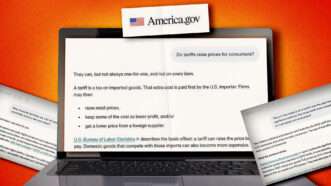
America.gov says that tariffs "can raise the price buyers pay. Domestic goods that compete with those imports can also become more expensive."

Plus: The rape case and porn, cornrow canceling, and more...

Even the best-case scenario means less investment, slower wage growth, and a budget increasingly spent on past obligations.

While the White House settles for a voluntary accord, the Federal Trade Commission is preparing subpoena-like demands and plans to compel testimony from frontier lab executives.
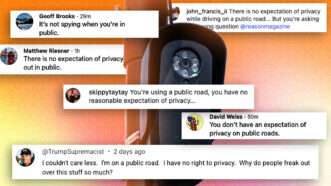
Defenders of Flock-style surveillance systems argue that people “have no reasonable expectation of privacy in public.” They're wrong.

Plus: FlyDubai flight to Tel Aviv forced to emergency-land, ICE hiring surge, and more...

The city's ordinance targets price gouging that its own evidence doesn't show—and it could kill discounts that save shoppers money.

Angela Lipps is suing for $10 million after a Fargo police detective ignored evidence that she was innocent and arrested her anyway.

Plus: rising debt and mortgage rates, whether AI will make government obsolete, and how to pitch Reason to your friends

Plus: Talarico and black turnout, an artist trial at the Vatican, hospitals use AI (for ill), and more...

Measures to slow AI development are more likely to trigger human lawsuits against AI companies than accomplish anything useful.

Sam Altman called for international regulation and "speedy incident reporting" at the U.N. on the same day Australia's prime minister said OpenAI took too long to disclose a breach.
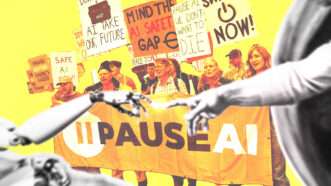
A new poll finds widespread support for slowing advanced AI, but government controls could create risks of their own.

The rationale for AI facial scanning—to prevent bad actors from following students into buildings—makes little sense.
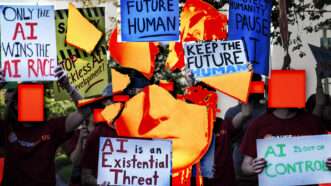
The fear of superintelligence is driving decisions that make AI less transparent and more consolidated.

Newsom's expert panel has two months to consider new AI rules, including "kill switches," that could spread nationwide.

Plus: why parents are abandoning public schools, whether AI requires government intervention, and what happened to fusionism in the conservative movement.

Developers are using videos of real-life work to train the new generation of robots.

A federal judge found that the state's restrictions on AI-generated political speech likely violate the First Amendment.

Anthropic's CEO wants federal regulation that would slow down AI (and his competitors' innovations). Has that ever worked?

Militaries are leaning on AI software for surveillance and targeting.



Plus: California's new restrictions on social media, Trump's $5,000 “dividend,” and the future of libertarianism.
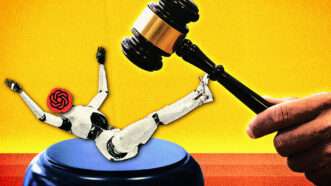
Dario Amodei is calling for coordinated international limits on AI development while Anthropic prepares to go public.

With their reputation figuratively underwater, data centers might be going literally underwater too.

Plus: Commercial surrogacy regulation, Russian weapons, a new drug in San Francisco, and more...

Facing a 25 percent tariff threat, Seoul agreed to bankroll nuclear reactors and a Texas gas plant. The cost is already climbing past budget.

The pro-AI side must avoid succumbing to paranoia and bad faith.
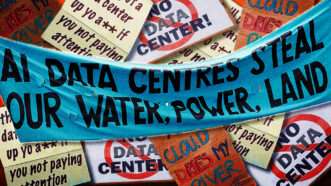
The panic is pretty silly, since these facilities are necessary to power industries that power our economy and fund state budgets.

Trump's $5,000 bribe, stay-at-home moms, car insurance beefs, AI doom, 9/11 memories, Zelda rumors, rom-coms, and the Rapture—Freed Up somehow fits it all into one episode.

Recent comments by Greg Abbott and Ron DeSantis reflect a bipartisan backlash against warrantless surveillance.
Celebrate your independence with a subscription to Reason magazine, your most trusted source of honest, insightful news and analysis.




