
Police Destroyed Their Homes and Businesses. The Supreme Court Won't Say Who Should Pay.
Are innocent people entitled to compensation when their property is ruined by police? That will continue to be an "open question."


Are innocent people entitled to compensation when their property is ruined by police? That will continue to be an "open question."

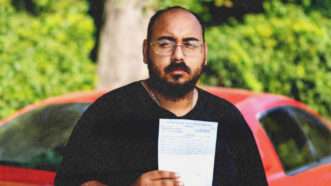
Mario Ayala is seeking the return of his property, which federal agents seized more than a year and a half ago for reasons that remain mysterious.
Federal appeals courts rejected qualified immunity for cops and a judge who flouted longstanding constitutional principles.

Frustrated by the children's resistance to a parental custody decision, Judge Eric Eighmy locked them in cells until they became more cooperative.

If the former ambassador tried to use her office for personal gain, she was only imitating her boss.

Once a leading figure in the anti-government militia movement, Ammon Bundy is now speaking out against President Donald Trump's immigration crackdown, arguing that the same federal overreach he spent years fighting is now being directed at immigrants.

A recent settlement crippled a local code enforcement scheme—and exposed the perils of turning petty violations into government revenue streams.

For helping prove that Maduro lost the 2024 election, Jesús Armas spent more than a year in Venezuela’s most-feared prison. He’s lucky it wasn’t more.

A judge ruled the Pentagon's supply chain risk designation of Anthropic was an unlawful, “arbitrary,” and “capricious” decision made to punish Anthropic.
Misconduct and misrepresentations by Justice Department lawyers have led some federal judges to question the traditional benefit of the doubt they give to the government.

The Secret Service asserted a nonexistent "emergency" to track Comey's cellphone, and the FBI's evidence falls far short of proving his seashell picture was a crime.

The episode illustrates the president's routine weaponization of government against his enemies.

Although Flock Safety’s auditing tools have helped catch the bad actors, more is needed to protect Americans’ privacy.

The Florida Fish and Wildlife Conservation Commission says it followed the law when it pulled the driving records of more than a dozen critics of the agency.

Giving people a pathway to sue federal immigration officials for violating constitutional rights is one way Congress can help hold the rogue agency accountable.

Trump’s nominee for attorney general has repeatedly subverted justice to benefit his boss.

High-level state officials launched a threat investigation over a harmless postcard to Florida's chief financial officer.

Politicians who don’t like receiving nastygrams should quit government work.

Federal law can punish true threats, and doxing intended to facilitate violence. But this woman simply named a government agent, which is not a crime.

The DOJ's unilateral abandonment of the Anti-Weaponization Fund "makes it crystal clear that these parties were never adverse," the former judges argue.

The president himself has repeatedly contradicted that claim.

Blanche is happy to pervert justice in service of the president's personal agenda. No wonder Trump wants to keep him as attorney general.
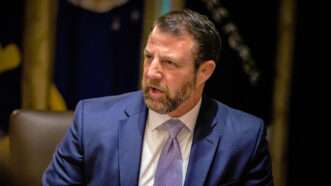
Mullin's latest idea is to stop processing international arrivals at airports in sanctuary cities.

Using taxpayer money to reward the president’s allies has nothing to do with the president's claims against the IRS.

Leaked reports showed troubling uses of force and restraint chairs at the Krome North Service Processing Center—until the details disappeared.

The president has fought to make sure alleged victims of government misconduct cannot get compensation. What changed?

Colorado's governor agreed with a state appeals court that the former Mesa County clerk had been punished for her wacky beliefs about the 2020 election as well as her illegal conduct.

The mother is suing after she delivered her preterm baby on the jail's floor following 24 hours of labor with no medical assistance.

"I didn't do anything wrong," George Retes, a U.S. citizen imprisoned for three days, tells Reason.

Deaths in ICE detention have hit a two-decade high, and allegations of medical neglect and poor conditions continue to surge.

The Court's 1963 ruling in Bantam Books v. Sullivan is freshly relevant in light of recent efforts to restrict speech through government intimidation.

Deaths in ICE custody hit a 20-year high in 2025 and a majority now say the agency's actions make Americans less safe.

Judge Rita Lin's preliminary injunction confirms what government officials had implicitly acknowledged: The supply chain risk designation was punishment, not policy.

Federal officers at Camp East Montana have beaten people for requesting medicine and even placed bets on which detainee would attempt suicide next.


A mayor and a police chief "mistook their authority to maintain order for a license to suppress criticism," says U.S. District Judge Stephanie Rose.

A federal judge ruled in 2022 that "no legitimate humane system would operate" like Arizona's prison health care system. Three years later, that same judge found the problems still hadn't been fixed.

Videos of recent immigration enforcement raise serious questions about authority, escalation, and the professional standards officers are trained to follow.




Proponents say such IDs will make life easier and protect kids from dangerous content. But opponents worry they will make you much easier to target.

Reason Roundup newsletter writer and associate editor Liz Wolfe goes live with Reason’s writers and producers to give you an exclusive look at what’s coming next from our newsroom.

Venus Bontadelli thought she'd left the nanny state behind when she fled California. But her new home of Powell, Wyoming, wasn't as free as she'd hoped

Humboldt County, California's sketchy code enforcement scheme piles ruinous fines on innocent people and sets them up to lose.
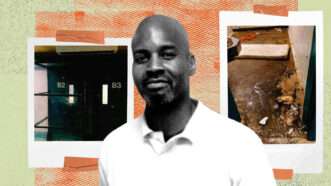
After 51-year-old Lamont Mealy was found dead in a Maryland prison cell, officials called it “natural causes.” His family’s lawsuit says guards intentionally shut off his water.

The settlement, which followed Sylvia Gonzalez's victory at the Supreme Court, also includes remedial First Amendment training for city officials.

A new FinCEN rule forced small money services businesses to collect personal data on nearly every customer transaction. Lawsuits claim this violates the Fourth Amendment.


New from Reason: a look into what Javier Milei has accomplished and what it will take to make the most of Argentina’s window for real change. Out now for subscribers.

