

Foreign Law in American Courts
Religion and the Law

No Religious Exemption from Forum Selection Clause in Employment Agreement
"Plaintiff should be treated like any other employee in his position, not that he should be favored based on his identity."
Foreign Law in American Courts
Sharia Divorce Law in American Courts
An interesting demonstration of how foreign law—including Islamic law—is sometimes applied (pursuant to American law) in American courts.
Should the Clergy-Penitent Privilege Be Abolished in Child Sexual Abuse Cases?
My new law review article defends long-standing principles: The privilege is not only constitutionally required, but it also helps to protect abuse victims by bringing sexual abuse to light.
"Employees Actually Do Not Have the Right to Believe That LGBTQ Rights Are 'Immoral'"
The Ninth Circuit allows a religious discrimination claim against Alaska Airlines to go forward, based on its firing of Christian flight attendants who objected on a company-run intranet to the company's statement in favor of a federal ban on sexual orientation and gender identity discrimination.
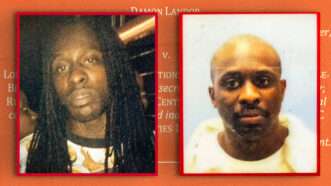
Supreme Court Limits the Ability To Sue Prison Guards for Religious Liberty Violations
Understanding the stakes of Landor v. Louisiana Department of Corrections.

Major League Baseball Teams Have the Right To Offer Pride Uniforms. Should They?
The league’s conduct is indisputably protected by the First Amendment. But that doesn't make it wise.
Pick Your YIMBY
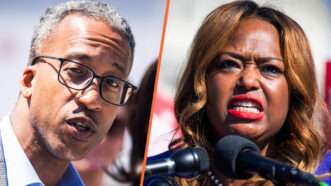
The D.C. mayoral race offers two leading candidates who are saying a lot of the right things about housing supply.
"Al Ghashiyah Testified That … as Head of the Family, He Has Decided that Islamic Law Is the Law that Applies to the Family"
Uh, no, says the Wisconsin Court of Appeals, refusing to set aside plaintiff’s brother’s will, in which the brother left nothing to the plaintiff.
The Pentagon's New War - Canceling American Religion and American History
A guest post by Prof. Paul Finkelman.
Youth Climate Plaintiffs Challenge Endangerment Repeal on Religious Liberty Grounds
Constitutional climate litigation seems to know no bounds.
Father Free to Send Children to Church Camp During His Parenting Time, Even When Mother Objects to Church's Views on Women
"[A]bsent a clear showing of substantial harm to the child, the noncustodial parent retains his or her fundamental right to direct the child's religious upbringing during his or her parenting time."
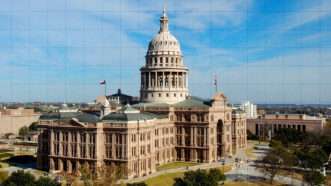
Separation of Church and State
Federal Appeals Court Says Texas' Ten Commandments Law Isn't Indoctrination
The 5th Circuit upheld a controversial law requiring Texas schools to display the Ten Commandments.

Satanic Temple Wins Legal Fight Over 10 Commandments Monument in Arkansas
A federal judge ruled the Ten Commandments monument at the state Capitol must be removed.

Additional Testimony Against the Proposed "Preserving a Sharia-Free America Act"
I submitted some additional testimony to a House subcommittee, in response to questions from Rep. Mary Gay Scanlon.
Court Rejects Women Inmates' Objections to California Law Related to Housing of "Transgender, Nonbinary, or Intersex" Inmates
The court's reasoning mostly turns on a conclusion that much of the prison behavior that plaintiffs complained about wasn't dictated by that particular law.
Parents Aren't Required to "Unquestioningly Accept and Support Their Minor Children's Claims of Transsexual Identity or Preferred Pronouns"
From a termination of parental rights decision by the Ohio Court of Appeals.

Oral Testimony at the House Judiciary Subcommittee Hearing on the "Preserving a Sharia-Free America Act"
It was notable that the GOP members and witnesses made little effort to actually defend the legislation in question.
My House Judiciary Subcommittee Testimony Against the "Preserving a Sharia-Free America Act"
I will be testifying against this proposed legislation - which would authorize exclusion or deportation of all or most non-citizen Muslim immigrants.
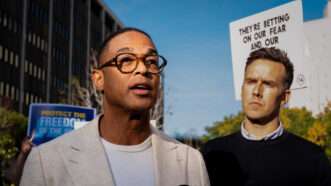
Don Lemon's Arrest Looks Like an Assault on Freedom of the Press
A federal indictment accuses him and another journalist of conspiring with protesters who disrupted a St. Paul church service.
Religious Employment and Title VII: Part 4—Avoiding Serious Constitutional Problems
Rejecting a textualist reading of Section 702 in favor of a cramped co-religionist privilege would raise serious First Amendment objections.




