
Justice Gorsuch on Abuse of Emergency Powers
In a recent talk, he decried a situation where "everything is an emergency."

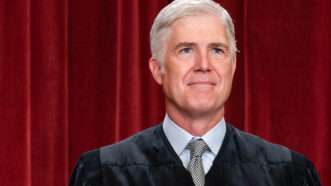
In a recent talk, he decried a situation where "everything is an emergency."
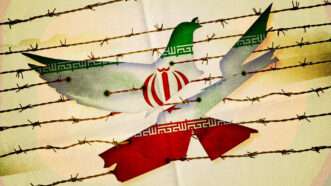
Congress can stop Trump's Iran war by failing to fund it.
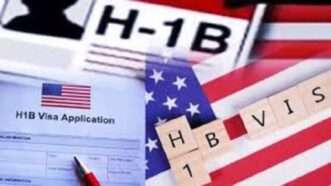
The court ruled that the imposition of the fee violates the Administrative Procedure Act.
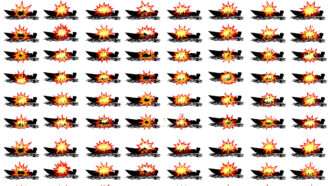
A year after launching his explosive antidrug campaign, President Donald Trump routinely rains death on alleged cocaine couriers.
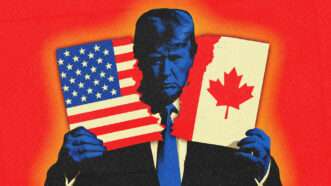
The paper provides an overview of the legal vulnerabilities of the Trump tariffs against Canadian goods, and what can be done to prevent a recurrence of his abuses.
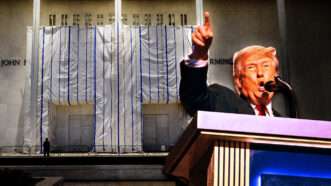
After a federal judge rejected his attempts at self-glorification, Trump said the building will "end up being ripped down" if he does not get the "recognition" he wants.
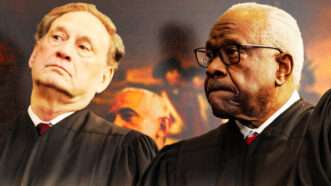
The conservative legal movement may be winning big at the Supreme Court. But Trump is not.
I will be one of the speakers.
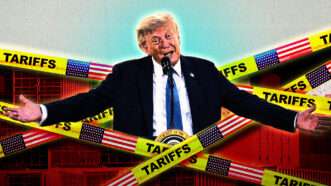
Their brief says the president is asserting "essentially boundless" authority to impose "economy-wide tariffs untethered from the statute Congress enacted."
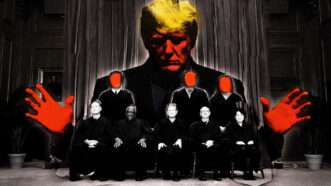
The president's latest tirade against recalcitrant justices reflects his open contempt for judicial review.
The Cato Institute, Michael McConnell, and I filed an amicus brief in litigation challenging Trump's massive Section 301 tariffs, which use "forced labor" as a pretext for sweeping protectionism.
Why the major questions and nondelegation doctrines bolster the legal case against Trump's Section 338 tariffs.
The Court rightly ruled the executive branch has no authority to restrict mail-in voting.
The brief explains why the Section 122 tariffs are illegal and run afoul of the major questions and nondelegation doctrines.
Some Democrats are licking their chops over other economic powers that Trump has claimed for the presidency.
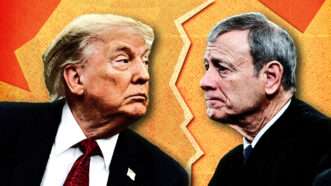
The chief justice finds himself in dissent in his latest showdown with the president.
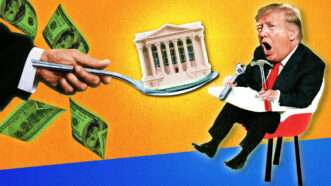
By unilaterally razing and replacing the East Wing, the president again shows his disregard for the rule of law and the separation of powers.
Section 338 is a long-defunct part of the notorious Smoot-Hawley Tariff Act of 1930.
A bill to sanction Russia would allow the president to place 100 percent tariffs on goods from countries that buy Russian fossil fuels.
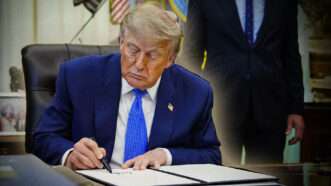
Less than two months after losing at SCOTUS, Trump tries again with more misguided executive orders.
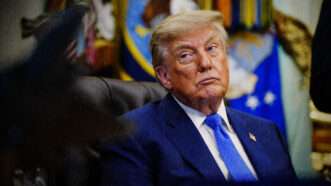
In one case after another, the president has tried to cut the courts out of the picture painted by the Framers.
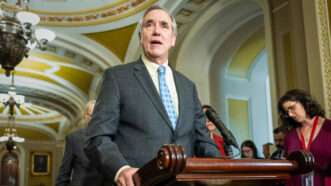
The Oregon senator's "For Our Republic Act" would check many of the president's abuses while preserving the powerful federal state he commands.
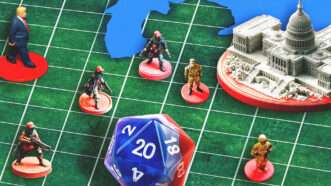
The Democratic nominee won five swing states by less than one percentage point. Then things got crazy.
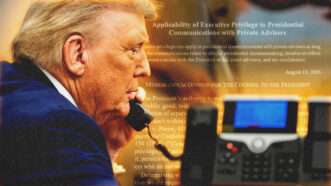
Transparency advocates say it's the latest attempt to hide more of the executive branch's business from the public and congressional investigations.
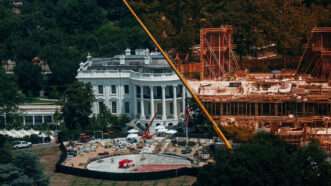
The Constitution assigns control of federal property to Congress, which never approved the president's demolition and replacement of the East Wing.
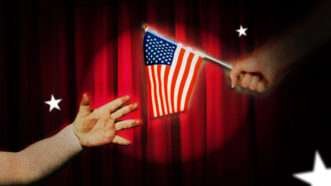
The two measures combine unconstitutional provisions with performance art.
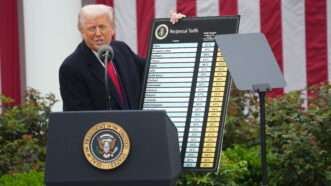
The article explains why the new tariffs are harmful and illegal for many of same reasons as those invalidated by the Supreme Court.
A guest post by Georgetown legal scholars Peter E. Harrell and Jennifer Hillman.
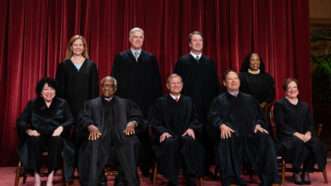
The prominent liberal legal scholar and former ACLU leader outlines how the Court has often checked Trump, but also critiques it for going against precedent.

It is now available on SSRN. This revision adds additional points, and takes account of various recent events.
It responds to a creative court-packing proposal put forward by Andy Craig.
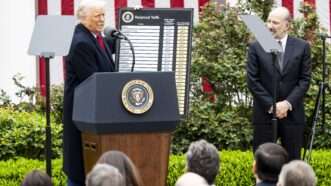
Economist David Hebert highlights an underappreciated danger of Trump's tariff mania. It's a serious problem, but one that can at least be mitigated.
It was filed by several businesses, including Learning Resources, Inc., which was also involved in the IEEPA tariff litigation.
The complaint explains why the tariffs violate the requirements of Section 301, and also run afoul of the major questions and nondelegation doctrines.
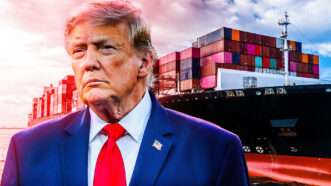
The Section 301 tariffs announced on Thursday overstep the powers granted by Congress and likely run afoul of the major questions doctrine.
The new policy is based on sham investigations, and runs afoul of the major questions and nondelegation doctrine.
The death of Humphrey's Executor was foretold, but some of the consequences may not have been anticipated.
The 50% tariffs on many Canadian imports are based on the long-defunct Section 338 of the notorious Smoot-Hawley tariff act.
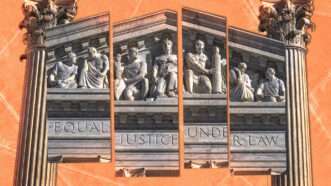
From executive power to civil liberties, what to make of a momentous year at SCOTUS?
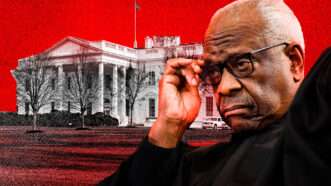
The conservative justice pushed for greater executive authority even in cases in which Trump won.
Three different VC bloggers were among the speakers: Jonathan Adler, Keith Whittington, and myself.
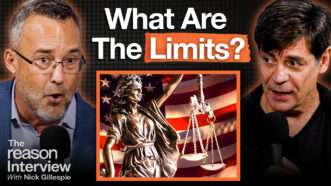
Clark Neily discusses the Supreme Court, executive authority, and why federal prosecutors wield too much power.
Trump v. Slaughter is a big win; Trump v. Cook is embarrassing given the posture of the case as explained in the dissents.
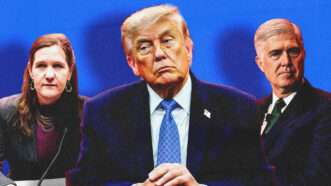
The Supreme Court has "no shortage of tools" to enforce the separation of powers, Justice Neil Gorsuch notes. "The only real question is whether we will use them."
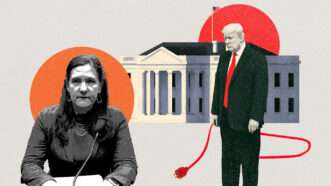
The Supreme Court extended presidential control over federal agencies. What could go wrong?

If the laws requiring such agencies to be independent are unconstitutional, it may be that very existence of those agencies is also now illegal.
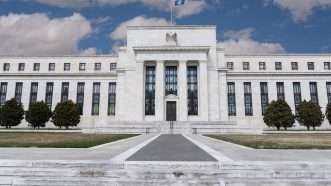
Tensions between today's two major presidential removal power decisions.
Celebrate your independence with a subscription to Reason magazine, your most trusted source of honest, insightful news and analysis.




