Even Under Mamdani, New York City's Ballot Questions Might Cut Red Tape and Public Review Hearings
Mamdani’s Commission on Government Efficiency put forward ballot proposals to cut red tape.


Mamdani’s Commission on Government Efficiency put forward ballot proposals to cut red tape.

"Keep AI unregulated," the Argentine president wrote in support of his proposed plan to boost artificial intelligence.

Exempt from Vancouver's building restrictions, Squamish Nation is constructing a 6,000-unit residential high-rise.

It sets a precedent for releasing other bioengineered organisms into the wild to repair ecological damage.
Bureaucrats who intend to do good still restrict competition and suppress liberty.

Occupational licensing raises costs and limits mobility without improving safety.

Despite the Supreme Court's best efforts to rein them in, federal regulators continue to abuse their authority under the Clean Water Act.
The second Trump Administration insists on acting unilaterally, and that will make many of its policy changes unsustainable over time.

It's not clear if the agency even has the legal authority to make the change. But if it goes through, there's little to worry about.
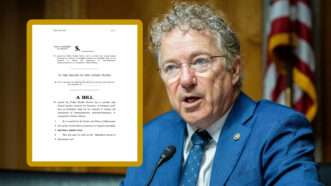
The Expedited Access to Biosimilars Act enables FDA approval of pharmaceutically equivalent biologic medications.

Zoox got the first commercial exemption for a driverless car. It came with a promise that safety regulations would evolve “as Zoox's technology advances.”

Plus: the DSA's policy agenda, Trump hits pause on Iran, and deregulating peptides

A key FDA advisory committee vote could bring clarity to the biohacking and alternative medicine world.
The BLT—a delicious celebration of the power of markets—exemplifies political attacks on the free movement of goods and people.

Supersonic flight is legally limited to the ocean. But the federal bureaucracy is (slowly) changing, and at least one company wants to take advantage.

Eliminating burdensome small business regulations is a win for everyone.

Despite decades of panic, a new reactor has been approved for the first time in 10 years.

The agency pretends to loosen scientifically unjustified regulations but does nothing of the sort.

America's most business-friendly states are proof that permitting reform works. Still, they have a bad habit of handing out tax breaks to favored industries.


The ATF is reconsidering some of its dumber regulations as the feds sue states with restrictive gun laws.

No single factor is wholly responsible for the low-cost airline's failure, but the government certainly didn't help.

The decision is a major win for public health.

Privately funded nuclear reactors are achieving critical milestones on their own, but the Trump administration wants to prop up a single company.
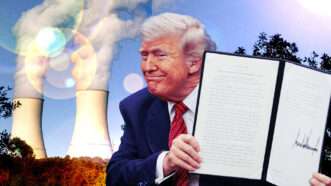
The Trump administration can build on its success in the nuclear industry by getting out of the way.

Couched with good intentions, new laws aimed at housing and artificial intelligence development will add more layers of red tape to Maryland’s growing bureaucracy.

A streamlined process for environmental review under the National Environmental Policy Act gives the government broader discretion to approve projects.

Terminally ill patients were promised access to experimental treatments, but the "right to try" exists mostly on paper.

The creative destruction triggered by Ted Turner's wild gambits left the tyranny of licensed, bureaucratic TV in rubble.

While not groundbreaking, the regulatory shifts offer some welcome relief.
The Trump Administration is refusing to defend a D.C. Circuit decision upholding a flawed energy conservation ruie.

"The New Deal made investment in America a risky project," says economist Donald J. Boudreaux, author of The Triumph of Economic Freedom.

Red tape issued by bureaucrats outstrips the impact of legislation.
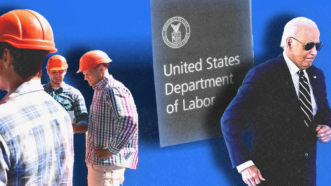
The government's new rule reverses a Biden-era anti-contracting directive and returns to a more contractor-friendly posture. But will this tug of war ever end?

"It shouldn't be this hard to give birth safely in the state of Alabama, and it doesn't have to," said the ACLU's lead counsel on the case.

The case could give the Court a chance to clarify what a "closely regulated" business is and what constitutional protections it enjoys.

This regulation didn't make anyone safer but it did make it harder to build nuclear energy projects in the United States.

Many states have deregulated hair braiding, but Louisiana lawmakers want to tighten regulations by demanding more coursework, including on the ancient origins of braiding.

A new bill could make Maryland "the most restrictive environment in the country," warns one doctor.
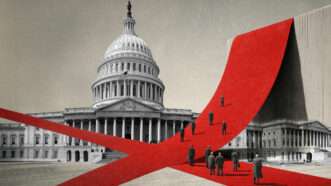
The world is growing simultaneously more corrupt and bound in red tape. That’s not a coincidence.

The EPA under the Obama and Biden administrations invoked that finding to adopt strict and costly regulations aiming to reduce emissions.
Plus: The House passes housing reform, Florida advances ADUs, and Zohran Mamdani hosts show trials for bad landlords.

A Kentucky proposal to legalize cigar bars bucks the trend of prohibitionist tobacco policy.

The Trump administration excludes advanced nuclear power reactors from excessive National Environmental Policy Act requirements.

AI-powered medical wearables and software are flourishing following the FDA’s new regulatory guidance.

The big lesson from the past 50 years of American air travel is that the aesthetics matter a lot less than the economics.

The big lesson from the past 50 years of American air travel is that the aesthetics matter a lot less than the economics.
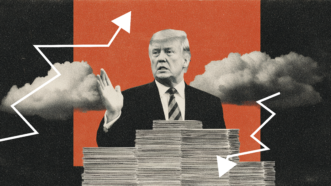
The president is making real progress on deregulation, but he needs to get Congress involved.


New from Reason: a look into what Javier Milei has accomplished and what it will take to make the most of Argentina’s window for real change. Out now for subscribers.