
No, Biden Isn't Coming for Your Burgers
Plus: Donor disclosure fight hits Supreme Court, school choice momentum, and more...


Plus: Donor disclosure fight hits Supreme Court, school choice momentum, and more...

The vast majority of hospitalized COVID-19 patients are overweight. Why won’t the government stop subsidizing junk food?
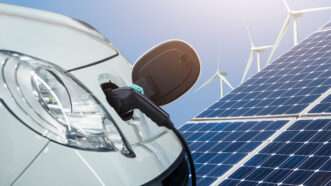
The plan would require a substantial retirement of machines that run on fossil fuels.
It would significantly reduce carbon emissions, but onerous regulation stands in the way.

The state legislature and Gov. Jared Polis are unshackling local ranchers and consumers.
So many people are leaving the state that it will soon lose a congressional seat.
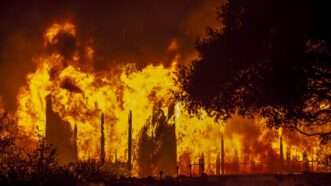
An environmental law keeps public agencies from reducing wildfire fuel.
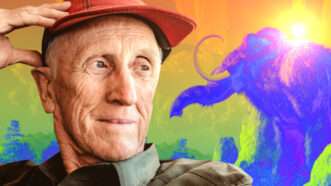
From "stay hungry, stay foolish" to "try everything, take nothing off the table."
Effective climate adaptation depends upon effective price signals. So why is the Senate Majority Leader standing in the way?
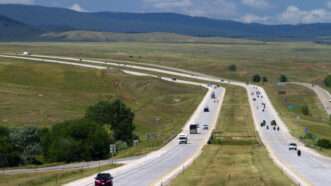
A series of laws passed in the 1970s may have permanently hamstrung American infrastructure development.
If there is an urgent need for emission reductions, regulatory ossification and legal risks counsel the consideration of other approaches, such as a carbon tax.
The Supreme Court will decide if the rule violates property rights.


The former Merry Prankster and Whole Earth Catalog founder talks about psychedelics, computers, bringing back woolly mammoths, and his new documentary.

Legalizing interstate sales and allowing outdoor growing would reduce the cannabis industry's energy consumption.

Let's restore this giant to America's forests.
Gov. Gavin Newsom's executive order banning non-electric cars from being sold after 2035 merely shifts the emissions from the tailpipe to the power plant.
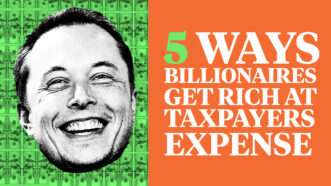
The tech billionaire isn't alone among the mega-wealthy in getting piles of money from government at all levels, say the authors of Welfare for the Rich.
Environmental activists should use the market to their advantage.

Neither wind power nor deregulation are responsible for the Texas power disaster.

Never let a good manufactured crisis go to waste
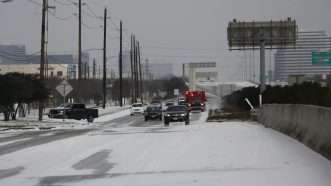
The vast majority of the shortfall is from failures at fossil fuel-powered plants.
The plaintiffs in Juliana v. United States may now file a petition for certiorari. They should be careful what they wish for.

Parsing technology trends, policy proposals, and clean tax cuts
Plus: Senate Conservatives Fund rallies for Hawley, Trump's popularity is rising again, and more...

The last seven years have been the warmest seven years on record.

"The vast majority of 2020's emission reductions were due to decreased economic activity."
His plan says that by 2035, no electric power should be generated by burning fossil fuels, and the U.S. should commit to zero net emissions of greenhouse gases by 2050.
Campaign promises about green energy often obscure real-world constraints.

Human ingenuity is enabling us to get ever more goods and services from fewer and fewer resources.
My review of Michael Shellenberger's Apocalypse Never

Joe Biden’s choice for agriculture secretary is more of the same.
A review of Richard Lazarus' chronicle of the Massachusetts v. EPA litigation in The New Atlantis.
Want to make money and help the world, too? Wall Street says you can!


Requiring meatpackers to pandemic-proof their facilities will have unintended consequences.
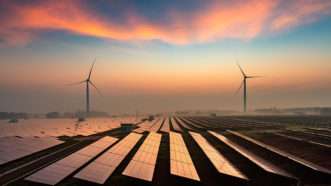
The state's electricity grid operators warned in 2019 that power shortages might become increasingly common when heat waves hit in the coming years.
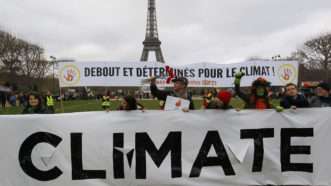
Biden would rejoin on day one of his administration.

Taking meaningful steps to reduce carbon emissions requires recognizing that the market is smarter than bureaucrats in Washington.
Jeff Nesbit and Bjorn Lomborg on the threat of climate change and what should be done about it
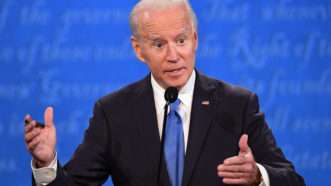
Food industry workers and wonks make their case for agricultural and food industry reforms.
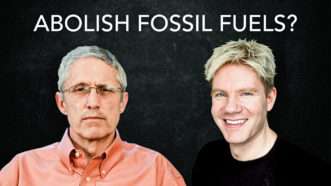
Jeff Nesbit vs. Bjorn Lomborg on the threat of climate change and what should be done about it
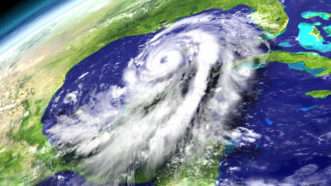
And yet, fewer lives are being lost with no increase in proportional economic losses.

Anti-biotech activists cite the precautionary principle to maintain chestnut tree-free forests.
A marathon oral argument on EPA's attempts at climate policy.

The book argues that rising prosperity and increasing technological prowess will ameliorate or reverse most deleterious environmental trends.

Pence's answers on energy and climate were full of misdirection and misinformation.
Celebrate your independence with a subscription to Reason magazine, your most trusted source of honest, insightful news and analysis.




