
The Millennial Internet Is Dead, and Politicians Killed It.
Social media use is declining, and what's left has shifted from conversation to passive scrolling.


Social media use is declining, and what's left has shifted from conversation to passive scrolling.

The bill’s “duty of care” could pressure platforms to suppress lawful speech in the name of protecting children.

Rep. James Comer is asking the HHS to consider disciplinary action against anti-alcohol activists empowered by the Biden administration.

Nicotine has become associated with the worst harms of smoking, even though the chemical is not responsible for the cancers or lung disease caused by combustible tobacco.

While the White House settles for a voluntary accord, the Federal Trade Commission is preparing subpoena-like demands and plans to compel testimony from frontier lab executives.

Time to deploy gene drives to eliminate these disease-carrying pests?

The planned reforms could promote harm reduction by addressing a huge backlog that has resulted in routine violations of a statutory deadline.

A GAO report notes that the Controlled Substances Act does not define "potential for abuse" or "accepted medical use."

A new report from the Government Accountability Office reveals that federal drug regulators do not have any clear policies or procedures for making scheduling decisions.

I've been working in law and public policy for over 15 years, and even I had a hard time making sense of Chicago's permit rules for food vendors.

Measures to slow AI development are more likely to trigger human lawsuits against AI companies than accomplish anything useful.

On Clarkson's Farm, the Top Gear star runs afoul of local government.

Sam Altman called for international regulation and "speedy incident reporting" at the U.N. on the same day Australia's prime minister said OpenAI took too long to disclose a breach.
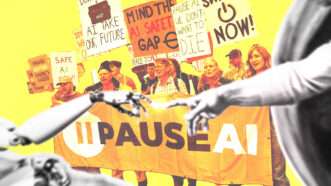
A new poll finds widespread support for slowing advanced AI, but government controls could create risks of their own.

The fear of superintelligence is driving decisions that make AI less transparent and more consolidated.
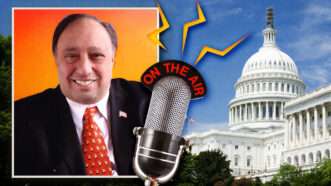
The push to mandate AM radios has brought Ted Cruz together with Bernie Sanders.
The Clarity Act's ethics provisions leave plenty of room for the president to keep profiting, and its regulatory framework hands bureaucrats too much discretion.

Anthropic's CEO wants federal regulation that would slow down AI (and his competitors' innovations). Has that ever worked?

Dario Amodei is calling for coordinated international limits on AI development while Anthropic prepares to go public.

A challenge to the federal prohibition on home distilling could give the Supreme Court a chance to rein in Congress’ Commerce Clause power.

It’s Eli Lilly vs. RFK Jr. in a battle over the rules around retatrutide.
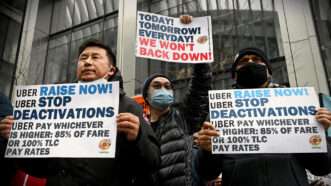
A federal judge temporarily blocked it from taking effect. But the legal fight is ongoing.
Bureaucrats who intend to do good still restrict competition and suppress liberty.

Charles and Elizabeth Copley have big plans for their 50-acre property, but the town insists they need a business license to let people to hike or walk their dogs.

From Texas to Ohio, political candidates are backing voters’ bad arguments for opposing data centers.


Occupational licensing raises costs and limits mobility without improving safety.

The misleadingly named "Delivery Protection Act" would require companies like Amazon and FedEx to directly hire employees for last-mile delivery, rather than contracting this service out to subcontractors.

Taxpayers shouldn’t have to pay for the royal family’s security, but British law prevents them from paying for armed security themselves.

Despite the Supreme Court's best efforts to rein them in, federal regulators continue to abuse their authority under the Clean Water Act.

California notoriously fought to do the same, which led to a slew of exemptions and job declines.

To fly a drone out of sight, you must get airline-level certification, which requires a lengthy approval process from the Federal Aviation Administration.
The authors recognize the need to reconsider policies that make it hard to innovate and build, but do not ask why they and their allies were blind to such concerns for so long.
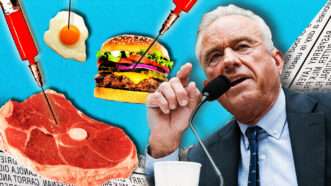
A proposed FDA rule would require food manufacturers to disclose ingredients they deem safe, which the agency admits would have a “significant economic impact” on small businesses.
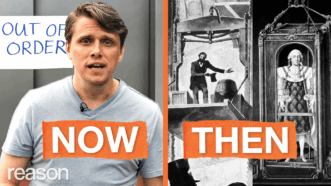
America’s elevator shortage is making housing more expensive, buildings less accessible, and cities less dynamic—all because of bad regulations and union protectionism.

In The Purge: but for Sex, everyone takes a crackdown on sexual freedom for granted.
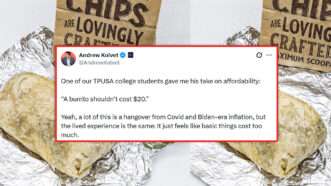
Americans are angry because everyday goods are much more expensive, and politicians think they should “stop whining.”
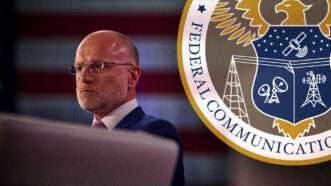
It's not clear if the agency even has the legal authority to make the change. But if it goes through, there's little to worry about.

Plus: Congress struggling to regulate college sports, looking at the economics of World Cup hosts, and why are golf shows all the same?

A bipartisan bill would give the Department of Homeland Security sweeping power to shut down powerful AI systems, with serious costs for competition and security.

The BLT—a delicious celebration of the power of markets—exemplifies political attacks on the free movement of goods and people.

Standard minimum wage and overtime laws now apply to the state's goat herders, whose animals clear brush and reduce fire danger. The costs are unsustainable.

This year’s rent freeze is just the latest regulation pushing New York City’s rent-stabilized housing stock toward financial and physical collapse.

Supersonic flight is legally limited to the ocean. But the federal bureaucracy is (slowly) changing, and at least one company wants to take advantage.


What’s at stake in Ream v. U.S. Department of the Treasury.

In a committee hearing yesterday, Alexandria Ocasio-Cortez complained about data centers' impacts on rural areas and industrial parks.
Celebrate your independence with a subscription to Reason magazine, your most trusted source of honest, insightful news and analysis.




