
Last of the Neocon 'Three Amigos': Lindsey Graham Dies Unexpectedly
The one thing Graham was consistent about was his enthusiasm for foreign wars.


The one thing Graham was consistent about was his enthusiasm for foreign wars.

Firing a toy gun out of a camera-covered robotaxi while underage drinking was never going to end well.
Newly published dashcam footage shows a sheriff’s deputy driving recklessly to pull over an actress he’d met while working on the set of the TV show Bad Monkey.
Newly declassified files reveal that J. Edgar Hoover wanted to prosecute the NSA’s future scholar in residence for collecting cryptography manuals.
Neil Gorsuch proposes an alternative to a Fourth Amendment standard that has proven to be an unreliable safeguard against government snooping.
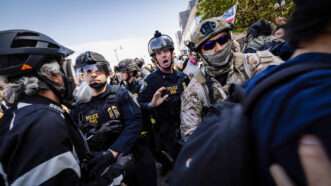
A new lawsuit accuses the Trump administration of violating the First Amendment rights of its critics by issuing warning notices to them.
A look back on a year of immigration enforcement expansion funded by the OBBBA.
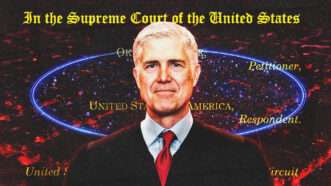
The justice argues that the "reasonable expectation of privacy" test and the third-party doctrine are indefensible in theory and unworkable in practice.
The Supreme Court could be poised to decide whether it's you or Big Tech companies.
How Trump rebranded the war on drugs as a fight against illegal immigration

The court said the law—which would require age verification for everyone—constitutes only a “marginal burden” and "does not raise meaningful concerns about muting valuable protected discourse."
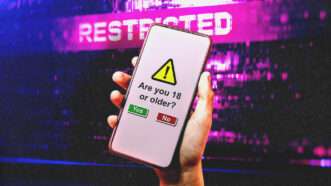
The U.K. says tech companies have three months to stop minors from sending or receiving nude images—and universal identity checks for phone users may be the only way forward.

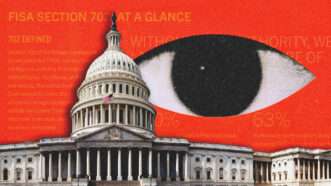
It’s long past time to open federal surveillance powers to scrutiny and reform.

Miller says it is "madness" to expect law enforcement to get a warrant before spying on Americans' electronic communications.

The documents reveal BusPatrol’s plan to equip tens of thousands of school buses with license plate readers and share the data with law enforcement.
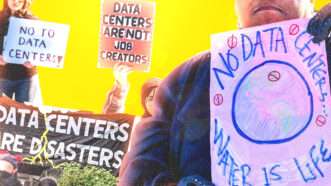
Plus: Plan B for STIs, justifying "deadly force" to protect fertilized eggs, and more.

If we want powerful AI systems to respect liberty, now is the time to train them to be more libertarian.

The ruling is a victory not just for one Texas title company, but for the principle that agencies like FinCEN can only do what Congress actually authorized.
U.S. citizens are being monitored and punished with technology meant to battle illegal immigration.

Department of Homeland Security
Plus: FISA reauthorization, driverless trucks in California, and an Epstein suicide note.

Plus: FISA reauthorization passes the House, a very capitalist museum, escalation in the redistricting wars, and more...

Cars are already spying on drivers. A 2021 law requires manufacturers to install more tracking technology.
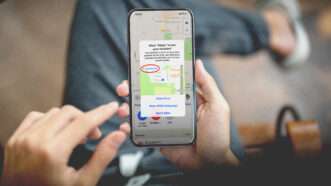
"Geofence" searches illustrate the perilous combination of modern technology and deference to law enforcement.
Sen. Ron Wyden warns that Americans would be “stunned” at how officials have used the law.
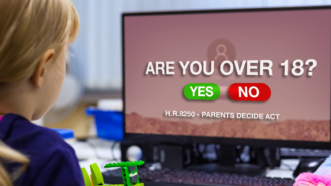
Plus: The war with Iran is raising condom prices, increased legal liability for chatbot advice could backfire, and more...
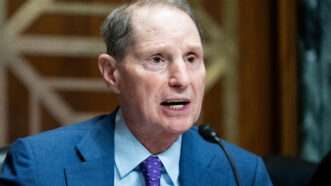
Plus: The House passes a short-term FISA extension, Ron Wyden urges fellow Senate Democrats to oppose a "clean" bill, and Norway gets robot buses.
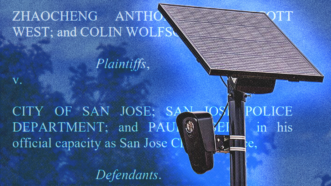
The city has created a network of nearly 500 cameras that routinely monitor innocent people as they go about their daily lives.
The president once said he wanted to kill warrantless electronic spying. So much for that.

Plus: New York wants to tax second homes, water in the Dupont Circle fountain, Polish robots chase wild boars, and more...

Following a backlash to its Super Bowl commercial, Ring owner Amazon announced that it was canceling a planned partnership with Flock Safety.

A new book revisits this 50-year-old Watergate report as President Donald Trump pursues his own politically motivated investigations.

The British Empire evacuated the Chagos Islands to build a military base, which the U.S. is using in the Iran War. Now, a court ruling is giving the original owners hope of going home.

She spent nearly six months in jail.

The case could give the Court a chance to clarify what a "closely regulated" business is and what constitutional protections it enjoys.

The president is much less concerned about the law's potential for overreach now that he's in charge of the government wielding it.
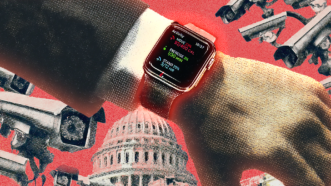
Government-backed biowearables could generate vast streams of personal health data with few legal safeguards.

Plus: Donald Trump vs. Thomas Massie, Republicans preparing to kill the filibuster for a very dumb reason, explosions in the Strait of Hormuz, and more...

Unlike the MetroCard, the OMNY system requires train and bus riders in New York City to give their name and phone number to the government.


Technological innovations allow the authorities to see who has visited whole geographic areas.

House and Senate committees were unfazed by the obvious First Amendment problems with the proposed Statewide Counterintelligence and Counterterrorism Unit.

Plus: AI for mass surveillance, Alaskan lawsuit to decriminalize prostitution, "enhanced" British regulation of streaming services, and more…

Pete Hegseth has threatened to invoke the Defense Production Act to force Anthropic to come around.

The Trump administration will start collecting social media account information on immigration forms.

When former LSD kingpin Seth Ferranti was pulled over in Nebraska, police claimed a traffic violation.

And paving the way for increased surveillance of all women
Celebrate your independence with a subscription to Reason magazine, your most trusted source of honest, insightful news and analysis.




