
The Volokh Conspiracy

Mostly law professors | Sometimes contrarian | Often libertarian | Always independent | Est. 2002

The Volokh Conspiracy

The Quid Pro Quo, Redux

Another step towards acknowledging the obvious

|

Alert readers will recall that back in February, there was considerable  disagreement aired here on the VC about whether or not the DOJ's decision to drop (at least temporarily) the criminal charges against NYC Mayor Eric Adams involved a "quid pro quo," something like:

"Use your mayoral powers to give federal immigration agents greater access to NYC facilities (such as Rikers Island and other prisons) (quid) and we won't prosecute you for bribery and corruption (quo)."

It seemed abundantly clear to me - bordering on the obvious - that there was such a quid pro quo,[1] whether or not it had been expressed out loud or merely, as Justice Kennedy put it once, with "knowing winks and nods."[2] As District Judge Ho put it, in his opinion dismissing the indictment[3]:

"Everything here smacks of a bargain: dismissal of the Indictment in exchange for immigration policy concessions."

Josh Blackman and Paul Cassell, however, thought otherwise.[4]

This question (of whether there was an improper quid pro quo) has come up once again, in a rather interesting and unusual context: a case in NY State court, Council of the City of New York v. Eric Adams in his official capacity as Mayor. As the caption indicates, Plaintiff is the NY City Council – the city's main legislative institution – and it is suing the current Mayor, seeking to nullify an Executive Order that the Mayor issued six days after the case against him had been dismissed.[5] The E.O. in question (E.O. 50) authorized the NYC Department of Corrections to allow federal ICE agents to conduct operations, and to maintain a permanent presence, at the Rikers Island detention facility.

The Council's claim, basically, is that

  • Adams had a "personal or private interest" in the subject matter of the E.O. because of the deal he had made with federal prosecutors ("cooperate or we'll prosecute");
  • Because of that personal or private interest, he was required to recuse himself from the matter at hand; and
  • Under NY law, a failure to recuse oneself from taking action in which one has a "personal or private interest" renders the action null and void.

The court – NY Supreme Court[6] – issued a TRO in late April, enjoining the City from implementing EO 50, and then, last week, converted that into a preliminary injunction to the same effect. On the quid pro quo question, the court found:

"[The City Council] has shown a likelihood of success in demonstrating, at a minimum, the appearance of a quid pro quo whereby Mayor Adams publicly agreed to bring ICE back to Rikers Island in exchange for dismissal of his criminal charges.  This showing is grounded in

Mayor Adams' public statements;

Mayor Adams' criminal defense attorney's written overtures to the DOJ;

The temporal proximity between these overtures and [DOJ's] directive to dismiss the criminal charges against Mayor Adams;

Statements from former Acting U.S. Attorney Danelle R. Sassoon and Assistant U.S. Attorney Hagan Scotten;

Homan's statement that he will be "in [Mayor Adams'] office, up his b___, saying 'Where the hell is the agreement we came to?"; and

The written findings by District Judge Dale Ho."

I assume that this decision will be appealed by the Mayor, though I have no idea whether or not NY state law allows for appellate review of interlocutory appeals. Things could get interesting if the matter goes to trial.


[1] My position [see here, here, here, and here] was (and is) that the DOJ's motion to dismiss the charges without prejudice was an outrageous and improper attempt to use the threat of criminal prosecution as a means to pressure a public official into co-operating with federal immigration policies. District Judge Ho agreed; his opinion is here, and well worth a quick read.

[2] Evans v. United States, 504 U.S. 255, 274 (1992) (Kennedy, J., concurring in part and concurring in the judgment) ("The official and the payor need not state the quid pro quo in express terms, for otherwise the law's effect could be frustrated by knowing winks and nods.").

[3] Judge Ho did not decide whether there was, or was not, an unlawful quid pro quo (though I think it is fair to characterize him as deeply suspicious). He did ultimately grant the DOJ's motion to dismiss the indictment against Adams, largely on the grounds that

". . . the Court cannot order DOJ to continue the prosecution, and it is aware of no authority (outside of the criminal contempt context) that would empower it . . . to appoint an independent prosecutor. . . .

[T]he Court would be overreaching if it attempted to force this prosecution to continue. [A] court is not situated—either in terms of institutional competence, or as a matter of its proper role in our constitutional system—to make an assessment as to whether a prosecution "should" continue. A court's role is to preside over cases, not to determine if a case should be prosecuted."

But he denied the most odious part of the DOJ's request: that the dismissal be without prejudice, which would have constituted a fairly obvious attempt to ensure Adams' continuing cooperation in compliance with the underlying deal.

[4] For Blackman, see here and here; for Cassell see here and here.

[5] I know absolutely nothing about the principles of standing that apply in NY state court, but it does appear that this kind of thing is permitted under those principles (though it would be extremely unlikely to hold up under federal standing rules).

[6] As I'm sure most VC readers are aware, the NY Supreme Court is a trial court, and not, actually, the supreme court of NY; that status belongs to the NY Court of Appeals.

Free Speech

No Free Speech Right to Name Change

|

From In re Argue, decided June 2 by Minnesota District Court Judge Charles Webber:

Nautica Alaja Argue wants to change his name to Navier Argue, explaining that he wants his name "to accurately align with his gender identity as a transgender individual." But Argue is a convicted felon {convicted [in 2022] of numerous aggravated robberies and other robberies … that involved more than a dozen separate victims} and therefore can change his name only as allowed by Minn. Stat. § 259.13.

That statute provides that when a prosecuting authority objects to a felon's name-change application (as Ramsey County has done here), a court can grant the application only if the applicant either: (1) "proves by clear and convincing evidence that the request … will not compromise public safety" (among other things), or (2) establishes that failure to allow the name change "would infringe on a constitutional right of the [applicant]." … Argue has not carried his burden of proving by "clear and convincing evidence" that changing his name "will not compromise public safety," and failure to grant his name-change request would not infringe on a recognized constitutional right.

The details related to the application of the statute are in the opinion (for more on Argue's original crimes, see this newspaper article); but here's the rejection of Argue's constitutional claim:

Read More

Free Speech

Court Rejects Lawyer's and Client's Libel Claim Over Inside Higher Ed's Coverage of Title IX Suits

The court appears unmoved by the claim that an earlier ruling sent the "wrong message ... that people of color (all the plaintiffs are Latino) do not have a chance to get their day in this Honorable Court."

|

From last Friday's opinion by Philadelphia County (Pa.) Common Pleas Court Judge Lyris Younge in Jauregui Law Firm v. Inside Higher Ed (appeal pending):

Plaintiffs Jauregui Law Firm, Raul Jauregui Esquire, and Daniel Boye … [sued] Defendants Inside Higher Ed, Johanna Alonso, Dyller Solomon Law Firm and Barry Dyller Esquire … alleging defamation, false light and commercial disparagement. The suit arises from an article authored by Johanna Alonso and published by Inside Higher Ed on June 13, 2023 …[, which] is a brief synopsis of a series of Title IX suits stemming from an alleged rape that occurred at King's College in Wilkes-Barre Pennsylvania. [The article appears to be this one, though it bears a June 14, 2023 date. -EV]

In under five pages, the Article describes an initial Title IX suit filed by a female student against Plaintiff Daniel Boye, three Title IX counter-suits filed by Mr. Boye against the female student, her mother and her friend, and yet another suit filed by the three women against Mr. Boye and Mr. Jauregui alleging that Mr. Boye's counter-suits constituted an abuse of the legal process and were a deterrent designed to intimidate the women. The Article notes that Mr. Boye was expelled from King's College. In addition, the Article quotes attorneys involved in the suits (including Mr. Jauregui) and a Title IX expert, discusses the potential legal implications of Title IX "countersuits", and whether Title IX proceedings at colleges constitute quasi-legal proceedings….

Defendants are entitled to judgment as a matter of law because the Article is substantially true and accurate. The Plaintiffs claim that the Article is "vile," "drips with venomous derogatory false fact," and was written and published by "depraved liars … who claim to be journalists." However, despite the Article's brevity, the Plaintiffs are unable to point to any material falsity contained therein.

Read More

Immigration

Federal Court Rules Against Trump Plan to Condition Federal Transportation Grants to States on Cooperation with Federal Deportation Efforts

The ruling is the latest in a long line of court decisions striking down executive efforts to attach conditions to federal grants that were not approved by Congress.

|

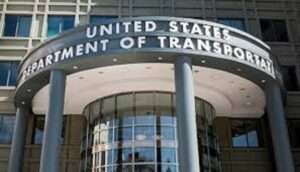
US Department of Transportation

Yesterday, in a lawsuit brought by twenty state courts, federal District Court Judge John J. McConnell, Jr. ruled the Trump Administration violated the Constitution when it tried to deny federal transportation grants to states that refuse to help federal authorities detain and deport supposed illegal migrants. The court ruled the Department of Transportation acted illegally because Congress had not authorized it to impose any such conditions on transportation grants, and because immigration enforcement has no meaningful connection to the purpose of the grants:

Defendants' conduct violates the [Administrative Procedure Act] because they acted outside of their statutory authority when they issued the Duffy Directive and imposed the IEC categorically across all U.S. DOT grants when Congress appropriated those funds for transportation purposes, not immigration enforcement purposes….. Congress did not authorize or grant authority to the Secretary of Transportation to impose immigration enforcement conditions on federal dollars specifically appropriated for transportation purposes….

These conditions violate the Spending Clause as well; the IEC is not at all reasonably related to the transportation funding program grants whose statutorily articulated purposes are for the maintenance and safety of roads, highways, bridges, and development of other transportation projects. The Government does not cite to any plausible connection between cooperating with ICE enforcement and the congressionally approved purposes of the Department of Transportation. Under the Defendants' position, the Executive would be allowed to place any conditions it chose on congressionally appropriated funds, even when it would be entirely unrelated to
the Department's purpose. Such is not how the three equal branches of government are allowed to operate under our Constitution.

This ruling follows a similar April decision by another federal district court, barring the Trump Administration from denying federal grants to "sanctuary" jurisdictions, which refuse to assist some types of federal immigration enforcement policies.

The two rulings are obviously right, and completely predictable - and, in fact, predicted by me. During Trump's first term, federal courts repeatedly struck down administration efforts to pressure immigration "sanctuary" jurisdictions by  attaching conditions to federal grants that were never authorized by Congress. Last November, I predicted we would see a repetition of this pattern under Trump 2.0. It wasn't a hard prediction, and I don't deserve any great credit for it.

In the November post, I noted longstanding Supreme Court precedent holds that conditions on federal grants must 1) be enacted and clearly indicated by Congress (the executive cannot make up its own grant conditions), 2) be related to the purposes of the grant in question (here, transportation grants cannot be conditioned on immigration enforcement), and 3) not be "coercive." Trump repeatedly ran afoul of these requirements in his first-term efforts to coerce sanctuary cities. And it would seem he hasn't learned from his errors.

For more detail, see my Texas Law Review article assessing litigation arising from Trump's first-term actions targeting sanctuary jurisdictions. In that article and elsewhere, I also explain why immigration sanctuaries (and conservative gun sanctuaries) are beneficial, and why judicially enforced limits on conditional grants provide valuable protection for federalism and the separation of powers.

Judge McConnell's decision is just a ruling on a preliminary injunction. There is no final decision in this case, and the Trump Administration will probably appeal. But barring a radical break with precedent, that appeal and others like it are extremely likely to fail - and for good reason.

More Allegations of Race/Gender/Etc. Focus in Harvard Law Review Screening Process

|

From Aaron Sibarium (Washington Free Beacon):

When the Washington Free Beacon published documents showing how the Harvard Law Review selects articles based on race, the law review insisted those documents had been taken out of context.

The journal claimed the Free Beacon had quoted "selectively" from "five internal memos going back more than three years," adding that the Harvard Law Review "considers several thousand submissions annually."

"The Review does not consider race, ethnicity, gender, or any other protected characteristic as a basis for recommending or selecting a piece for publication," the journal wrote in a fact sheet published on May 27.

But according to new documents obtained by the Free Beacon, the law review eliminates more than 85 percent of submissions using a rubric that asks about "author diversity." And 40 percent of journal editors have cited protected characteristics when lobbying for or against articles—at one point killing a piece by an Asian-American scholar, Alex Zhang, after an editor complained in a meeting that "we have too many Yale JDs and not enough Black and Latino/Latina authors."

Read More

N.Y. Times Magazine Reveals Internal Conflicts On The Left With Skrmetti

The groups presented a unified front, but with a 6-3 loss, recriminations are flying.

|

As the saying goes, success has many parents, but failure is an orphan. Such is Skrmetti. Barely twenty-four hours after the landmark decision, the New York Times Magazine published a lengthy profile of the case. I would encourage you to read the entire piece. We often think of the political left as some sort of monolithic and coherent institution of group think. But this article reveals many fractures on the left, some of which I suspected, but had no first-hand knowledge.

First, the article speaks to how quickly the national conversation changed around transgender rights. During the lead-up to Windsor and Obergefell, I often remarked how effective the social movement was for gay marriage. The argument was simple: allowing this couple to marry will in no way affect traditional marriage. Even the phrase marriage equality was so easy to grasp! I don't think things were so simple, but the messaging was effective. Moreover, the movement took decades to develop. People had time to accept the argument on their own terms.

However, the argument for transgender rights felt much different. Most Americans had no clue what "cisgender" or "gender affirmative care" meant. Yet, if people refused to uses these neologisms, they were cancelled and deemed bigots. And, unlike with gay marriage, the transgender movement necessarily required others to make changes. People would have to accept transgender athletes in female sports. Women who had privacy concerns about bathrooms would have to just suck it up. And that was before doctors started telling parents they could either have a dead daughter or a live son, coupled with school districts that deceived parents. All of this seemingly happened in a few years. Trump had so much influence in averting this movement.

Second, Bostock was a case about LGB as well as T, but the T only followed from the (wrong) textualist argument that Justice Gorsuch convinced himself of. And the Times articles reveals how the advocates, including Chase Strangio of the ACLU, tried to bamboozle Gorsuch directly:

Indeed, as Strangio recounted in an interview later that year, the lawyers had spent months workshopping just such a path to victory, ultimately landing on a simple argument: All the justices needed to accept was that Stephens would not have been fired for asking to wear women's clothing at work if her sex was female.

"So, fine," Strangio explained. "Say it's assigned sex at birth, say it's whatever you want — but it's because of sex." At oral argument, another A.C.L.U. lawyer reassured Gorsuch, who was considered the key vote, that protecting trans people would not lead to social upheaval — assurances that Strangio privately chafed at but that he recognized as tactically effective. "We wanted them to apply the law," Strangio said. "And we wanted them, particularly Gorsuch, to believe that it wasn't a big deal."

But Strangio--who sees the Supreme Court as "vile"--saw what Justice Gorsuch did not:

Yet in practice, Strangio and other civil rights lawyers believed that Bostock was a very big deal. In their view, they had successfully maneuvered the Supreme Court — a "vile institution," as Strangio put it — into setting a far-reaching judicial precedent. At the time, other pathways to expand rights for L.G.B.T.Q. people were narrowing. Despite progress in left-leaning states, legislation to enshrine housing, workplace and other protections at the federal level had stalled in Congress, in part because L.G.B.T.Q. groups refused to consider carve-outs — demanded by otherwise sympathetic Republicans — to protect religious institutions. Bostock seemed to offer a way to attain those rights without the compromise and horse-trading of legislation.

Yes, Bostock killed the possibility of legislative compromise--yet another reason why this decision is so inconsistent with how Gorsuch usually approaches the judicial process.

Third, transgender activists like Strangio thought momentum was on their side--as the saying goes, they were on the right side of history. Indeed, Merrick Garland had to be pushed to file in support of the Tennessee challenge:

When Tennessee's ban passed in February 2023, lawyers in the department's civil rights division lobbied to move aggressively. The attorney general, Merrick Garland, was at first skeptical. In conversations, Garland and his advisers weighed whether the case was strong enough to merit the time and resources it would consume if the civil rights division were to intervene. Eventually, though, Garland signed off.

I am reasonably confident that Garland was lobbied by Solicitor General Elizabeth Prelogar, his former clerk, and someone who carried great influence. Prelogar was almost certainly a source for this story.

Read More

crime victims

Can Federal Prosecutors Avoid Judicial Review of Dismissal Motions by Agreeing in Advance With a Defendant Not to Prosecute?

The Justice Department and Boeing are trying that dubious maneuver, which eviscerates the requirement in the federal rules that judges must approve dismissal motions.

|

Currently before Judge O'Connor in the long-running criminal prosecution of Boeing is the Justice Department's recently filed motion to dismiss. I've blogged about this case many times before, including  here, here, and here. Boeing is facing a federal conspiracy charge, filed in January 2021, for defrauding the FAA about the safety of Boeing's 737 MAX aircraft. Late yesterday, I filed an opposition to the motion to dismiss for fifteen Boeing 737 MAX crashes victims families. The opposition not only presents strong objections to the Department walking away from the prosecution, but also presents an important separation of powers question about whether courts will continue to have the power to review prosecutors' motions to dismiss.

Some background about dismissal motions is helpful helpful here: Under Federal Rule of Criminal Procedure 48(a), a dismissal requires "leave of court." This judicial review has been part of the rules for more than 80 years and is designed to check potential prosecutorial abuses. It is standard practice for federal courts to review dismissal motions, and even hold hearings on them if there is some question about the grounds for dismissal. VC readers may recall my (and  my co-bloggers) earlier posts, for example, on the dismissal motion in the Mayor Adams case.

In yesterday's filing, my lead argument opposing the pending motion to dismiss the Boeing charge concerns an unprecedented maneuver by the Justice Department. Before filing its motion to dismiss with the Court, the Justice Department negotiated with Boeing a non-prosecution agreement (NPA). The parties included in their NPA a provision in which the Department agreed not to further prosecute Boeing. This provision took effect several weeks ago, even before Judge O'Connor has had an opportunity to rule on the currently pending motion to dismiss.

In my opposition for the victims' families, I explain why this subterfuge would destroy Rule 48(a)'s judicial review requirement:

If this Court approves the parties' maneuver in this widely publicized case, then this unprecedented approach will likely become the blueprint for all future dismissal motions in federal criminal prosecutions. Before filing a motion to dismiss under Rule 48(a), the Government and the defendant will simply enter into a non-prosecution agreement containing the no-further-prosecution language found here. Then the Government will file its dismissal motion, and any action that the Court might take thereafter becomes essentially irrelevant. For example, even if the Court were to provide a perfectly good (but previously unconsidered) reason for the Government to move forward with prosecuting the case, the Government has already committed not to do so.

Against this backdrop, approving the Government's and Boeing's audacious scheme would effectively block Rule 48(a) from achieving the purposes it was designed to serve. The Rule provides judicial review of prosecutors' dismissal motions so that "[t]he public and crime victims, not to mention the government and defendants, necessarily and correctly see accountability with Article III from start to finish." Ryan, 88 F.4th at 625 n.9. It has long been recognized that, by adopting Rule 48(a), "the Supreme Court intended to … vest[] in the courts the power and duty to exercise a discretion for the protection of the public interest …." Id. at 628 n.12 (citing Cowan, 524 F.2d at 511). As a result, "[p]ublic perception and confidence in the criminal justice system assume that when criminal charges are submitted for judicial resolution, the courts vigilantly will enforce the public interest …." Id. at 626.

The Government and Boeing's private agreement to evade any judicial protection of the public interest is "'clearly contrary to manifest public interest public interest' as assessed 'at the time of the [motion] to dismiss.'" Id. at 627 (quoting Hamm, 659 F.2d at 629). Simply put, it cannot be in the public interest to eliminate the judiciary's public interest review. Tautologically, the very purpose of public interest review is to protect the public interest. For whatever reason, the Government and Boeing may find that review distasteful. But it is this Court's obligation to enforce Rule 48(a)'s mandate.

This maneuver also violated the families' rights under the Crime Victims' Rights Act (CVRA). My brief explains that during two meetings with the families, the Justice Department suggested that it was going to allow Judge O'Connor to consider the motion to dismiss before the Department entered into an agreement blocking further prosecution of Boeing:

By deceptively creating the impression that it would proceed through the normal course of allowing a judicial decision on its Rule 48(a) motion to dismiss, the Government deprived the victims' families of their "reasonable right to confer with the attorney for the Government in the case." 18 U.S.C. § 3771(a)(5). While the Government need not confer about every minor detail of a proposed resolution, the no-further-prosecution provision is a staggeringly important and unprecedented provision that the Government should have disclosed and discussed with the victims' families. The "reasonable right to confer" would necessarily encompass such an important provision, particularly where the victims' families and their counsel could—and did—assume that the Justice Department would not maneuver to avoid Rule 48(a) scrutiny. For the same reasons, concealing from the victims' families this shift from normal processes violated the families CVRA right to be "treated with fairness." 18 U.S.C. § 3771(a)(8).

I also advance other arguments against the motion to dismiss. Read More

Slavery

Writings on Juneteenth, its Meaning, and its Significance for American Liberty

Compendium of links to my writings about the holiday celebrating the abolition of slavery.

|

NA

Today, is Juneteenth, the federal holiday commemorating the abolition of slavery - the greatest triumph of freedom in American history. In this post, I compile some links to my writings relevant to the holiday and its significance. All are posts published here on the Volokh Conspiracy blog.

"Juneteenth and the Universalist Principles of the American Revolution," June 19, 2021. This post explains how abolition was a fulfillment rather than a repudiation of the principles of the American Revolution, despite attempts of some on both right and left to claim otherwise.

"Reflections on Juneteenth," June 19, 2024. This post extends and elaborates on the points made in the 2021 post, and condemns the lame culture war over the holiday.

"Slavery, the Declaration of Independence and Frederick Douglass' 'What to the Slave is the Fourth of July?'", July 4, 2020. Douglass's famous speech sheds light on some of America's greatest evils - but also on the great good done by the Revolution and Founding. This post - and Douglass's speech - are not about Juneteenth, as such. But they are obviously relevant. Douglass rightly argued that the principles of the Revolution required the abolition of slavery - while also condemning the hypocrisy of the many white Americans who claimed otherwise.

"The Case Against the Case Against the American Revolution," July 4, 2019. A rebuttal to longstanding arguments - advanced by critics on both right and left - that the Revolution did more harm than good. The claim that the Revolution somehow set back abolition is a central argument of many of those critics. I explain why that argument is wrong.

On Frederick Douglass, the Declaration of Independence, and Juneteenth

Lucas Morel and Jonathan White channel the insight and vision of Frederick Douglass.

|

Today is Juneteenth. The most recently recognized federal holiday (formalized in 2021 as Juneteenth National Independence Day), Juneteenth recognizes the freeing of enslaved people in Texas at the end of the Civil War.

In today's Wall Street Journal, Lucas Morel and Jonathan White write on the day's significance:

Juneteenth joined Independence Day as a federal holiday in 2021, celebrating the day the Emancipation Proclamation freed slaves in the outer reaches of rebel-held territory. Critics of Lincoln's proclamation—now as then—say it was ineffective because it took so long to be enforced. Yet Frederick Douglass, who devoted his life to freedom for black Americans, understood that paper declarations sowed the seeds of a more perfect union.

On June 19, 1865, Maj. Gen. Gordon Granger declared at Galveston, Texas, that "all slaves are free" by virtue of Lincoln's edict dated Jan. 1, 1863. It took more than two years to make the promise of freedom a reality.

As Morel and White note, Frederick Douglass saw the Declaration of Independence as a commitment to individual liberty and human dignity that would be fulfilled over time. In the same way, the Emancipation Proclamation was issued in 1863, but not given full effect throughout the southern states until the end of the war in 1865 (and slavery would not be wholly eradicated under U.S. law until ratification of the 13th Amendment).

They write:

Although Douglass disagreed with Lincoln about the timing and rationale of emancipation, he predicted that Lincoln's proclamation would stand as "the greatest event of our nation's history, if not the greatest event of the century," placing "the North on the side of justice and civilization, and the rebels on the side of robbery and barbarism." Douglass and Lincoln alike clearly took inspiration from the Declaration of Independence—America's first Emancipation Proclamation. Both were committed to realizing the promises of 1776, nearly a century later.

Juneteenth and Independence Day honor the struggle of an imperfect people on an imperfect path to freedom and equality. American history—"a heap of Juneteenths," in the words of Ralph Ellison—can be read as one journey, full of setbacks and triumphs, toward realizing the truths of the Declaration of Independence. That "ink and paper proclamation," nearly 250 years old, established a way of life that remains, in Lincoln's words, "the last best hope of earth."

Of additional note, Morel and White have a forthcoming volume of Douglass's writings on Abraham Lincoln. I very much look forward to reading it.

Guns

Guns, Felons, Religion, and Islam

|

From U.S. v. Thompson, decided Monday by Judge Karen Marston (E.D. Pa.):

On August 12, 2004, Thompson was sentenced to eight to twenty years' imprisonment after being convicted in the Court of Common Pleas of Philadelphia County for Attempted Murder, Aggravated Assault, Carrying Firearms without a License, and Possession of an Instrument of Crime. He was paroled on August 15, 2011. While still on parole on December 20, 2022, Thompson allegedly possessed a Ruger, Security 9, 9mm semi-automatic pistol loaded with fifteen live rounds of ammunition….

He was prosecuted for being a felon in possession, and argued, among other things, that this violated his religious freedom "by substantially burdening his ability to adhere to the Quran's requirement that he carry arms during prayer as a practicing Muslim":

RFRA "guarantee[s] more generous protections for religious freedom than are available under the Supreme Court's present interpretation of the First Amendment," by "proscrib[ing] government conduct which 'substantially burdens a person's exercise of religion' unless the government can demonstrate, inter alia, that the burden is the 'least restrictive means of furthering a compelling government interest.'" …

Thompson identifies as a "devout Muslim" and "strict adherent" to the teachings of the Quran, "the central religious text in the practice of Islam [and] a revelation directly from Allah." According to Thompson, the Quran "requires him to carry arms" during prayer. (See Doc. No. 26-1 (a passage from the Quran attached to Thompson's motion, which purportedly states, "And when you are among them and lead them in prayer, let a group of them stand [in prayer] with you and let them carry their arms.").) He argues that § 922(g)(1) substantially burdens his ability to do so.

The court concluded that Thompson hadn't adequately alleged that he believes the Quran requires him to carry firearms:

Read More

Free Speech

News Site Can Be Prosecuted for Publishing Home Addresses of Police, Prosecutors, and Judges

So the New Jersey Supreme Court unanimously held Tuesday; the decision allows civil liability as well as criminal punishment, once the government official demands that the newspaper (or anyone else) stop publishing this information.

|

From the opinion in Kratovil v. City of New Brunswick:

The Legislature enacted Daniel's Law "to enhance the safety and security of certain public officials in the justice system," thereby enabling those officials to "carry out their official duties without fear of personal reprisal." Subject to strict notice requirements [under which the official must first demand that the information be removed and not published -EV], Daniel's Law prescribes a procedure by which the home address and unpublished home telephone number of a public official designated as a "covered person" can be protected from disclosure or redisclosure. Daniel's Law imposes civil liability on persons, businesses, and associations that violate the statute, and provides for criminal liability for reckless or intentional violations…

In 2023, plaintiff Charles Kratovil learned through a records request pursuant to the Open Public Records Act (OPRA), that the voting address of defendant Anthony Caputo, the New Brunswick Police Director, was in the Borough of Cape May. Kratovil began working on a story about Caputo's residence. After Kratovil disclosed Caputo's address to local officials, Caputo notified Kratovil that he was a covered person under Daniel's Law and requested that Kratovil refrain from republishing his exact home address.

The New Jersey Supreme Court upheld the statute. It cited various Supreme Court precedents, including Florida Star v. B.J.F. (1988), which held (in striking down a ban on publishing the names of rape victims):

We do not hold that truthful publication is automatically constitutionally protected, or that there is no zone of personal privacy within which the State may protect the individual from intrusion by the press, or even that a State may never punish publication of the name of a victim of a sexual offense. We hold only that where a newspaper publishes truthful information which it has lawfully obtained, punishment may lawfully be imposed, if at all, only when narrowly tailored to a state interest of the highest order, and that no such interest is satisfactorily served by imposing liability under [the Florida statute] … under the facts of this case….

And here's how it applied the precedents:

Read More

The First Meeting Of The White House Religious Liberty Commission

|

On Monday, the President's Religious Liberty Commission held its first public meeting. I was honored to testify on the fourth panel.

Panel 1

  • Mark Rienzi, President and CEO of the Becket Fund
  • Gerard Bradley, Professor of Law at Notre Dame Law School

Panel 2

  • Mark David Hall, Professor in Robertson School of Government at Regent University

Remarks by Attorney General Bondi

Panel 3

  • Barbara Elliott, Fellow of the Dominican School of Philosophy and Theology and Assistant Professor of Liberal Arts at Houston Christian University

Panel 4

  • Stephanie Barclay, Professor of Law at Georgetown Law Center
  • Josh Blackman, Professor of Law at South Texas College of Law Houston
  • Kristen Waggoner, CEO and President of Alliance Defending Freedom

Supreme Court

Supreme Court Rejects Constitutional Challenge to State Limits on Sex Transition Treatments for Minors

The Court's majority avoids the larger question of whether laws targeting transgender individuals should be subject to heightened scrutiny, but Justice Barrett did not.

|

The Supreme Court issued five opinions today, most notably its decision in United States v. Skrmetti, rejecting a constitutional challenge to a Tennessee law prohibiting certain medical treatments for gender dysphoria for minors (e.g. puberty blockers and hormones).

The decision produced 112 pages of opinions. Chief Justice Roberts wrote for a 6-3 Court. Justice Alito concurred in part and concurred in the judgment. Justice Thomas and Justice Barrett each wrote separate concurrences (the latter of which Justice Thomas also joined). Justice Sotomayor wrote the principal dissent, joined by Justice Jackson in full and Justice Kagan in part. Justice Kagan also wrote a separate dissent.

Writing for the Court, Chief Justice Roberts concluded that the Tennessee law did not target transgender individuals as a class. Accordingly, his opinion did not reach the question of whether a law that did target transgender individuals is subject to heightened scrutiny. With heightened scrutiny off the table, the Court applied rational basis review, which the Tennessee law easily satisfied.

Justice Sotomayor's dissent disagreed with the majority across the board, concluding that the law did target transgender individuals, should be subject to heightened scrutiny, and failed heightened scrutiny. Interestingly enough, Justice Kagan agreed with the first two parts of the dissent, but did not think the Court should reach the third question. Rather, Justice Kagan urged, the lower court should have been given the opportunity to apply heightened scrutiny in the first instance.

Justice Alito only concurred in the judgment because he concluded, like Justice Sotomayor, that the law should be understood as one targeting transgender individuals, but he concluded that heightened scrutiny was not required and agreed with the majority that the law satisfied rational basis.

Writing separately, Justice Barrett argued that even if the Tennessee law were interpreted to target transgender individuals, it should not be subject to heightened scrutiny because transgender individuals should not be considered a suspect class. In short: "The Equal Protection Clause does not demand heightened judicial scrutiny of laws that classify based on transgender status. Rational-basis review applies, which means that courts must give legislatures flexibility to make policy in this area." In this she was joined by Justice Thomas.

Justice Barrett's concurrence in Skrmetti (as well as her dissent in Perttu, rejecting the Court's expansion of jury trial rights under the PLRA) are interesting to note given recent claims that she has "drifted" to the left, or was never a particularly conservative justice.

Predictions For The Remaining 15 Cases

Barring any surprises, I do not expect any surprises.

|

Today the Court decided five new cases, including the blockbuster Skrmetti decision. I will have much more to say about that case in due course. For now, I will note that last night I concluded my post on Justice Barrett with this line:

There is always hope for tomorrow.

Indeed, tomorrow--that is today--brought hope! I try to be open-minded, and will treat each decision on its own terms. Based on my quick skim, there is a lot to be hopeful about.

Now, for predictions.

Based on my count, there are fifteen outstanding decisions. (Please email me if I've made any errors.)

All of the cases have been decided from the October, November, and December sittings.

In the January sitting, eleven cases were argued, and one was decided Per Curiam (remember TikTok?). There are five cases not yet decided: Hewitt, Stanley, Free Speech Coalition, McLaughlin, and R.J. Reynolds. Five Justices have not yet written: Thomas, Gorsuch, Kavanaugh, Barrett, and Jackson. I don't have any strong feelings about the assignments. I think that Free Speech Coalition will go to a Justice who raised kids in the digital age: either Kavanaugh, Barrett, or Jackson.

In the February sitting, eight cases were argued. Two remain outstanding: Gutierrez and Esteras. Justices Sotomayor, Gorsuch, and Barrett have not yet written for that sitting. Barrett probably has Gutierrez, a case about jurisdiction. Sotomayor, the former district court judge, probably has Esteras, a sentencing case.

In the March sitting, nine cases were argued. Four cases remain outstanding: Louisiana  v. Callais, Riley v. Bondi, FCC v. Consumers' Research, Fuld v. PLO, and Medina v. Planned Parenthood. Justice Thomas was assigned two EPA cases from this sitting, so he is done. That means one Justice likely does not have an assignment. Who has not yet written: Roberts, Alito, Kagan, Gorsuch, Kavanaugh, Barrett. I think the Chief will keep the Planned Parenthood case for himself. I think Alito has Callais, the Voting Rights case. I think Roberts assigned Consumers' Research to either Gorsuch or Kavanaugh, as they both have interest in delegation. Barrett has Riley, a nerdy jurisdictional case. And I think Kagan has the PLO case, which involves the Due Process Clause of the Fifth Amendment.

In the April sitting, ten cases were argued, and two were dismissed PC. Three remain outstanding: Kennedy v. Braidwood, Mahmoud, and Diamond Alternative Energy. Four justices have not yet written from April: Alito, Kagan, Kavanaugh, Jackson. I can see Roberts giving Justice Kagan Braidwood, after all of her bitter Appointments Clause dissents. She will have the satisfaction of reversing the Fifth Circuit. I hope Alito has Mahmoud, but Roberts could let Jackson write something narrow and harmless. Whoever didn't get Braidwood or Mahmoud will draw the short straw with Diamond.

The rest of the term seems fairly predictable. Barring any surprises, I do not expect any surprises.

Of course, my predictions are usually wrong, so please discount everything I wrote.

Equal Protection

Court Upholds Tennessee Restriction on Youth Gender Medicine

|

Off to a conference today, so I can't write about it in detail but the Court's syllabus on p. 1-5 seems to summarize the opinion (U.S. v. Skrmetti) well.

Here's one particularly interesting passage I noticed, from Justice Thomas's concurrence:

The Court rightly rejects efforts by the United States and the private plaintiffs to accord outsized credit to claims about medical consensus and expertise. The United States asserted that "the medical community and the nation's leading hospitals overwhelmingly agree" with the Government's position that the treatments outlawed by SB1 can be medically necessary. Brief for United States 35; see also Brief for Respondents in Support of Petitioner 5 (asserting that "[e]very major medical association in the United States" supports this position). The implication of these arguments is that courts should defer to so-called expert consensus.

There are several problems with appealing and deferring to the authority of the expert class. First, so-called experts have no license to countermand the "wisdom, fairness, or logic of legislative choices." FCC v. Beach Communications, Inc., 508 U. S. 307, 313 (1993). Second, contrary to the representations of the United States and the private plaintiffs, there is no medical consensus on how best to treat gender dysphoria in children. Third, notwithstanding the alleged experts' view that young children can provide informed consent to irreversible sex-transition treatments, whether such consent is possible is a question of medical ethics that States must decide for themselves. Fourth, there are particularly good reasons to question the expert class here, as recent revelations suggest that leading voices in this area have relied on questionable evidence, and have allowed ideology to influence their medical guidance.

Taken together, this case serves as a useful reminder that the American people and their representatives are entitled to disagree with those who hold themselves out as experts, and that courts may not "sit as a super-legislature to weigh the wisdom of legislation." Day-Brite Lighting, Inc. v. Missouri, 342 U. S. 421, 423 (1952). By correctly concluding that SB1 warrants the "paradigm of judicial restraint," Beach Communications, 508 U. S., at 314, the Court reserves to the people of Tennessee the right to decide for themselves.

Read More

More