
Tyler Cowen's Stubborn Attachments To Freedom and Prosperity: Podcast
The prolific George Mason University economist outlines his unabashedly libertarian argument for a government that does less and individuals who do more.


The prolific George Mason University economist outlines his unabashedly libertarian argument for a government that does less and individuals who do more.

Ford expects to lose $1 billion due to higher steel prices, while Caterpillar's stock dropped sharply this week after it said tariffs cost it $40 million.

Many people think Sweden is socialist, but its success comes from free markets.

But who, exactly, will be suffering?

Will ending capitalism also end global poverty? The for-profit magazine seems to think so.

All we have to show for 9 years of economic expansion is record amounts of debt, and all long-term fiscal problems ignored.
The president's agenda hurts American consumers and businesses.

Brian Riedl has a plan to stabilize the national debt at 95 percent of GDP. He says trying it might be political suicide, but the alternative is much worse.

The federal government spent $790 billion more than it taxed during fiscal year 2018. The deficit is about to get worse. Much worse.

Sometimes a bankruptcy isn't evidence of some hedge fund manager's hubris or humiliation, but merely a reminder that risk is part of capitalism.

It's like trying to plunge lasagna out of your kitchen sink.

In a bold new book about Hayek, the George Mason economist says "too much time and effort has been put into repackaging and marketing a fixed doctrine of eternal truths."

Price gouging is not the evil many officials make it out to be.
New report declares world must be off fossil fuels entirely by 2050.

An in-depth look at New York's car wash industry, and the real world consequences of politicians interfering with a complex industry they don't understand.
It's time to find out how deep in the red our country is.

Gene Epstein of Barron's and Bhaskar Sunkhara of Jacobin will debate whether "socialism is more effective than capitalism in bringing freedom to the masses."
Paul Romer overturns limits-to-growth nonsense, and William Nordhaus projects climate change damages.

Tariffs on aluminum, silicone, and dyes are already causing pain for toymakers, and the prospect of additional tariffs is anything but fun and games.

"We consistently allow the government to develop…programs like this that sound really great on paper but have no practical benefit," Keith Bradford says.


Economist Mark J. Perry talks about rising incomes, flattening inequality, low unemployment, and why none of it seems to make us feel better.
In the long term, deficit-financed tax cuts would be a drag on the economy.

Economic freedom is good-whether in itself or because of the longevity, prosperity, and associated liberty it brings.
New Census data showing record levels of income and no increase in inequality should be cause for celebration.

The passage of tax reform 2.0 blows a huge hole in the budget, and a much-touted opioid bill might just make the crisis worse.

The libertarian humorist talks about his new book, how to drink in war zones, and why the Chinese are more American than most U.S. citizens.
Journalist and Soho Forum co-founder Gene Epstein on economists' romance with strongmen and his upcoming debate with Jacobin's Bhaskar Sunkara.

Trump says tariffs aren't hurting the economy, new steel plants are opening up, and some stuff about Canada. It's all wrong.

Soybean prices have fallen as much as 30 percent since planting season, and harvest is fast approaching.

One has generated more wealth for more people than any other system ever tried, while the other has produced a long track record of failure, misery, and death.

The GOP's willingness to follow Trump down an anti-trade cul-de-sac risks alienating voters who could be crucial on the margins of close races.
At nearly every opportunity, the GOP has made the nation's fiscal outlook worse.

Walmart warns the Trump administration it may be forced to raise prices in response to tariffs.

The unseen consequences of the trade war matter as much as the more visible.

The next Reason-Soho Forum debate in New York features Barron's Gene Epstein vs. Jacobin's Bhaskar Sunkara.

Chinese entrepreneurs worry that the trade war will "put them in the Communist Party's crosshairs," and make further market reforms politically difficult.
Tax competition between states is alive and well.

If Trump presses ahead with plans to tax all Chinese imports, the added costs would cancel out the economic benefits of last year's corporate tax cut.


The only goal of tariffs is to change consumer behavior. If consumers won't notice the costs, the tariffs have already failed. Or maybe Ross is lying.

It's a scare tactic, and an inaccurate one at that.
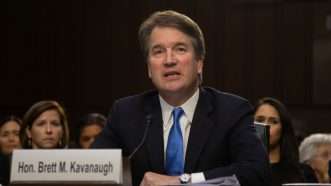
Reason's editors debate whether a single-source allegation from 35 years ago should be enough to derail a Supreme Court pick.

Trump planned to borrow heavily to fund his still unreleased infrastructure plan, even while the Republicans in Congress were making the deficit worse.
The president's economic agenda is harming American businesses and consumers.

Calls to shrink the size, scope, and spending of government, or even balance its budget, have gone the way of the dodo bird. That's kind of a problem.

The president believes "TRADE IS BAD!" These firms would beg to differ.


New from Reason: a look into what Javier Milei has accomplished and what it will take to make the most of Argentina’s window for real change. Out now for subscribers.

