
How Badly Could the Novel Coronavirus Epidemic Whack the U.S. Economy?
Looking at better and worse projections.


Looking at better and worse projections.

While the 2017 tax cuts didn't deliver the results promised by Trump and his magical-thinking supporters, the administration has delivered some economic expansion, some job creation, and some investment growth.

Attempts to impose low prices on emergency supplies often do far more harm than good.
If it works at all (and it usually doesn't), a fiscal stimulus is meant to boost demand. The biggest potential economic problem from coronavirus has to do with supply.
"Companies can simply blacklist California writers and work with writers in other states, and that's exactly what's happening."
There was a deficit of debt talk at the conservative conference.

Instead of taking a little off the top, Trump needs to give farm subsidies a buzz cut.
"Absent policy changes, the federal government continues to face an unsustainable long-term fiscal path," America's top auditor warns. But is anyone listening?

Proponents always forget to figure in the costs.

Whisky has become collateral damage in a long-running spat between the U.S. and the E.U. over subsidies to airplane manufacturers.

Maybe Rome needed to disintegrate before the West could grow wealthy.
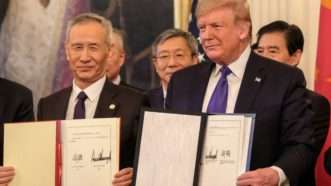
Instead of $12.5 billion in new agriculture purchases exports to China this year, the USDA expects less than $4 billion.
When it comes to the trade deficit, policy wonks were right and the president was wrong.

Bloomberg says "We're not going to throw out capitalism"; Sanders isn't so sure.

Plus: China boots three reporters, megacities are getting a smaller share of growth than they used to, and Dems gather to debate in Las Vegas..
Plus: Virginia's assault weapon ban gets shot down, Trump's tariffs face new legal scrutiny, and why you don't want Amy Klobuchar on your bar trivia team
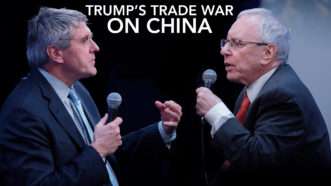
Stephen Moore and Gene Epstein debate whether or not President Trump's Chinese trade policy deserves broad public support.

Federal outlays per person have increased $1,441 since 2016, to a grand total of $14,652 per person.
It’s a testament to fiscal irresponsibility.
The president’s plan calls for modest cuts made easy by unlikely growth.
And whether it balances at all depends on some creative accounting. Meanwhile, it proposes $2 billion in new spending on the border wall.

Plus: Josh Hawley's latest terrible idea, sex work divides NOW, Gary Johnson's 2020 endorsement, and more...

Stephen Moore and Gene Epstein debate whether or not President Trump's Chinese trade policy deserves broad public support.

The federal government is not a good steward of your money.

Assembly Bill 5 was designed to constrain the growth of the so-called gig economy. In practice, it's closing off opportunities

American manufacturing has been in a recession for the past year.
An interesting study on the effect of right-to-work laws on union members
The PRO Act would implement a veritable grab bag of policies that labor unions have been pushing Congress to pass for years. The House will vote on it this week.
Plus: A poppyseed muffin prompts the authorities to take a newborn baby, two-thirds of young voters support sex work decriminalization, and more...
The president likes things big, so that apparently applies to government budgets too.
The Tariff Man doubles down on bad economics.
A new report shows federal budget deficits pushing past $1 trillion for the next decade.

The Breakthrough Institute's Ted Nordhaus urges Americans to reject both doomism and denialism.
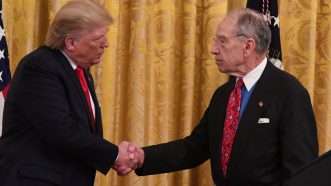
Republicans might rue that mistake when Elizabeth Warren or Bernie Sanders inherits Trump's beefed-up trade authority.

Discredited 18th-century economist Thomas Malthus still haunts the environmental debate.
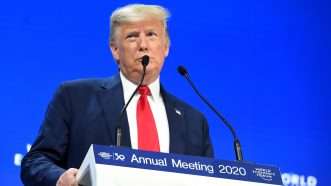
Good news on the economic front.
What is the correct reward for the person who creates something that millions of people want badly enough to pay for it?
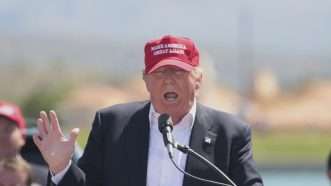
Trump's trade war has harmed the very industries and workers he aimed to help.
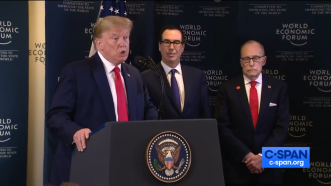
Plus: More from an impromptu Trump talk at Davos, how Kamala Harris handled California cop corruption, and more...


Martin Ford and Antony Sammeroff debate the future of robotics and its potential economic impacts at the Soho Forum.
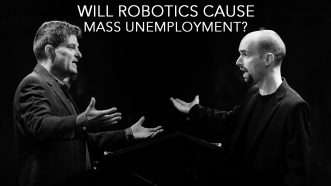
Martin Ford and Antony Sammeroff debate the impact of robotics on the economy
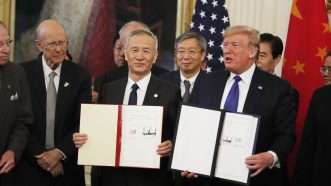
Unless the tariffs are lifted, the "Phase One" trade deal might not accomplish much beyond empowering China's communist regime to tighten its grip on free markets.
Celebrate your independence with a subscription to Reason magazine, your most trusted source of honest, insightful news and analysis.




