
COVID-19 Edicts Highlight the Importance of Structural Limits on Government Power
The national eviction moratorium and Arizona’s business restrictions were based on dubious assertions of authority.

The national eviction moratorium and Arizona’s business restrictions were based on dubious assertions of authority.

Two district court decisions have upheld the moratorium against various challenges, while one has ruled against it. The legal battle may be just beginning.
On the inconsistency between choice of law cases and interstate sovereign immunity cases

The Supreme Court did not resolve the case today, but did take the noteworthy step of asking for the views of the federal government.
The case was filed directly in the Supreme Court under its "original jurisdiction" over cases filed by one state against another. It could have important implications for the future of federalism.
The article adapts and expands some of the ideas developed in my recent book "Free to Move," and is now available for free download on SSRN.
Partisans who abandon constitutional principles because they prove inconvenient are in for a rude surprise when the other team wins.
The president acknowledges that there are limits to executive power, even during a public health emergency.
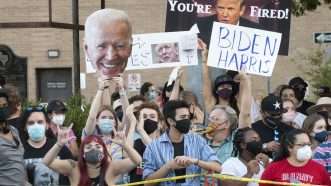
Let people join with the like-minded to reject officials and laws that don’t suit them and to construct systems that do.

A comparison of Texas and California suggests that legal edicts matter less than The New York Times thinks.
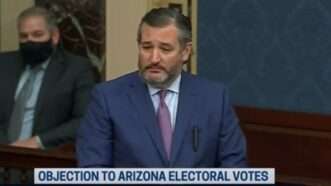
Cruz plunged into the constitutional abyss while Rand Paul stepped back, refusing to sacrifice democracy and the rule of law.

Centralization makes sense only if you ignore differences in local conditions—and trust the feds to make the right choices.
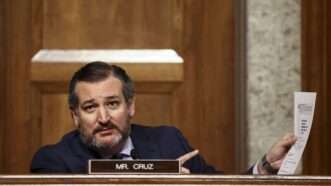
By his own account, the Texas senator is committed to defending a dishonest, amoral, narcissistic bully.

Under punitive federalism, localities refuse dictates from above while state and federal officials retaliate.

The bill is unlikely to make headway in the Senate, but it could nudge President-elect Joe Biden toward more ambitious reforms.
The combination of foot voting and decentralization of power can offer people more and better choices than are available at the ballot box.

Voters in four states voted to legalize recreational marijuana. In Oregon, they went much further.

The event is free and open to the public.
The event was sponsored by the Miller Center for Public Affairs.

How do we resolve the cannabis conflict between state legalization and federal prohibition?
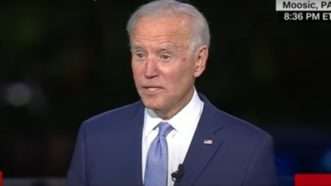
If only that signaled a broader respect for legal limits on executive power.

For the moment, the executive "memorandum" is long on rhetoric, but short on actual action. If it ever does lead to action, it could be yet another attack on federalism and separation of powers.
The event is co-sponsored by the Indiana University Maurer School of Law, and the Law and Economics Center at George Mason University.
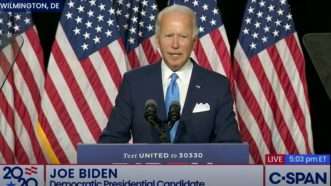
Both major parties defend the Constitution only when it's convenient.
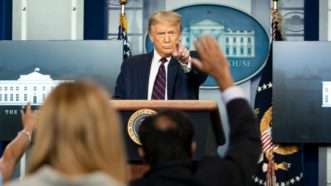
Will his blunt self-aggrandizement reinvigorate concerns about presidents who exceed their powers?

New York City's primary election fiasco reveals gross incompetence rather than fraud.

A president from a party supposedly committed to restraining the federal government is now sending enforcers to cities over local objections.
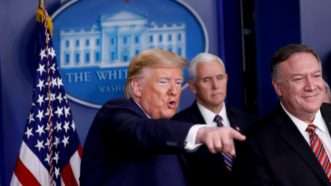
Thanks to him, there will be no escaping accusations by the left that states' rights are merely a ruse to protect white power.
From the torching of an Elk statue to clandestine raids by federal officers, it's like a bizarro episode of Portlandia

The ruling is at odds with decisions by four other circuits and could be headed to the Supreme Court - unless Biden wins the election and reverses administration policy.
Fifth and final post in a series based on my new book "Free to Move: Foot Voting, Migration, and Political Freedom"

State reform isn't a complete substitute for abolition of the federal judicial doctrine. But it can achieve a lot. A recent Colorado law provides a model other states would do well to imitate.

A Second Amendment hypocrite with a plan to undermine federalism
Third in a series of posts based on my new book "Free to Move: Foot Voting, Migration, and Political Freedom."
The Department of Justice is finding creative ways to file federal charges against rioters and looters.
The event includes questions and commentary by Northwestern University law Professor John McGinnis
The Introduction summarizes the book's argument and provides an outline of the chapters that follow.
The first in a series of posts based on my book "Free to Move: Foot Voting, Migration, and Political Freedom"

The ruling is yet another setback for the administration, though legal battles over sanctuary jurisdictions will continue.
It is now available for preorder, and will be delivered by June 23.
A podcast debate and discussion about the virtues and vices of Marijuana Federalism.

In this post, I link to their responses and offer a brief rejoinder to Waters.
The video was produced by the Institute for Humane Studies, and goes over some key themes of the book.

A president who can attach his own new conditions to federal grants to states could use that power to undermine state autonomy on many issues - especially now that federal spending has been massively expanded during the coronavirus crisis.
Videos of interviews by political commentator Amy Peikoff and immigration lawyer Nathan Brown.

The symposium, which includes a contribution from me, reviews important new books on secession by Timothy William Waters and Frank Buckley.
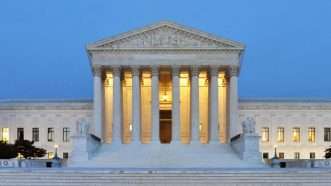
Why the Supreme Court can rule in favor of Congress in the Trump financial records cases without thereby giving Congress any unlimited power.
Celebrate your independence with a subscription to Reason magazine, your most trusted source of honest, insightful news and analysis.




