
Code Games 2.0
The Trump administration begins the implementation of manufactured housing deregulation.


The Trump administration begins the implementation of manufactured housing deregulation.

A GAO report notes that the Controlled Substances Act does not define "potential for abuse" or "accepted medical use."

A new report from the Government Accountability Office reveals that federal drug regulators do not have any clear policies or procedures for making scheduling decisions.

A recent settlement crippled a local code enforcement scheme—and exposed the perils of turning petty violations into government revenue streams.
Just because marijuana is legal under state law does not mean marijuana is legal -- a useful reminder.

Sonoma County launched the program to find illegal cannabis grows, but it secretly morphed into a wider search for minor building code violations.

A SCOTUS petition argues that the practice, which allows a judicial finding of dangerousness based on a preponderance of the evidence, violates the Fifth Amendment.
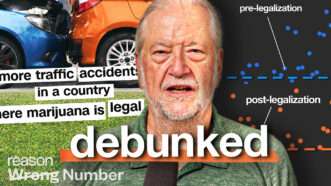
We dissected some of the deeply flawed studies favored by drug warriors.

New research on cannabis use could reshape the debate around marijuana legalization and revive old arguments for restricting legal markets.

As leader of the “Girchi—More Freedom” party, Zurab Japaridze spent 7 months jailed as a political prisoner. He’s prepared to spend much longer there if he has to.

Gary Youds says his cannabis café is “what the future looks like the day after the drug war.”

An old drug conviction could still stop you from waxing eyebrows, cutting hair, or giving massages.

The United Nations’ latest World Drug Report makes that very clear.

After upholding the Second Amendment rights of drug users and carry permit holders, the justices will address the constitutionality of "assault weapon" bans.

Aaron Brown discusses how research gets distorted, why sensational claims spread so quickly, and how to think more critically about the numbers behind the headlines.

A dispensary owner believes Hawaii’s hemp regulations are unconstitutional. He’s suing to stop their enforcement, but the law may not be on his side.
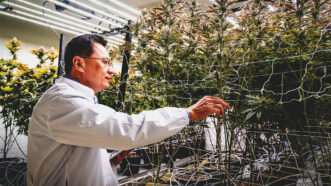
Rescheduling marijuana will make it easier to study a drug that tens of millions of Americans already use.

The Supreme Court's decision in United States v. Hemani could open the door to relief for cannabis consumers convicted of illegal gun possession.

The decision is a modest but welcome step toward rectifying the injustice of criminalizing conduct that violates no one’s rights.

Even under the Supreme Court's highly elastic understanding of that clause, Thomas says, such laws do not qualify as regulation of interstate commerce.

The conservative justice continues to wage a lonely legal crusade over the Commerce Clause.
The Supreme Court's unanimous decision in Hemani.

The unanimous decision upholding the gun rights of cannabis consumers is striking given the Supreme Court's long history of accommodating the war on drugs.

A notable 9-0 Second Amendment decision that features three concurring opinions, all of which make good points.

A landmark win for the right to keep and bear arms in United States v. Hemani.

A 10 percent ownership cap was supposed to prevent monopolies in Missouri's marijuana market. Instead, the state's licensing regime may have created a blueprint for companies to build one.
Plus: California fails to unmask ICE agents, the illogic of medical-only marijuana rescheduling, driverless cars in D.C., and more...

Acting Attorney General Todd Blanche's distinction between medical and recreational cannabis is hard to reconcile with the relevant scientific and statutory criteria.

Plus: skyway socialism, reconsider the lobster, D.C.'s urban growth, and more...

From higher crime to teenage stoners, here are things that the weed debate got wrong.

Afroman discusses his free speech court victory, why he thinks he could unite America, and whether he feels pressure to always be high.

A Supreme Court case illustrates the potential for trans-partisan alliances between critics of gun control and critics of the war on drugs.

Alexander Ledvina was convicted of violating a federal law at the center of a Second Amendment case that the Supreme Court is considering.

Most of the justices seemed unsatisfied by the Trump administration's argument that the law is constitutional as applied to a Texas marijuana user.

"We see this as an important civil liberties issue," says an ACLU lawyer.
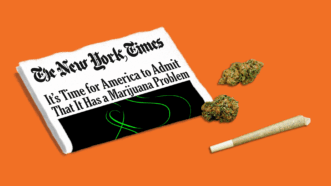
The newspaper’s plan to address marijuana abuse would compound the disadvantages that state-licensed suppliers face in competing with the black market.

Drug policy reformers and Second Amendment advocates team up in a case before the Supreme Court.
NRA Amicus Brief Argues that Ban Fails Bruen Test

The Liberty Justice Center is urging the Supreme Court to uphold a 5th Circuit decision rejecting the claim that cannabis consumers have no Second Amendment rights.

They are joining the Trump administration in urging the Supreme Court to uphold a federal law that disarms "unlawful" drug consumers.

In addition to its symbolic significance, rescheduling the drug will facilitate research and provide tax relief to state-licensed cannabis suppliers.

Plus: Debating marijuana at Turning Point USA, Massie and Khanna threaten Bondi with contempt over Epstein files, and Minnesota’s welfare fraud case.
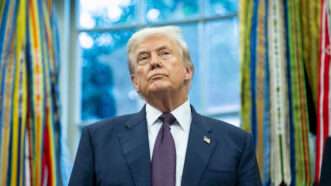
Plus: Polymarket bets on when killers will be apprehended, how locking up phones saves high school, and more...

The long-awaited move will facilitate medical research and provide tax relief to the cannabis industry, but it falls far short of legalization.
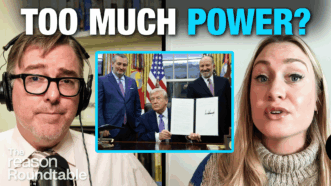
Plus: reclassifying marijuana as a Schedule III drug, mass shootings at Bondi Beach and Brown University, and the U.S. seizes a Venezuelan oil tanker

The main practical benefits would be tax relief for the cannabis industry and fewer barriers to medical research.

Plus: Universal childcare, Canada's abortion industry, the new media personality cults, and more...
Celebrate your independence with a subscription to Reason magazine, your most trusted source of honest, insightful news and analysis.




