
Would a Firing Squad Have Been More 'Humane' for Christa Pike?
Lethal injection dresses up the death penalty as something clinical and civilized. But the goal is the same: to kill someone.


Lethal injection dresses up the death penalty as something clinical and civilized. But the goal is the same: to kill someone.

New York Gov. Kathy Hochul appointed a special prosecutor who has already implied that she sides with Jane Doe.

Mamdani wants to spend millions of dollars fighting "hate." Where does the money go?
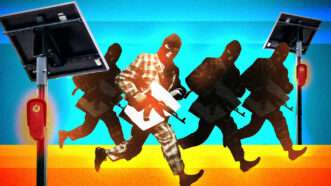
Flock has been promoting a recent study of its cameras' impacts on car theft. But the paper didn't demonstrate a causal effect.

Just as a holdout may be a bulwark against wrongful conviction, a unanimous verdict is difficult to obtain by design.

A new campaign by the Cato Institute aims to educate jurors on their right to vote their conscience against unjust laws and sentences.

In the court of public opinion, there is little room for ambiguity here. But those who watched the trial know that reality is far less satisfying.

Robby Soave and Christian Britschgi discuss the stalled jury deliberations in Lindsay Clancy’s case and the police killing of Heehaw.


The government also placed Karyann Parkinson on its child abuse and neglect registry, where she will remain for seven years.


Crime in D.C. had already fallen 29 percent before the National Guard showed up, yet the Pentagon plans to keep at least 2,500 troops in the city through 2029.

Statistician Aaron Brown and professor Robert Spitzer debate the efficacy of gun control.

What kind of country would America be if people were freely allowed to peacefully deliver goods that had been consensually bought and sold?

Reformers need to take into account people’s fear of crime and human predators.

Robby Soave and Amber Duke attack The Free Press' latest attempt to defend Flock cameras.

Denaturalization isn't new, but it has been used sparingly in modern history, in part because it is extremely costly and time-consuming.

"He should never have been charged, let alone convicted," judges now say.

Paul Skalnik was a career criminal and jailhouse snitch whose unbelievable testimony secured dozens of convictions—including that of Jim Dailey, who awaits execution.

Pamela Colloff discusses the dangers of incentivized testimony, the difficulty of overturning wrongful convictions, and how the justice system compounds its own errors.

The administration this month denied thousands of clemency applications.

The Sentencing Project highlights the perverse consequences of the felony murder rule, a vestige of British law that still prevails in federal courts and all but two states.
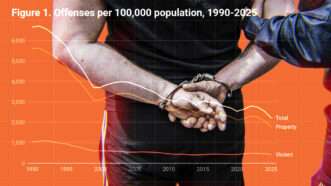
Facts don't care about the GOP's "crime wave" feelings.

The latest numbers from a sample of U.S. cities indicate continuing crime decreases that go beyond a reversion to pre-2020 norms.
My essay on the topic collects the available empirical research. There is support for the theory that, as police across the nation pulled back from some forms of proactive policing after protests surrounding George Floyd's killing in Minneapolis, homicides and gun violence increased as a result.

Robby Soave and Amber Duke discuss how the refurbishment of D.C.’s Reflecting Pool has gone off the rails.

A new book shows how a phrase made its way from the crime pages to our political arguments—and picked up a passel of meanings along the way.


Britain has long wasted taxpayer money on frivolous projects. A secret dossier suggests it has now outdone itself.


Free speech experts say the “Shrext” is protected by the First Amendment.

With cigarettes costing around $40 a pack, Australia’s war on smoking has become a case study in how prohibitionist policies create black markets, violence, and criminal power.

A judge last week threw out a criminal indictment against him on the grounds that it was tainted by vindictiveness. But that same spirit infects another part of his story that few people have discussed.

The president has fought to make sure alleged victims of government misconduct cannot get compensation. What changed?


A new lawsuit claims that ChatGPT gave the shooter information about busy times on campus and how to use guns.

Making less harmful products harder to get pushes people toward more dangerous ones.

"Geofence" searches illustrate the perilous combination of modern technology and deference to law enforcement.

Federal law defines the term but there is no federal statute to charge someone with "domestic terrorism."
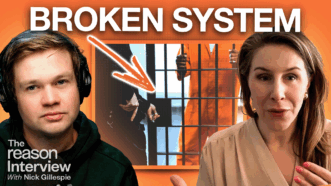
Economist Jennifer Doleac discusses why long sentences don’t reduce crime, how first-time defendants benefit from leniency, and why clearance rates are key to crime reduction.

From higher crime to teenage stoners, here are things that the weed debate got wrong.


No single government controls the South Pole, so how do they deal with crime?
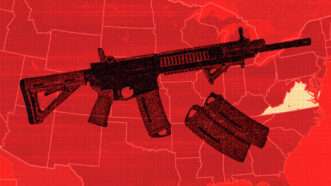
The ban, which targets guns based on criteria that make little sense, seems vulnerable to a challenge under the Supreme Court's Second Amendment precedents.

"In less than an hour, their lives would drastically change as the pair would be arrested for throwing homemade bombs."



Just 26 undocumented immigrants faced federal trafficking charges in 2023.
Celebrate your independence with a subscription to Reason magazine, your most trusted source of honest, insightful news and analysis.




