
A Russia Sanctions Bill Would Give Trump Vast New Tariff Powers
The bill, which passed the House and Senate, would let Trump impose tariffs up to 100 percent on certain countries, but it fails to properly define which.


The bill, which passed the House and Senate, would let Trump impose tariffs up to 100 percent on certain countries, but it fails to properly define which.
The conservative legal movement may be winning big at the Supreme Court. But Trump is not.
I will be one of the speakers.
Their brief says the president is asserting "essentially boundless" authority to impose "economy-wide tariffs untethered from the statute Congress enacted."
The president's latest tirade against recalcitrant justices reflects his open contempt for judicial review.

The Freedom of Information Act gives Americans the right to see what records the government has on any subject—including you.
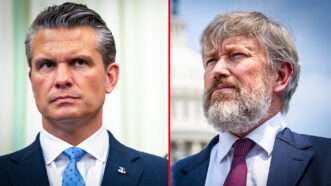
The Kentucky congressman says he will force a vote on removing Hegseth, who is accused of "abusing the power of his office to ignore congressional war powers resolutions, to kidnap foreign leaders, and to intimidate critics of the Trump administration."

Nothing says “small government” like having politicians run college sports.
A notable legal defeat for the Trump administration
The Cato Institute, Michael McConnell, and I filed an amicus brief in litigation challenging Trump's massive Section 301 tariffs, which use "forced labor" as a pretext for sweeping protectionism.

A lawsuit argues that a recently passed law to protect immigration service providers in California is "overbroad and vague."
Why the major questions and nondelegation doctrines bolster the legal case against Trump's Section 338 tariffs.
This year's Sumner Canary Memorial Lecture at the Case Western Reserve University School of Law.

A challenge to the federal prohibition on home distilling could give the Supreme Court a chance to rein in Congress’ Commerce Clause power.

This is what happens when you give the government control over artistic institutions.
The decision ends a yearlong legal war spanning multiple lawsuits, contradictory state and federal court orders, and repeated appeals to the Supreme Court.

Twenty-five years after the attacks, control and distrust rule the institutions that process foreigners who travel or immigrate to the United States.

The panic is pretty silly, since these facilities are necessary to power industries that power our economy and fund state budgets.

The Court rightly ruled the executive branch has no authority to restrict mail-in voting.
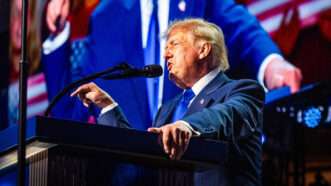
Plus: Data center backlash, Anthropic job-loss predictions, and more...

Unwise policies are not always unlawful policies.

The brief explains why the Section 122 tariffs are illegal and run afoul of the major questions and nondelegation doctrines.
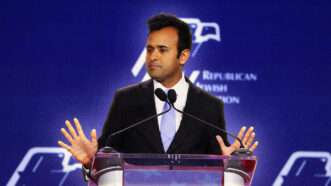
In November, we will learn whether Buckeye Republicans have been sufficiently persuaded by a more tolerant vision of the fusion of faith and freedom.

Olympus Spa—an all-female, nude establishment in Washington state—sued after the government said it had broken the law by refusing to accept a preoperative transgender woman. But the case is more complicated than it looks.
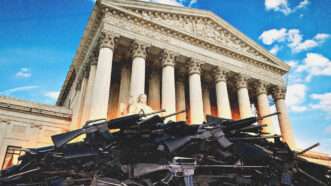
The Supreme Court has agreed to hear a pair of cases involving rifle restrictions imposed by Connecticut and Cook County, Illinois.

By labeling this group a terrorist organization, the state is chilling more than Muslims' freedom of expression.
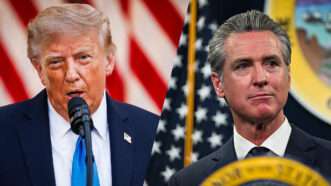
Some Democrats are licking their chops over other economic powers that Trump has claimed for the presidency.
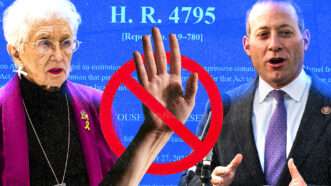
The bipartisan bill, which passed the House, takes aim at university boycotts of any “major strategic partner.”
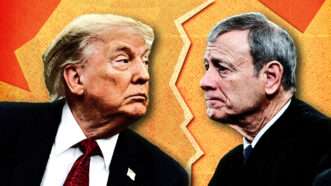
The chief justice finds himself in dissent in his latest showdown with the president.

The government also placed Karyann Parkinson on its child abuse and neglect registry, where she will remain for seven years.

By unilaterally razing and replacing the East Wing, the president again shows his disregard for the rule of law and the separation of powers.

The proposed GRANITE Act looks to shield U.S. companies from foreign censorship orders.

Trump administration officials didn’t try to hide that they were punishing the company for its views.

The Safer GAMING Act would silence minors in every online game by default—and violate the First Amendment.

Pension changes passed in 2011 have saved California taxpayers from a fiscal crisis, but public sector unions are now pushing to undo them.
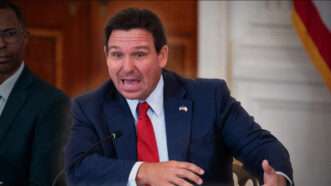
Florida police departments have been adding drones, facial recognition technology, and license plate readers to their arsenals for years.
And both are hiding behind a lie of omission.
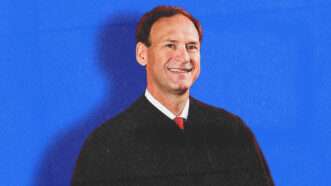
The conservative justice is sticking around on the Supreme Court. Will conservatives come to regret it?

Plus: AOC reaffirms her socialism, Russia-Ukraine war gets even deadlier, and more...

A Texas law restricting “sexually oriented performances” was struck down after a federal judge said it could apply to everything from cheerleading to karaoke to performances by Dolly Parton, Elvis Presley, and Miley Cyrus.

Sometimes direct action is the only way to get politicians to consider civil liberties.
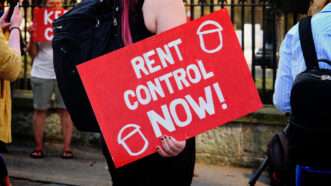
The war in Iran is causing California lawmakers to consider wider price controls.
Celebrate your independence with a subscription to Reason magazine, your most trusted source of honest, insightful news and analysis.




