Jared Dillian is the founder and principal of Jared Dillian Money.
The Bond Market Doesn't Trust the Treasury
To judge from rising 10-year interest rates, the bond market doesn't seem to expect Trump to bring inflation or spending under control.


There are only a handful of ways to shore up Social Security. Sens. Bernie Moreno and Elizabeth Warren are backing one of the most expensive.
The father of the World Sports Exchange tells his story.
The national wage floor is so low that it might as well not exist.
Increasing income taxes almost always results in less revenue and less economic activity.
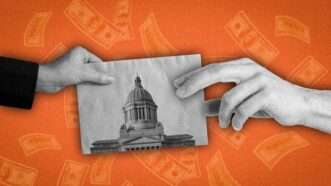
Washington has enjoyed decades of spectacular economic growth as a direct result of the absence of state income taxes. The new measure threatens to change all that.
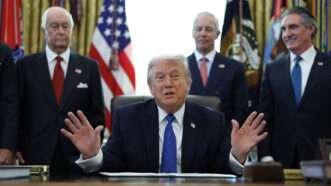
The president says he would rather increase prices for homeowners than drive prices down.
From defense contracting and mortgage finance to credit, housing, and monetary policy, Trump is leaning heavily on command-and-control economics.
If interest rates stop being market signals and become policy decisions, what survives may look less like capitalism—and more like permanent crisis management.
Ultra-long mortgages create the illusion of affordability but lock borrowers into decades of extra interest because leaders won’t fix the supply crunch.
Fraud didn’t disappear after 2002. But IPOs did get rarer, private equity got bigger, and ordinary investors got pushed to the sidelines.
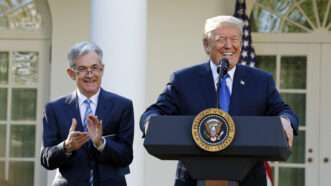
By installing Stephen Miran and eyeing more allies, Trump is positioning the central bank for aggressive rate cuts and a sharp break from its tradition of independence.
The president’s $300 billion tariff rebate plan risks replaying Bush-era giveaways—but on a scale large enough to fuel inflation and deepen the deficit.
The Fed should be replaced by free markets, not unbridled presidential power.
If Zohran Mamdani turns socialist rhetoric into policy, New York’s financial giants may not stick around to see how that plays out.
It’s not the only way the Republican senator is closer to democratic socialism than to traditional conservatism.
Trump’s tariffs aren’t just bad economics—they’re a rejection of abundance, prosperity, and capitalism itself.
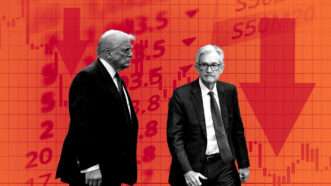
According to the president, the U.S. economy will begin to slow down unless the Fed “lowers interest rates, NOW.”
The stock market may look irrational, but it's repricing risk faster than ever. Sometimes, that's a feature, not a bug.
Despite efforts to rein in government debt, gold prices keep rising—suggesting investors aren’t buying the promises of fiscal responsibility.
Central bank digital currencies would destroy any chance for financial privacy, but society is willingly moving in that direction.
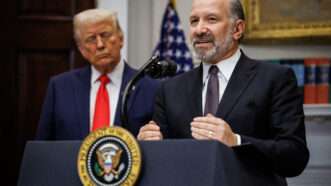
Commerce Secretary Howard Lutnick says the Trump administration wants to eliminate income taxes for those making $150,000 or less—an unprecedented shift with major consequences.
Taxing tips generates practically no revenue, burdens workers, and fuels pointless IRS audits.
Cuts to government spending mean fewer bonds, lower borrowing costs, and potentially a break for borrowers.
America’s tax system is already highly progressive. A simpler, flatter structure would be fairer, raise more revenue, and fuel economic growth.
If a central bank has to exist, it has to be independent.
The Treasury Secretary’s debt decisions during the pandemic locked in low rates—but only for two years. Now, taxpayers are paying the price.
Capping state and local tax deductions sparked a tax migration that rewarded pro-growth states. Raising the cap now would stall reform where it’s needed most.
A rate cap could leave millions scrambling for alternatives in an increasingly cashless economy.
Celebrate your independence with a subscription to Reason magazine, your most trusted source of honest, insightful news and analysis.