

The Volokh Conspiracy
Mostly law professors | Sometimes contrarian | Often libertarian | Always independent
The American Bald Eagle Is Back - But Don't Credit the Endangered Species Act
Many things contributed to the rebound and recovery of the bald eagle, but the nation's foremost species conservation statute deserves little credit.
The American bald eagle--our nation's national bird and symbol--is doing well. Populations have been expanding for years, and are now approaching the levels estimated for the founding era.
Many policymakers, pundits and professional environmentalists want to credit the Endangered Species Act for the success of eagle recovery efforts. But try as they might, it is hard to find much evidence that the ESA (as opposed to other conservation laws and recovery efforts) did much good, for reasons I explain in the latest issue of PERC Reports, published by the Property & Environment Research Center in Bozeman, MT.
The biggest factor in the eagle's recovery was almost certainly the banning of DDT for most uses. But this was done prior to the enactment of the ESA, under a different law (and by the EPA, not the Fish & Wildlife Service, the latter of which administers the ESA). The eagle also received more targeted protection from other laws. The bald eagle was officially removed from the endangered species list in 2007, and since then populations have continued to soar without the ESA's protection.
There's more, but those are reasons to read the article. It concludes:
Americans should be pleased that bald eagle populations continue to expand. The growing number of bald eagles is a conservation success story. But given the act's longstanding and widespread record of failing to promote species recovery, we should be careful before attributing that success to the Endangered Species Act.
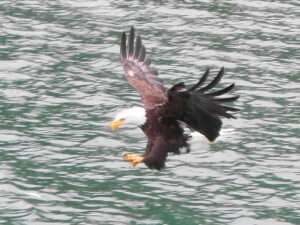
[ And, yes, for those curious, I took the picture that accompanies this post.]




