
A Higher Minimum Wage Lowers Opportunities for America's Poorest Workers
Minimum wage jobs aren't supposed to be career choices, but stepping stones on the way to other things. Everyone has to start out somewhere.


Minimum wage jobs aren't supposed to be career choices, but stepping stones on the way to other things. Everyone has to start out somewhere.

When the feds failed to track COVID-19, Emily Oster stepped in.

Pandering to maritime unions means higher costs and harsher lives for coastal minority populations.

American Compass Executive Director Oren Cass vs. the Cato Institute's Scott Lincicome on whether the U.S. should increase its intervention in the manufacturing industry.
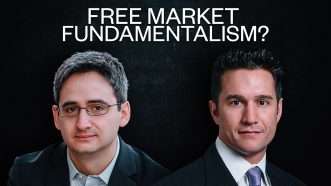
American Compass Executive Director Oren Cass vs. the Cato Institute's Scott Lincicome on whether the U.S. should increase its intervention in the manufacturing industry.

Plus: How the U.S. covered up the murder of Jamal Khashoggi, a Washington school district is suing to force its teachers back to the classroom, and more...
California Democrats and their labor union allies are embracing anti-democratic principles to thwart the will of the people.

Biden is seeking unity, but bipartisan agreement on bad policy is nothing to cheer for.

A politicized vaccine distribution process intended to take price out of the picture has given the edge to the rich, connected, and powerful.

Five reasons why Trump's trade war didn't go the way he thought it would.
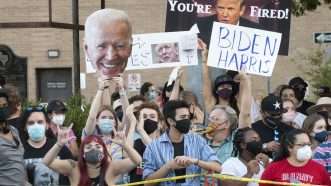
Let people join with the like-minded to reject officials and laws that don’t suit them and to construct systems that do.
Bill Allen was my multiple-times UCLA econ professor, author of The Midnight Economist and co-author of Alchian & Allen's University Economics.
Neither major party is a friend to limited government.

More than 4,100 people died of COVID-19 yesterday across the country, but some New York medical providers are dumping vaccines instead of putting them in people's arms.


Ostrom was best known for her studies of how local groups manage natural resources.

Entrepreneurs discouraged by red tape even before COVID-19 need officials to leave them alone.
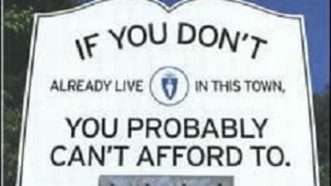
The Harvard economist explains how to expand opportunity for the young by deregulating housing, labor, and education.

Sen. Josh Hawley, a supporter of Trump's trade policies, lobbied to give a special exemption to a Missouri-based power tools manufacturer. Many other elected officials did too.

Fortunately, 2020 is nearly at an end. Unfortunately, its events will leave one hell of a mark on the years to come.
New York's unemployment rate is nearly 10 percent and roughly one-third of small businesses in New York City may have closed forever. Seems like a great time to make it more expensive to employ people, right?

A new book, Wretched Refuse?, documents that newcomers not only increase economic activity but often revitalize faith in free market, limited-government institutions.

Staying isolated from family and friends is wrenchingly difficult, even when it’s the right thing to do.
The Trump years were more than infuriating on trade matters—they were destructive.
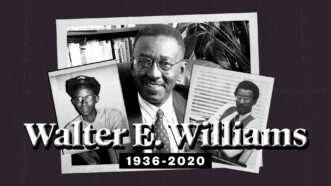
Libertarian History/Philosophy
"I just do my own thing," said the George Mason University economist and author of The State Against Blacks.

Plus: Uber abandons self-driving autos, on being "both loud and silenced," and more...

Protected financial access for politically targeted industries

Airlines keep claiming they need a second bailout to bring back 35,000 furloughed employees. Don't buy their argument.

Able to do our jobs from where we please, life for many of us will reflect a bit more of what we want rather than what we have to do to get by.

We must not ignore the suffering that this pandemic and our collective response to it have inflicted on millions of fellow citizens.
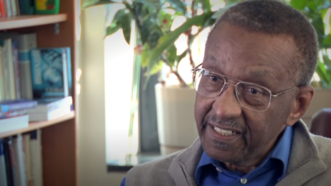
The self-described "crazy-ass man" and libertarian economist focused on government's role in perpetuating racial inequality.

Despite Elizabeth Warren's contention that it is the "single most effective economic stimulus that is available through executive action," forgiving student debt is a bad idea.
Circumstances change and the world may grow more complicated, but authoritarians never vary from their demand for more power over our lives.
Charities are free to help people who truly need help.
She once suggested that if Americans care about the deficit so much, maybe we should make Libya pay for it.

In a year that will be remembered for a deadly pandemic that shut down parts of the economy and cost millions of people their jobs, here's one silver lining.
Governments should prepare for emergencies by cutting spending during flush times.

Libertarian History/Philosophy
The libertarian billionaire and the head of his foundation discuss their new book, leaving partisanship behind, and learning from their critics.

If government controlled the production of turkeys and toilet paper, this would be a very unhappy holiday.
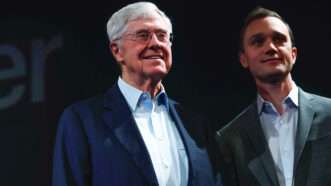
Libertarian History/Philosophy
The libertarian philanthropist and CEO of Stand Together on their new book, Believe in People: Bottom-Up Solutions for a Top-Down World

Elon Musk, now the third-richest person in the world, was born in South Africa but eventually came to the United States via Canada.
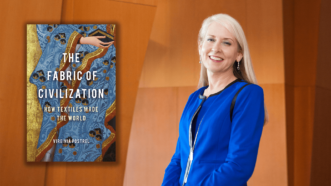
The former Reason editor discusses her new book, The Fabric of Civilization, and why she's optimistic about the future.

Before putting testing rules in place, officials should have considered whether the public would be willing and able to comply.

As the coronavirus reshapes daily life, two Reason editors crisscross the country and describe what they’ve seen.

American farmers and consumers deserve freer trade.

It will review a Ninth Circuit decision holding that there is no taking when the government forces property owners to grant union organizers temporary access to their property.

If we can't trim the Pentagon's budget this year, will we ever?
Celebrate your independence with a subscription to Reason magazine, your most trusted source of honest, insightful news and analysis.




