
Civil Liberties
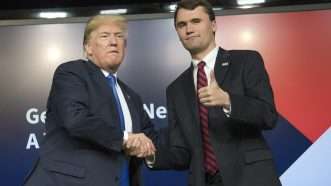
Trump To Convene 'Social Media Summit' Over Accusations of Anti-Conservative Bias
The president invited Republican lawmakers as well as social media stars who claim that tech giants are suppressing free speech.
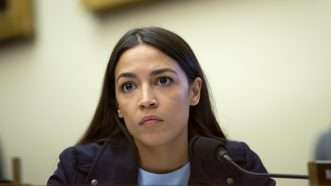
Two Lawsuits Argue That Alexandria Ocasio-Cortez's Blocking of Twitter Critics, Like Trump's, Violates the First Amendment
The New York congresswoman's use of Twitter seems similar to the president's in constitutionally relevant ways.
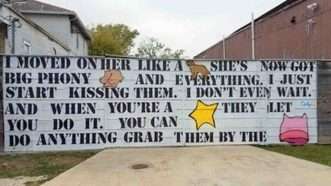
A Mural Quoting Trump at His Most Profane Is Protected Speech, Judge Rules
New Orleans can't use zoning regulations to decide what counts as artistic expression.
Man Sues Anti-Homosexuality Group for Libel, Loses, Unsuccessfully Tries to Seal Court Opinions
The plaintiff had pleaded guilty to, among other things, having sex with a minor (apparently when he was 21 and the minor was 15); the alleged libel stemmed from, among other things, reports of that crime.
New Orleans Mural Ordinance, Which Regulates "Works of Art," Is Unconstitutionally Vague
So a district court held today.
@RealDonaldTrump and Twitter: Public Forums and Private Architecture
Today’s decision fits awkwardly with a usual element of a designated public forum – that the government has created rules allowing for open discourse and is thus bound by those rules.
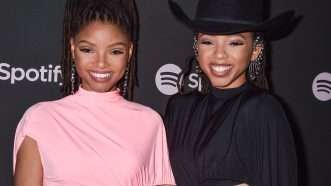
The Backlash Over The Little Mermaid Casting a Black Ariel Is Fake News
Few people who tweeted #NotMyAriel were actually upset about Halle Bailey portraying the mermaid princess.
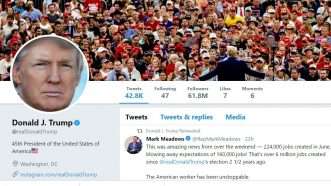
2nd Circuit Agrees That Trump Cannot Constitutionally Block Critics on Twitter
The court says the "interactive space" created by his account is a public forum, meaning that the president's viewpoint discrimination violates the First Amendment.

California Lawmakers Pass Bill Limiting Police Use of Deadly Force
Officers will now have to argue that killing was necessary and not just say they had a fear they were in danger.
Second Circuit: Unconstitutional for @RealDonaldTrump to Block Twitter Users Based on Viewpoint
The reasoning would apply to other politicians' accounts that are seen as "official" rather than personal, and to accounts that are run by government entities (such as school boards) rather than individual politicians.
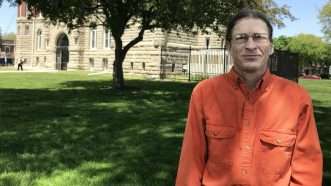
An Iowa Man Wins His Free Speech Suit After Being Charged for a Facebook Rant Against a Cop
Jon Goldsmith was charged with third-degree harassment after calling Deputy Cory Dorsey a "stupid sum bitch" online.
Sealing Records of a Teacher's Prosecution for Sexual Conduct with Underage Students?
An interesting Massachusetts decision from a couple of months ago, upholding a trial court's refusal to seal under such circumstances.

Is Facial Recognition the New Fingerprinting—or Something Much Worse?
State DMVs are building a vast national digital identification database for federal law enforcement.

Noncompliance Kneecaps New Zealand's Gun Control Scheme
As of last week, only around 700 weapons had been turned over.

Court Says Purdue Violated Student's Due Process Rights
"Purdue's process fell short of what even a high school must provide to a student facing a days-long suspension."
Is Wrongful Search Engine Optimization a Tort?
An anonymous lawsuit claims that it's tortious to try to artificially boost the prominence of an embarrassing article.

Sheriffs Say They Won't Enforce New Washington Law Raising Gun Purchase Age to 21
The new law says that someone buying a semi-automatic rifle has to be at least 21, pass a stricter background check, take a safety training course, and complete a 10-day waiting period.

14-Year-Old Posts Picture of Airsoft Gun on Snapchat, School Suspends Him for 3 Weeks
The principal calls it "very, very serious" wrongdoing.

Alabama Prosecutor Will Drop Charges Against Marshae Jones for Miscarrying After She Was Shot
Sanity prevails (for now) in Alabama case that sparked national outrage.

Relying on the Same Illogic That Trump Used to Ban Bump Stocks, a New Lawsuit Argues That Customizable Rifles Are Illegal
The plaintiffs say manufacturers broke the law by producing rifles that were compatible with accessories that facilitate rapid firing.
"Prominent Pornography Researcher Frames Defamation Claims As Sexual Harassment, Prompting a Defamation Suit by Her Target"
An academic debate turns into professional and legal accusations.
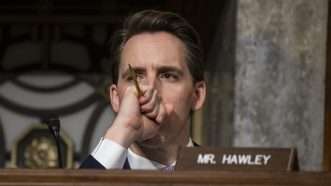
Because Politicians Are for Sale, They Think Everyone Else Is Too
Sen. Josh Hawley (R–Mo.) has proposed a dreadful bill that would give the government control of internet content. He thinks the only reason anyone could be opposed is because they've been bought off.

Prominent Pornography Researcher Frames Defamation Claims As Sexual Harassment, Prompting a Defamation Suit by Her Target
Nicole Prause and Donald Hilton, longtime opponents on the subject of pornography, are now facing off in court.
First Amendment Likely Bars Arizona's Withdrawal of Tax Benefits to Nike Over Betsy Ross Sneaker Controversy
The Supreme Court has held that the government generally may not terminate contracts with contractors based on their constitutionally protected speech; the same likely applies to financial incentives..
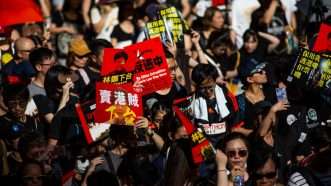
Hong Kong Protests Show Dangers of a Cashless Society
Many digital payments can be tracked, potentially assisting an authoritarian crackdown.
No Preliminary Injunction, No Pseudonymity, No Sealing in Internet Libel Case
That's what a New York trial court decision just posted online today held -- correctly, I think.
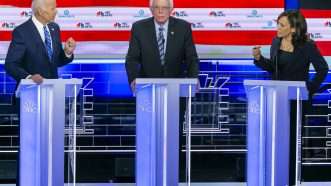
Welcome to the Busing Election!
What the backward-looking Democratic debate tells us about contemporary education policy and woke politics
Purdue Student Expelled for Alleged Sexual Abuse Can Proceed With His Due Process and Sex Discrimination Claims
"Fairness can rarely be obtained by secret, one-sided determination of facts decisive of rights."

The Sinister, Unconstitutional Effort to Ban Secure Encryption Is Back
It’s the ‘90s all over again, and the White House is in no mood to humor tech companies right now.
Rape Claims, Speech Restrictions, and Consent
Noted political publicist Trevor FitzGibbon (who had represented Julian Assange) sues whistleblower lawyer Jesselyn Radack (who had represented Edward Snowden) -- a second time.
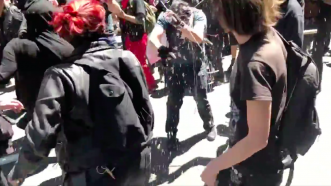
Antifa Mob Viciously Assaults Journalist Andy Ngo at Portland Rally
Masked activists attacked the Quillette editor with fists and milkshakes, sending him to the emergency room.
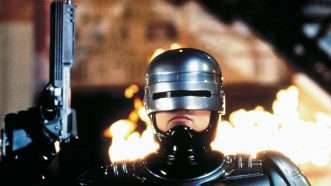
Facial Recognition Tech Straight Out of 'Robocop' Could Be a Real Threat to Civil Liberties
As governments and law enforcement agencies rush to incorporate facial recognition tech, California lawmakers have a chance to slam on the brakes.

Facing Legal Challenge, Washington Weed Regulators Lift Ban on Cannabusiness Signs at Seattle Hempfest
The state's Liquor and Cannabis Board changed its policy after Hempfest and two marijuana retailers challenged it on constitutional grounds.
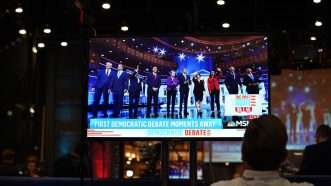
On Gun Control, Democratic Presidential Candidates Offer Nothing but Empty Promises
None of the participants in last night's debate had a credible answer to the question of what should be done about the hundreds of millions of guns that Americans already own.

No, Cory Booker, There Isn't a Study Showing That Licensing Gun Owners Cuts Gun Violence by 40 Percent
A flawed study continues to be repeated as if it proves something about the efficacy of gun permit laws.

Inside Hong Kong's Fight To Keep Chinese Authoritarianism at Bay
Activist and celebrity musician Denise Ho discusses the Hong Kong protests, her 2014 arrest, and the future of Hong Kong's autonomy from China.
First Amendment Limits Media Liability for Inducing Breach of Nondisclosure Agreement -- Now a Precedent in California
The Court of Appeal has ordered that the formerly nonprecedential decision, which I blogged about four weeks ago, will now be precedential.
When the Government Says You're Fake News
Countries across the world tackle political misinformation with authoritarian censorship.
Will Any Democratic Debater Acknowledge Math?
Early debates actually tell us a good deal about where political parties are heading.
Minnesota Supreme Court Holds That Nonmedia Speakers Are Fully Protected by First Amendment
Prior Minnesota precedents had said that some First Amendment protections against defamation liability applied only to media speakers.

The War on Backpage.com Is a War on Sex Workers
The government's latest moral crusade shields traffickers, empowers pimps, and undermines free speech online.

Democrats Reveal Their Hostility to the Second Amendment
Most of the party’s presidential contenders show little or no concern for the right to armed self-defense.

A Social Media Platform Has Banned Support of Trump
It's Ravelry, and it's not just a "knitting site."
Attempt to Vanish Newspaper Articles About Elected School District Trustee Lynette Boggs-Perez
Boggs-Perez is the recently elected trustee of the San-Antonio-area Judson Independent School District, and the requests aimed to deindex columns about her in the Las Vegas Review-Journal and the San Antonio Express-News.
Backers of a Federal Ban on 'Gun Silencers' Claim Only Murderers Use Them
The bill would turn law-abiding gun owners into felons for possessing a product that is almost never used in violent crimes.
Incensed by Warrantless Border Searches of Americans' Tech Devices? These Senators Have the Cure.
Ron Wyden and Rand Paul team up to stop Border Patrol from snooping in your stuff without good reason.