Before the NSA Honored Historian David Kahn, the FBI Investigated Him
Newly declassified files reveal that J. Edgar Hoover wanted to prosecute the NSA’s future scholar in residence for collecting cryptography manuals.
The anti-social media crusaders have popular support. That should worry online freedom advocates.
Don't assume this couldn't happen in America too.
Semafor reported on Project 2029’s "Kids Over Clicks" proposal, which outlines Democrats' plans to regulate social media and AI companies.
Federal law can punish true threats, and doxing intended to facilitate violence. But this woman simply named a government agent, which is not a crime.
Plus: the worst rule at the World Cup, and the worst person in golf?
FIFA can restrict political messaging inside its stadiums, but there is no stopping English football fans from mocking their prime minister elsewhere.
Government agencies would have to report communications and could be sued for bullying.
Public records obtained by City Journal show the Center for the Defense of Academic Freedom has taken a bizarrely censorial approach to its mission.
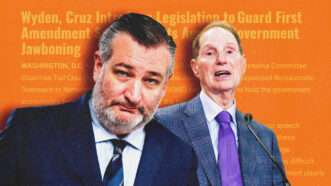
The JAWBONE Act would let Americans sue government officials who try to restrict their speech by pressuring social media platforms, broadcasters, or AI companies.
Free speech experts say the “Shrext” is protected by the First Amendment.
"This ban is completely unfounded and must be reversed," writes Shabbos Kestenbaum.
But free speech advocates are pushing back.
The president’s habitual attempts to criminalize dissent hark back to tyrants of yore.
The Trump administration invokes the notoriously vague FARA to threaten a critic.
"A primary aim of censorship is to normalize itself," Ai Weiwei writes in his new book On Censorship.
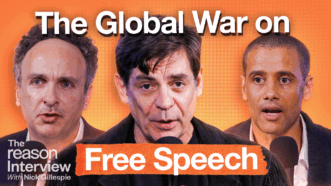
Jacob Mchangama and Jeff Kosseff discuss the global decline of free speech, why democracies are embracing censorship, and what can be done to protect open debate.
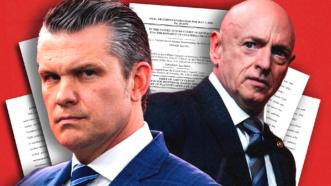
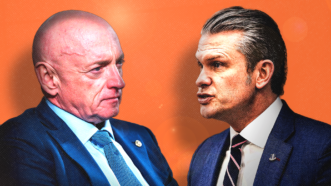
The defense secretary argues that military retirees like Sen. Mark Kelly are not allowed to say things he unilaterally deems "prejudicial to good order and discipline."
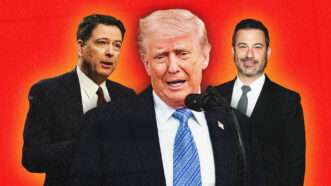
The president is not shy about using government power to punish people for saying things that offend him.
Financial censorship should worry us all, suggests Rainey Reitman in Transaction Denied.
To justify punishing a legislator for his speech, a FIRE brief notes, Defense Secretary Pete Hegseth relies on a Supreme Court precedent that is clearly inapposite.
The Court's 1963 ruling in Bantam Books v. Sullivan is freshly relevant in light of recent efforts to restrict speech through government intimidation.
The defense secretary's asserted authority to control the speech of retired military officers "would chill public participation by veterans," a brief supporting Mark Kelly warns.
The Ivy League school released a self-critical report this week.
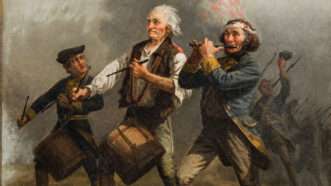
Remembering the infuriating case of United States v. “The Spirit of ’76.”
Free speech lawyers say UNC violated North Carolina’s institutional neutrality law.
The feds have arrested an Army staffer who spoke to a journalist for a book about special operations. The journalist says it's retaliation for exposing corruption.
The U.K. said it would stop investigating "legal" social media posts, but free speech advocates demand more change.
Despite its rejection of the Biden administration's interference, the Trump administration is still asserting authority over online speech.
"We are not in the mood to discuss the matter further, and have not been in the mood for 250 years."
Plus: The FCC threatens broadcast licenses over war coverage, J.D. Vance positions himself as an Iran war skeptic, and remembering Reason Senior Editor Brian Doherty.
And Middle Eastern dictatorships are helping him do it.
Mark Chenoweth discusses the SEC’s gag rule, the power of the administrative state, and the legal battle over whether regulators can silence their critics.
After users prompted Elon Musk’s AI chatbot Grok to generate "vulgar" posts, British officials warned X it could face penalties.
Satellite broadcasting is a strategic counter to state censorship.
Exiled journalist Fardad Farahzad discusses how Iranians get uncensored news, the state of the protest movement, and whether the Islamic Republic is losing its grip on power.
Plus: The FCC targets Disney and Comcast, new Epstein associates revealed, and Trump’s tariffs cause growing rifts with U.S. allies.
The commission has targeted the news rating company with onerous record demands and a merger condition aimed at cutting off its revenue.
A new bill in Wyoming aims to defend Americans against the U.K.’s online regulators.
Here's why I believe TikTok.
Presidents should try to nudge the world toward more trade and less war whenever possible. Trump is doing the opposite.
Creeping authoritarianism in the European Union gets pushback from an administration that has its own rocky relationship with free speech.
The appeals court ruled that administrators violated Stuart Reges' First Amendment rights when they investigated and threatened to punish him for constitutionally protected speech.
Progressive censors failed to suppress our political demons. It's finally time to confront them.
Larry Bushart's lawyers argue that his arrest for constitutionally protected speech violated the First and Fourth amendments.
Celebrate your independence with a subscription to Reason magazine, your most trusted source of honest, insightful news and analysis.