
People Have Got To Try Being Normal About Caitlin Clark, Sophie Cunningham, and the WNBA
Plus: Congress struggling to regulate college sports, looking at the economics of World Cup hosts, and why are golf shows all the same?


Plus: Congress struggling to regulate college sports, looking at the economics of World Cup hosts, and why are golf shows all the same?
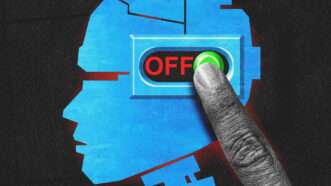
A bipartisan bill would give the Department of Homeland Security sweeping power to shut down powerful AI systems, with serious costs for competition and security.

The BLT—a delicious celebration of the power of markets—exemplifies political attacks on the free movement of goods and people.

Standard minimum wage and overtime laws now apply to the state's goat herders, whose animals clear brush and reduce fire danger. The costs are unsustainable.

This year’s rent freeze is just the latest regulation pushing New York City’s rent-stabilized housing stock toward financial and physical collapse.

Supersonic flight is legally limited to the ocean. But the federal bureaucracy is (slowly) changing, and at least one company wants to take advantage.


What’s at stake in Ream v. U.S. Department of the Treasury.

In a committee hearing yesterday, Alexandria Ocasio-Cortez complained about data centers' impacts on rural areas and industrial parks.

Eliminating burdensome small business regulations is a win for everyone.

The legislation would eliminate the tip credit for restaurant workers and other tipped employees—which has not worked out well in the past.
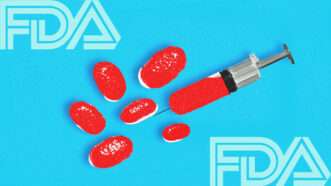
The FDA says it can't license Regenative Lab's overseas sales today because it might change its regulations tomorrow. Now, the company is suing.

The E.U. pulls ahead of the U.S. in the creepy international automobile surveillance race.

A proposed bill would legalize commercial autonomous vehicles in D.C. under one of the country’s most expensive regulatory frameworks, but unions still want the brakes applied.

It's coming faster than you might think.

The agency pretends to loosen scientifically unjustified regulations but does nothing of the sort.

A new law requires grocery stores to keep one staffed checkout open for every three self-checkout stations.

The ATF is reconsidering some of its dumber regulations as the feds sue states with restrictive gun laws.

The father of the World Sports Exchange tells his story.

No single factor is wholly responsible for the low-cost airline's failure, but the government certainly didn't help.

Plus: World Cup tourists embrace America, the Supreme Court expands gun rights, and Europe's resistance to air conditioning

The anti-social media crusaders have popular support. That should worry online freedom advocates.
The cronyism committed by the Maryland Lottery and Gaming Control Agency is a little too obvious.

Don't assume this couldn't happen in America too.

The continent’s political class needs to get over its aversion to life-saving technology.
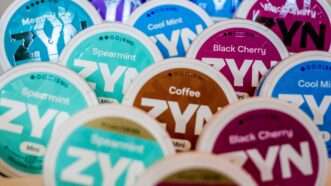
The decision is a major win for public health.

A Trump memo revives debate over the right to repair.
Data show that Waymo has far fewer bodily injury and property damage claims. So why do some politicians oppose it?

European countries are stubbornly refusing to adapt to warming weather, with deadly results.

The NYC Rent Guidelines Board voted to freeze rent for approximately 1 million apartments on Thursday night.
Privately funded nuclear reactors are achieving critical milestones on their own, but the Trump administration wants to prop up a single company.

The president is forcing his biggest supporters to choke down his incompetence and delusions like so much algae.

A dispensary owner believes Hawaii’s hemp regulations are unconstitutional. He’s suing to stop their enforcement, but the law may not be on his side.

Anthropic and OpenAI may not like current federal controls on their products, but it will be consumers who end up getting screwed.

Jack Clark discusses Anthropic's regulatory fights, the possibility of recursive self-improvement, and how AI could reshape the economy.

If Boston can trust adults to “sip and stroll” during the World Cup, it can trust them all year round.
No poor country has ever achieved decent living standards without first getting richer.
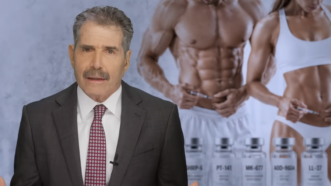
Because the agency has banned most peptides, products from overseas labs dominate the market. How does that protect Americans?

A proposed FCC rule would require Americans to share more personal information with phone service providers. Bye, bye burner phones?
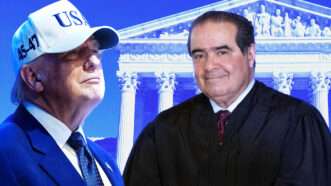
How a four-decade-old dissent may now help the president fire independent federal agency heads at will

The government says this is about national security. But given the history—and ongoing litigation—between the White House and Anthropic, something more may be going on.

The FDA's burdensome regulatory process has throttled sunscreen innovation.
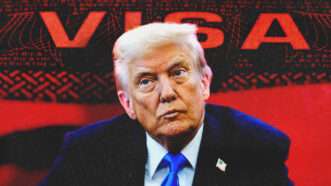
U.S. District Judge Leo Sorokin struck down the fee, saying it exceeds the president's statutory authority and violates the separation of powers.


Don't impose a moratorium. Produce more energy.

As data centers dominate public debate, two states reveal their approach. Texas has taken a stance in line with market needs, while North Carolina reacts to fear and bad press.

The state requires that people prove certain businesses are needed. How to do that is another question entirely.
Celebrate your independence with a subscription to Reason magazine, your most trusted source of honest, insightful news and analysis.




