Data Center Wars: North Carolina Resists Innovation While Texas Considers Market-Based Rules
As data centers dominate public debate, two states reveal their approach. Texas has taken a stance in line with market needs, while North Carolina reacts to fear and bad press.
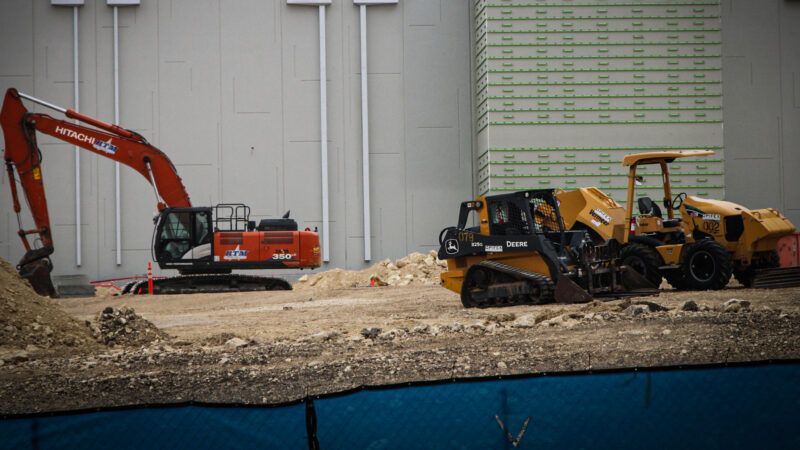
According to a recent Gallup poll, 71 percent of Americans would oppose the construction of a data center in their community, largely due to concerns over potential environmental impacts, quality of life, and energy affordability. This strong public opposition has left state lawmakers scrambling to regulate new and existing data centers, even in states with low energy prices.
In North Carolina—where the residential cost of electricity is about 13.8 percent lower than the national average—the state Senate is currently considering the Ratepayer Protection Act. This bill would likely increase the cost of data center development in the Tar Heel State by requiring every data center proposal with a peak monthly demand of "100 megawatts or greater" to include noise assessments for schools and homes "within 500 feet" of the project, and force developers to implement more expensive cooling systems within their facilities.
While the bill takes positive steps to end government paternalism by prohibiting local tax credits for data centers, it also mandates that data centers contractually cover all service-related costs to ensure retail customers aren't "subsidizing" their operations. Some AI companies have already voluntarily committed to financing grid upgrades elsewhere in the country, and President Donald Trump has called for this to be the industry norm moving forward.
The legislation also introduces new ways for the state to pick energy winners and losers by also barring utilities from retiring facilities that generate more than 100 megawatts (MW) of electricity—enough to potentially power as many as 100,000 homes—until an electric utility in the state receives regulatory approval to build a new 1,000 MW nuclear facility.
There are currently five electric utilities operating in the state, but only one, Duke Energy, has plans to build a new nuclear power plant. However, Duke Energy's proposed plant won't be online until 2036 and falls short of the bill's stipulated generation capacity of 1,000 MW.
Still, this provision, if passed, could come back to haunt North Carolina ratepayers by forcing aging, expensive power plants to stay open, even when cheaper alternatives exist. This is exactly what's happening in Michigan, where a federal emergency order has forced a coal plant to stay open more than a year past its retirement date. This order could leave ratepayers to foot $180 million in additional costs, according to the Environmental Defense Fund.
And even with noticeable gains in deregulating the nuclear industry, North Carolina's bill doesn't appear to account for the startup capital required for a 1,000 MW nuclear power plant. In Georgia, home to two recently built 1,000 MW plants, the state's ratepayers were on the hook for $7.56 billion of the $10.2 billion needed to complete the plants, borne through higher utility bills.
North Carolina isn't the only state considering new regulations for data centers. In Texas, the Electric Reliability Council of Texas (ERCOT), which manages 90 percent of the state's electric grid, has proposed two new rule changes that will determine which data center projects are built.
Data centers and other large loads have requested "roughly 450 gigawatts of power—more than five times the all-time peak power demand recorded within the ERCOT region," according to E&E News. To help weed out the serious applicants from the unserious ones, the grid regulator is proposing a new process for connecting power-hungry projects to the grid, the Batch Zero Interconnection Study.
Rather than considering large-load applicants individually, as ERCOT currently does, the new plan will consider them in batches. To qualify for consideration, serious applicants must submit a deposit to cover the cost of grid upgrades, "prove they have a contracted customer, a signed lease agreement or deed for the land they're building on," and meet other provisions, reports the Houston Chronicle. Once approved, an applicant must connect to the grid within 30 days.
ERCOT has also proposed a rule requiring crypto facilities and data centers "to stay online during brief grid disruptions," according to E&E News. The operator claims the rule would prevent cascading power outages, as occurred during Winter Storm Uri in 2021.
However, in comments submitted to ERCOT, officials from Google, Tesla, and the Texas Blockchain Council all objected to the policy, which they say imposes a one-size-fits-all standard rather than establishing a threshold based on the specific needs of its large-load customers.
The Public Utility Commission of Texas, which regulates the state's electric utilities, still has to approve ERCOT's proposed rules.
With data centers likely to remain a focal point in public discourse, states are beginning to reveal how they will address the issue. While Texas' plan has received some industry backlash, it seems more flexible to market needs than North Carolina's, which appears to be motivated more by fear of the bad publicity surrounding data centers than by market signals.