
Donald Trump and Ben Carson Go Full NIMBY in The Wall Street Journal
The Trump administration has abandoned its own promising housing reforms in favor of toxic culture war politics.


The Trump administration has abandoned its own promising housing reforms in favor of toxic culture war politics.

Plus: California Judicial Council sets expiration date for eviction moratorium, the U.S Justice Department accuses Yale of discriminating against whites and Asians, relations thaw between Israel and the UAE, and more...


NIMBYism comes in many different ideological stripes. Fewer homes and higher rents is always the result.

The president has ditched a promising, free market-influenced revamp of Obama-era fair housing regulations in favor of a legally dubious new rule that's heavy on local control.
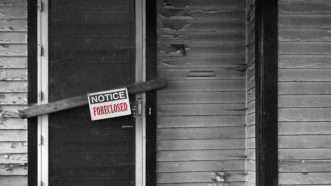
Officials in Oakland County, Michigan, are worried they could be on the hook for more than $30 million in payments to former homeowners victimized by an aggressive forfeiture scheme.

The Bedrooms Are For People campaign would repeal the city's existing limits on unrelated people living in the same house.

Democrats in Congress are floating plans for billions more in rental assistance, and a blanket nationwide moratorium on evictions to forestall a potential housing crisis during the pandemic.


The switch threatens an initiative to repeal Boulder's restrictions on unrelated people living together.

Government growth and abuses are not challenged nearly enough.

Stanford epidemiological model predicts self-flattening while MIT forecasts continued epidemic growth.
The president's criticism of the 2015 AFFH rule is an implicit attack on his own housing reforms.

The 4-2 ruling is reminiscent of the federal Supreme Court's dubious decision in Kelo v. City of New London, which also upheld a condemnation for a project that turned out to be a dud.


What started as a largely uncontroversial emergency response to the COVID-19 pandemic has now become subject of intense legal and policy battles.

The decision distinguishes US Supreme Court cases allowing the government to transfer property from one private party to another for almost any "public purpose."



It took a crisis for policymakers to see that hundreds of rules were not worth the burdens they imposed.

The health crisis revealed red tape that hobbles our lives even in good times.

The California state legislature has done everything in its power to legalize accessory dwelling units. A new lawsuit probes whether it's done enough.

Democrats' HEROES Act is mostly about messaging. And it sends all the wrong messages on housing.

Giving renters direct assistance is a better idea than rent cancelation, but that's not saying much.

Rent strikes and calls for rent cancellation proliferate across the country.

Early takeaways from the country's response to a pandemic

Matt Ridley on how the coronavirus caught him by surprise, the crucial role of dissent in politics, and the importance of innovation for survival

The coronavirus shutdown might alter buying patterns, as more people flee tightly packed cities for suburban, exurban, and rural areas.

The Minnesota congresswoman's proposal to cancel rents and mortgages during the coronavirus pandemic is both wildly impractical and constitutionally dubious.

The feds pushed cities to implement zoning restrictions. High prices and social inequality were the inevitable results.

Alexandria, Virginia, is the latest city to entertain demands to cancel rent payments during the current pandemic.

And they are taking full advantage of the opportunity
In two separate op-eds yesterday, the senators pitch central planning as the best response to the coronavirus pandemic.

Yes, tenants are losing their jobs because of the COVID-19 shutdown, but forcing businesses to provide services for free would have a ripple effect.

Health care workers will now be allowed to use the Chinese-certified KN95 masks, which are equivalent to the N95 masks that are in short supply.

Before this, the wait period was a year.

Restrictions on takeout cocktails, telemedicine, hand sanitizer, and plastic bags are among the rules being chucked aside in a crisis.

Many regulations serve little to no public purpose.

"You cannot just decide you want to sell groceries," said Barbara Ferrer, the director of L.A. County Public Health.

The agency's emphasis on caution over speed led to needless suffering and loss of life long before the COVID-19 pandemic.

Sen. Mike Gianaris (D–Queens) argues eviction moratoriums don't go far enough to protect renters who've been put out of a job because of the virus.


The new rule would ask localities receiving federal funding to report on their housing market outcomes and propose concrete steps for improving affordability.

Emergency measures can easily become routine policy.

State legislators want to allow duplexes statewide and eliminate local governments' ability to impose aesthetic design requirements.

State lawmakers want to override local zoning codes to let churches and other nonprofits build affordable housing on their own land.


While the 2017 tax cuts didn't deliver the results promised by Trump and his magical-thinking supporters, the administration has delivered some economic expansion, some job creation, and some investment growth.


New from Reason: a look into what Javier Milei has accomplished and what it will take to make the most of Argentina’s window for real change. Out now for subscribers.

