
Rousseau, Malthus, and Thanos Were Wrong
The authors of Superabundance make a strong case that more people and industrialization mean a richer, more prosperous world.


The authors of Superabundance make a strong case that more people and industrialization mean a richer, more prosperous world.

A compilation of my work on this topic, on the one-year anniversary of the start of Vladimir Putin's attempt to conquer Ukraine.
The war is often described as a conflict between authoritarianism and liberal democracy. That reality has some underappreciated implications.

What was a local conflict is shaping up as a battle between alliances.

After one year, whatever morale boost Biden’s visit provided won’t necessarily have concrete, strategic effects in Ukraine.

Plus: Google blocks news to Canadian users in advance of pending media law, Arizona considers zoning reform bill, and more...

Many Democrats and Republicans were outraged when Trump and Biden respectively were found with classified documents. But both sides are missing the point.

Plus: the editors field a listener question on intellectual property.

Plus: The National Endowment for Democracy ends funding of conservative media blacklist, the U.S. Supreme Court will hear major internet free speech case, and more...

Global hunger declined for decades before pandemic policies and Russia’s invasion broke the world.

War by Other Means tells the story of those conscientious objectors who did not cooperate with the government's alternative-service schemes.

Plus: Age verification for social media, a bill to ban cannabis "gatherings," and more...


Lawmakers are once again trying to reclaim their war powers through AUMF repeal.


Plus: States move to curtail internet anonymity, Amsterdam cracks down on cannabis, sex, and booze, and more...

Denuclearization is not possible at any remotely acceptable price, and that may not change for decades to come.
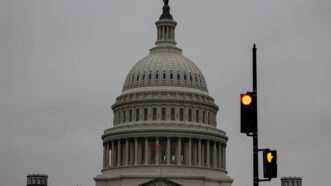
Legislators will increasingly argue over how to spend a diminishing discretionary budget while overall spending simultaneously explodes.

His State of the Union address sketched a foreign policy that is reckless on some points, relatively restrained on others, and utterly uninterested in any real resolution to America’s lingering military entanglements.

These days, he may run for president. His politics have changed.
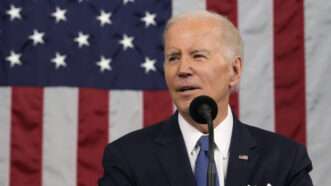
The president's State of the Union address re-upped a tired, old promise to spend more tax dollars on less infrastructure.

A big part of Trump's appeal in 2016 was his forthright opposition to military interventionism. His record in office didn't match the rhetoric.

After $67 billion and more than 20 years, the F-22 finally won a dogfight against an unarmed, nearly immobile opponent.

Plus: The French face "le wokisme," a Tennessee "eyelash specialist license" would require 300 hours education, and more...
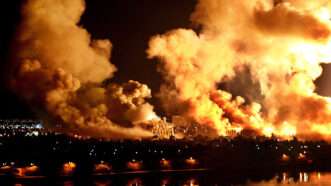
It was a blunder. Worse than that, it was a crime.

A new proposal to more than triple visa entry fees for performers will harm American audiences and culture.

Hungary's inflation hits 24.5 percent—the highest in the European Union—and Orbán's price controls aren't helping.

Plus: The editors consider the ongoing debt ceiling drama and answer a listener question about ending the war on drugs.

Sen. Rand Paul says Republicans "have to give up the sacred cow" of military spending in order to make a deal that will address the debt ceiling and balance the budget.

Compared to Russia, war with China is a deeper nightmare.
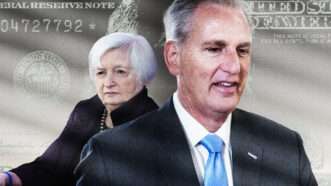
Social Security, Medicare, and Medicaid are still the chief drivers of our future debt. But Republicans aren't touching them.

The actual total is probably higher according to the Government Accountability Office's new report.

It's not Trump vs. Biden: High officials play fast and loose with government secrets, but only regular people face harsh penalties.

Shipping industry insiders floated a recommendation to charge critics of the Jones Act with treason, according to documents obtained through a Freedom of Information Act request.

Researchers: Moscow’s social media meddling had little impact on the 2016 election.

The riot in Brasilia arose from the local tradition of political mob violence.

Like other authorizations for the use of military force—or AUMFs—it would be an unnecessary, unwise expansion of executive power.
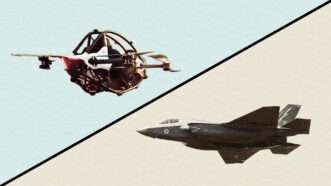
A Swedish company will soon be delivering electric single-person aircraft that can take off and land vertically, which the F-35B struggles with despite billions in funding.

Kevin McCarthy's pick to lead the House Foreign Affairs Committee evades any post-Trump humbleness in foreign policy.

For most aid critics, the urge to cut off Kyiv appears unconnected to any sort of principled realism, non-interventionism, or even isolationism.

Join Reason on YouTube and Facebook on Thursday at 1 p.m. Eastern for a live discussion of America's continued funding of Ukraine's defense against Russia's invasion.

The Inflation Reduction Act extended tax credits for buying electric vehicles, but the requirements will put them out of reach for most customers.

If lawmakers keep spending like they are, and if the Fed backs down from taming inflation, then the government may create a perfect storm.

Reformers had two years of unprecedented victories—and then protectionists started using scare tactics to block them

They say the U.S. is pivoting to other conflicts, but the Pentagon hasn't exactly left the Middle East and North Africa behind.

The maritime industry inserted some protectionism into the National Defense Authorization Act.

Plus: Title 42 order termination is on hold, the FTC vs. Meta, and more...

Plus: The editors extend the discussion on the lack of immigration reform in this week’s bill.


New from Reason: a look into what Javier Milei has accomplished and what it will take to make the most of Argentina’s window for real change. Out now for subscribers.

