
Mamdani's $131.5 Million DoorDash Settlement Is Not What He Says It Is
The mayor characterized it as a victory against corporate greed. Meanwhile, 65 percent of affected drivers were underpaid by $1 or less, and the average underpayment was $7.70.


The mayor characterized it as a victory against corporate greed. Meanwhile, 65 percent of affected drivers were underpaid by $1 or less, and the average underpayment was $7.70.
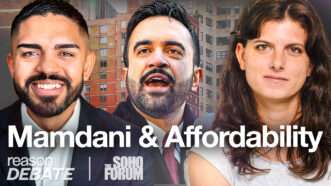
Emily Eisner and Kenny Burgos debate Zohran Mamdani's housing policies.

Plus: Ketamine deep dive, failed Oura IPO, Ray Dalio's warning, and more...
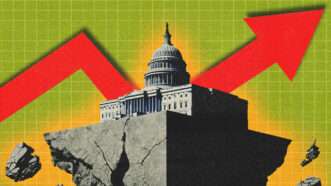
To judge from rising 10-year interest rates, the bond market doesn't seem to expect Trump to bring inflation or spending under control.

Even the best-case scenario means less investment, slower wage growth, and a budget increasingly spent on past obligations.

Plus: rising debt and mortgage rates, whether AI will make government obsolete, and how to pitch Reason to your friends
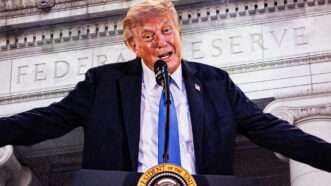
Plus: Rent freeze setback, AI misalignment, Bolshevik ridiculousness, and more...

Economists Stephen Moore and Scott Lincicome debate tariffs as a foreign policy tool.

After a week in Buenos Aires, I found Milei’s economic revolution is real—and deeply divisive.
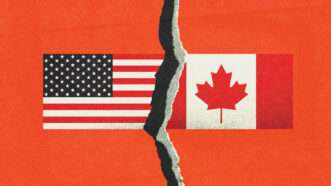
As the president liberalized the market for beef, he also imposed new 50 percent tariffs on some $20 billion worth of Canadian goods. Americans will suffer.
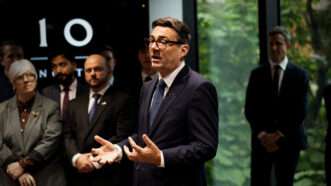
Taxpayers have already paid $14,300 for branding the new office—and more than $1,300 for moving a replica Downing Street door to Manchester, according to a Freedom of Information request.

Their few defenders often misunderstand their benefits.
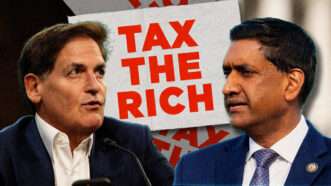
Many entrepreneurs with high net worths don't actually have much cash. What bank lends $100 million against illiquid stock in young companies that may or may not succeed?

California notoriously fought to do the same, which led to a slew of exemptions and job declines.

Gov. Mike DeWine's recent essay in The New York Times makes the case for a more open legal immigration policy.

Plus: the rise of affordability politics, Trump attempts to end birthright citizenship, and the Cambridge plagiarism controversy
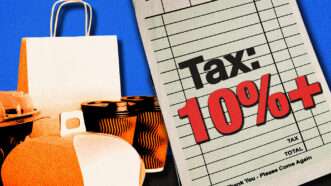
Food-related taxes are rising in popularity, though they hurt restaurants and customers—and may even fail as a revenue-raising tool.

Plus: The economy lost 23,000 jobs in July, inflation is outpacing wage growth, Trump is still mad about birthright citizenship, and more...

Researchers estimate that discouraging just one-third of international STEM graduates could leave the American economy 0.7 percent to 1.3 percent smaller—equivalent to losing the entire economy of Utah or South Carolina.
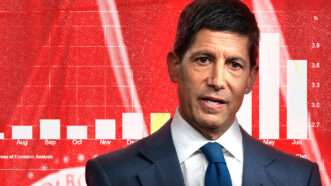
The 30-year U.S. Treasury bond just hit its highest yield level since 2007.
"Success comes from meeting the needs and wants of others," says businessman and publisher Steve Forbes.

Britain’s seventh prime minister in a decade inherits weak growth, record-high taxes, and a swelling welfare bill. His proposed cure is an even larger role for the state.

The legislation would eliminate the tip credit for restaurant workers and other tipped employees—which has not worked out well in the past.

Plus: Democrats taking a new tack, the popularity of social media bans, an influencer correspondent, and more...
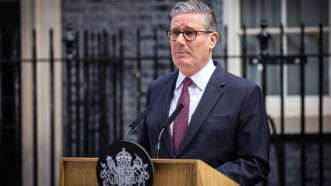
The Labour leadership race may replace one unpopular big-government prime minister with another.
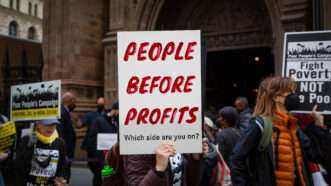
No poor country has ever achieved decent living standards without first getting richer.
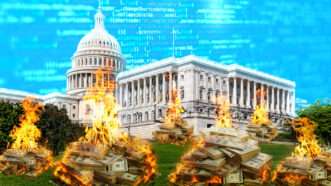
Congress cannot sit by and hope for AI to fix the deficit.

Thomas Piketty's plan is a comprehensive program for global managed decline dressed up in the language of climate justice and equality.
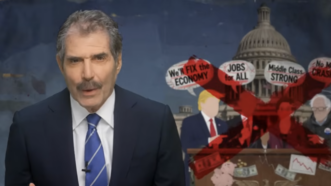
"It's really important that people step back, look at economic history," says economist Donald Boudreaux. "They'll see that we prosper more the more economically free we are."

Plus: What California's election results tell us, the economic costs of war with Iran, and the push to nationalize AI

He famously said the Founders had created "a republic, if you can keep it." How have we kept it? And can we continue?

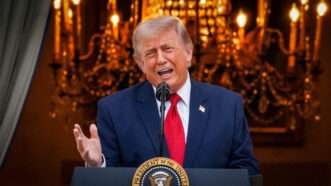
They cost each American household roughly $1,000 in 2025, with more coming in 2026.
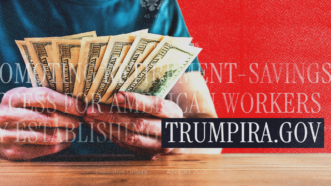
The fiscal objection is serious. But the deeper problem is that the proposal misunderstands the saving behavior of the households it aims to help.

So far, electricity prices haven't risen. If and when they do, the solution is more power generation.

The U.S. economy continues to outstrip the competition but takes a hit from declining immigration.

The burden of Trump's illegal tariffs was spread across the American economy. The refunds likely won't cover all those costs.
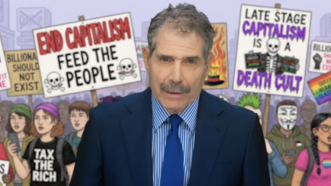
"The New Deal made investment in America a risky project," says economist Donald J. Boudreaux, author of The Triumph of Economic Freedom.
New study finds that tariffs were responsible for the "entirety of the excess inflation in the core goods category."
It would be easy to wave it away and move on. But that's how the U.S. got in such a dire fiscal situation.
"For the first time since California came into the union," the publisher and businessman says, "they're having out-migration."
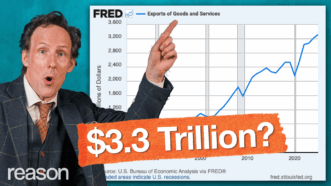

There was little rhyme or reason to the president's "emergency" tariffs, which fluctuated wildly depending on his mood.
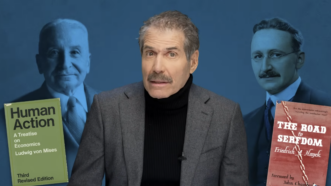
"Central planning doesn't work because everybody has different ideas for themselves," says Ryan McMaken of the Mises Institute.
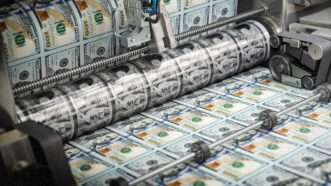
The problem is not that the government collects too little. It's that the government spends too much.

By the administration's logic, Iowa is hurting Arizona by producing so much corn. This is a very silly way to think about economic policy.

Many states have deregulated hair braiding, but Louisiana lawmakers want to tighten regulations by demanding more coursework, including on the ancient origins of braiding.

Plus: A seventh American has been killed in the Iran conflict, the U.S. is almost certainly responsible for school strike, how Lindsey Graham helped start the war, and more...
Celebrate your independence with a subscription to Reason magazine, your most trusted source of honest, insightful news and analysis.




