Americans' Support for Tariffs Plummets When They See Prices Rise
A new poll challenges the protectionist narrative currently dominating both sides of the political aisle.


A new poll challenges the protectionist narrative currently dominating both sides of the political aisle.
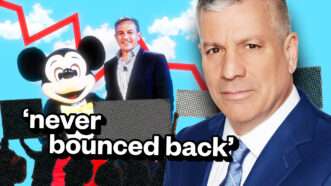
The business journalist discusses his new book Go Woke, Go Broke and how CEOs accelerated corporate political activism only to regret its impact on the economy.
Plus: Subway crime stats, millennial wealth building, CNN roasted, and more...

A new report ranks the states on their occupational licensing requirements.

A new survey suggests that neither Harris nor Donald Trump have won over a majority of voters with their respective economic visions.

British economist Geoffrey M. Hodgson argues private property and individual enterprise fueled the Great Enrichment.
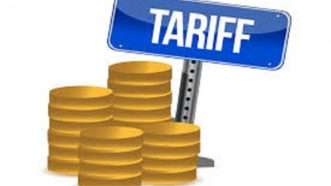
A new Cato Institute/YouGov survey finds contradictory attitudes on trade policy, and widespread ignorance. The survey also suggests a potentially promising political strategy for free trade advocates.
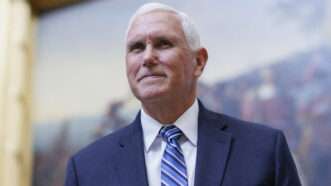
Lawmakers must be willing to reform so-called "mandatory spending," Pence's nonprofit argues in a new document.
The state Supreme Court unanimously ruled that ridesharing drivers can be exempted from California's crackdown on independent contracting.
Seventy-five percent of respondents are concerned that tariffs will raise the cost of the things they buy, yet neither Trump nor Harris has suggested lowering them.

The rush to crack down on the young people making money on TikTok misses the real causes and possible effects of the social media influencer boom.
The campaign promise from Donald Trump sounds nice, but it would be disastrous when considering the program is already racing toward insolvency.

Google is "the best," the court says. But being on top is dangerous.

Under collectivism, "a man must be prepared to break every moral rule," F.A. Hayek observed in 1944.

Facing an economic downturn in the 1990s, Japan racked up debt. America should not repeat that mistake.
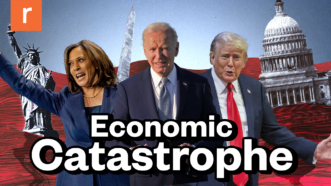
Should we blame Biden and the politicians applauding him for their unwillingness to address our looming fiscal disaster?
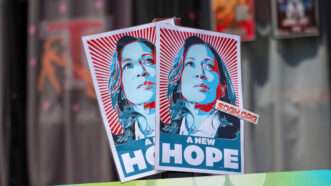
Plus: Violence in the U.K., dead bears in Central Park, parenting influencer absolutely roasted, and more...

A few reasons to remain calm about the economy
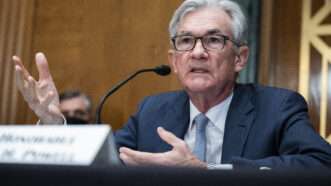
Plus: Emhoff scandal, Iran and Hezbollah possibly striking Israel, Nirvana facts, and more...
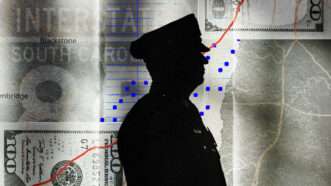
A 21-month legal battle unveils the dark side of South Carolina's annual traffic crackdown.
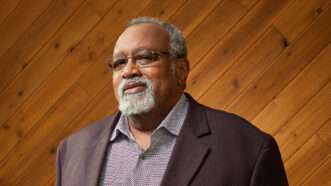
The Brown University economist's new memoir Late Admissions covers capitalism, addiction, race, and the academy.
A key indicator has predicted every recession since 1970, and the alarm just sounded.
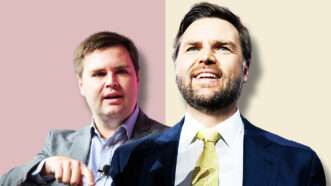
Untangling the roots of Vance's odd political evolution.
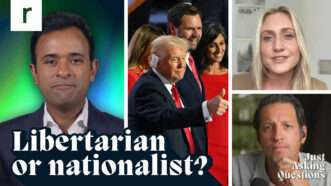
The former presidential candidate discusses the ideological tensions within the America First movement.

Fact check: Venezuelan President Nicolás Maduro is the leader of the Socialist Party.

People making the same income should be paying the same level of taxes no matter how they choose to live their lives.
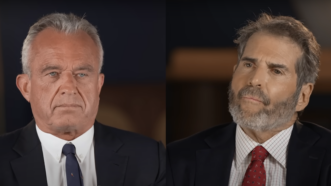
It's good to hear a candidate actually talk about our spending problem. But his campaign promises would exacerbate it.

With prices skyrocketing, the city is weighing whether to regulate hotels further by barring them from hiring contracted workers.

It seems anything the government touches dies—today, it’s thousands of acres of once-productive vineyards.

A recent boom in entrepreneurship challenges red-tape hurdles.

Researchers found that giving people $1,000 every month for three years resulted in decreased productivity and earnings, and more leisure time.
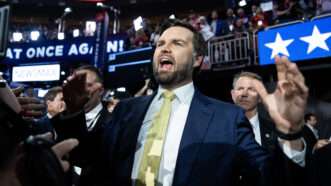
The New Right talks a big populist game, but their policies hurt the people they're supposed to help.

The candidate supports gun rights, wants to privatize government programs, and would radically reduce the number of federal employees.

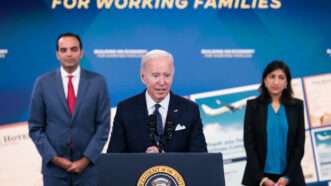
Sen. Rand Paul writes that repealing the Robinson-Patman Act would help bust inflation.
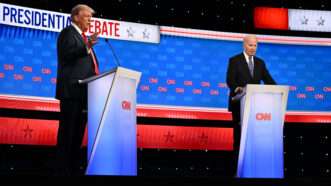
Voters should not dismiss the former president's utter disregard for the truth as a personal quirk or standard political practice.

Despite the party’s alleged turn against regime change wars, Pompeo’s stab-in-the-back myth has Republicans convinced that the same policy will work this time.

Reason's Emma Camp attended the Republican National Convention to ask attendees if they still believe in the power of free markets.

Under the law, the feds couldn't deny you a job or security clearance just because you've used marijuana in the past.
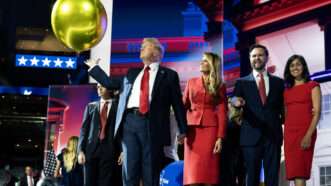
This week left no doubt that the GOP's current leadership wants the government to do more, spend more, and meddle more.

We asked delegates at the Republican National Convention whether a second Trump term would address America's debt problem.
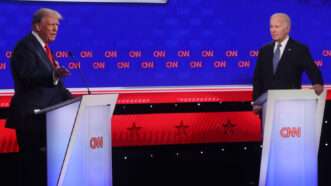
Tariffs lead to trade wars, limit competition, and reduce innovation. But both Trump and Biden want more of them.
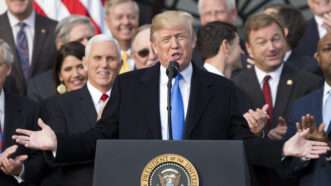
There seems to be general bipartisan agreement on keeping a majority of the cuts, which are set to expire. They can be financed by cleaning out the tax code of unfair breaks.
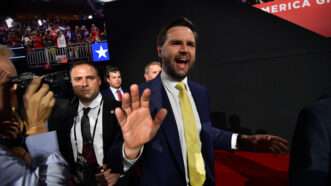
If voting was the solution to the ills of America's working class, wouldn't it have worked by now?

Libs of TikTok is blasting out screenshots of random people's offensive posts to her millions of followers in hopes of claiming their scalps.
Sen. Rand Paul writes that the lawsuit punishes Apple for a feature its customers like.

Help Reason push back with more of the fact-based reporting we do best. Your support means more reporters, more investigations, and more coverage.
Make a donation today! No thanks
Every dollar I give helps to fund more journalists, more videos, and more amazing stories that celebrate liberty.
Yes! I want to put my money where your mouth is! Not interested
So much of the media tries telling you what to think. Support journalism that helps you to think for yourself.
I’ll donate to Reason right now! No thanks
Push back against misleading media lies and bad ideas. Support Reason’s journalism today.
My donation today will help Reason push back! Not today
Back journalism committed to transparency, independence, and intellectual honesty.
Yes, I’ll donate to Reason today! No thanks
Support journalism that challenges central planning, big government overreach, and creeping socialism.
Yes, I’ll support Reason today! No thanks
Support journalism that exposes bad economics, failed policies, and threats to open markets.
Yes, I’ll donate to Reason today! No thanks
Back independent media that examines the real-world consequences of socialist policies.
Yes, I’ll donate to Reason today! No thanks
Support journalism that challenges government overreach with rational analysis and clear reasoning.
Yes, I’ll donate to Reason today! No thanks
Support journalism that challenges centralized power and defends individual liberty.
Yes, I’ll donate to Reason today! No thanks
Your support helps expose the real-world costs of socialist policy proposals—and highlight better alternatives.
Yes, I’ll donate to Reason today! No thanks
Donate today to fuel reporting that exposes the real costs of heavy-handed government.
Yes, I’ll donate to Reason today! No thanks