
Do Legal Restrictions Account for the Downward Trend in New COVID-19 Cases?
The New York Times thinks so, but the data do not fit that hypothesis very well.


The New York Times thinks so, but the data do not fit that hypothesis very well.

The coronavirus pandemic has ushered in an age of sloppy, inaccurate journalism and a heightened need for media literacy.

Kids do not catch or spread or suffer from coronavirus at the same rate as adults, no matter what your newspaper is telling you this week.
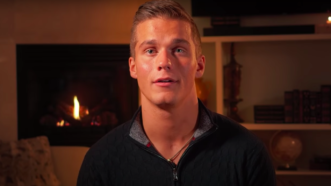
A Jezebel hit piece unfairly smears a 25-year-old Republican candidate for Congress.

That scenario seems highly implausible based on what we know about the epidemic.

If conservatives don't like The New York Times, they don't have to read it. Unlike in the not-so-distant past, you now have endless media options.

The paper's claim reflects the same arbitrary distinction between religious and secular activities that churches are challenging in court.

Cancel culture is real, but Hamilton is safe.
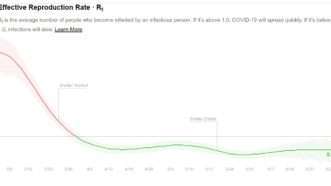
Trends in Massachusetts highlight the importance of voluntary changes in behavior.
Trading unattainable exactitude for unimpeachable morality will lead to a scoldier and less accurate journalism.
Scott Alexander has deleted his popular blog to deter a reporter from exposing his real name.

There was absolutely no reason to run this.

New infections are down nationwide but rising in some places as people rebel against government-recommended precautions.

The NBC News Verification Unit sadly did not live up to its name.


The paper's editors are blind to the sins of writers whose conclusions they like.

Staffers framed their opposition to Sen. Tom Cotton's op-ed as a matter of workplace safety.

Elite media institutions are noisily abandoning liberalism.

What happened to staying at home to keep grandparents safe no matter what?

All of it, The New York Times assumes.
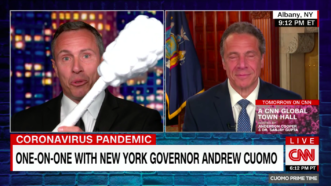
CNN should put an end to this bad family comedy routine—and start asking the governor real questions.
The central tenet of the #MeToo movement is being memory-holed.
There is a difference between reporting facts that make the president uncomfortable and manufacturing facts to fit a preconceived view of him.

CNN badly misreported a Gallup poll.

If you think much about the epidemic remains uncertain, The New York Times warns, you might be part of "the virus 'truther' movement."

There are a lot of reasons to critique the attorney general. Find one that doesn’t require misleading your audience.

Joe Biden, Donald Trump, and double standards, as discussed on the Reason Roundtable podcast.

Readers may be better served by a newspaper that is open about its reporters' opinions. But then it can hardly object when Trump publicly describes them as political opponents.
Why aren't TV networks grilling Biden about this?

"The thread caused some concern & we would like to clarify."

Calls to U.S. poison control centers are up. They have been since March.

"Unless government prohibits the event during this time, we allow it to be organized on Facebook," a company spokesperson tells Reason.

The gatherings are ill-advised but understandable given the harms of government-enforced shutdowns.

Dr. Oz deserves criticism, but he was clumsily referencing a real—and actually encouraging—scientific study.

Dean Baquet's argument for proceeding cautiously with Joe Biden but not with Brett Kavanaugh isn't very persuasive.
So far, it's been silence from The New York Times, The Washington Post, CNN, and others.

The media can reasonably blame Trump for a lot of things. This is not one of them.

A history professor disputed some of Nikole Hannah-Jones's claims about slavery and the American Revolution.

The pundits and newspapers pushed Warren, Klobuchar, and Buttigieg, but Super Tuesday voters just wanted boring old Biden and Bernie.
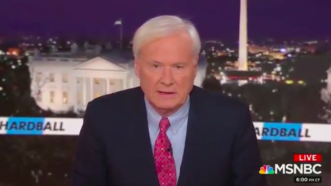
"Compliments on a woman's appearance that some men, including me, might have once incorrectly thought were okay, were never okay."

Police say there were no reports of attempted kidnappings.
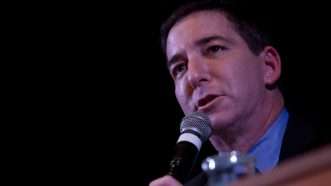
Authoritarian Jair Bolsonaro attacks the press using the same justification the U.S. used to charge Julian Assange.

Journalists and pundits who frantically doubled down on their initial bad takes deserve more criticism.

And they're just as wrong and dangerous this time around.
The high school student was falsely accused of racial harassment, and has sued media companies for $800 million.
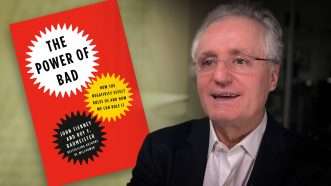
John Tierney and Roy F. Baumeister want to defeat The Power of Bad.

Media theorist Marshall McLuhan's work best explains how the world changed in the 2010s—and what we can expect in the decade ahead.

Human beings are designed to remember trauma more than joy, bad times more than good ones. But John Tierney and Roy F. Baumeister have good news on the despair front.
Celebrate your independence with a subscription to Reason magazine, your most trusted source of honest, insightful news and analysis.




