
It's the End of the Neoliberal Era, and We Still Don't Know What Neoliberalism Is
Politics is filled with words that mean different things in different mouths, but "neoliberalism" is an especially tangled case.

Politics is filled with words that mean different things in different mouths, but "neoliberalism" is an especially tangled case.

But placing a wager on your favorite team is still illegal or too complicated in many states.

How the zeal for government project housing killed a prosperous black community in Detroit.

Both public safety strategies are rooted in bigotry and disproportionately harm African Americans.
Without judicial review, liberals confronting a Republican-controlled legislature will have no opportunity to seek constitutional redress in federal court.
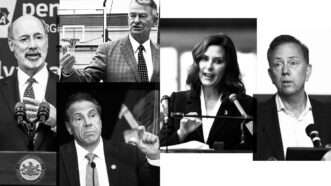
Alarmed by unilateral COVID-19 restrictions, states are imposing new limits on executive authority.
Why Bernie Sanders, Hasan Piker, and Elizabeth Warren should open their wallets before they open their mouths.

The P.C. culture of the '80s and '90s didn't decline and fall. It just went underground. Now it's back.

Despite civil asset forfeiture reforms in Florida, police are still finding ways to take people's stuff.

When it comes to political polarization, it's confirmation bias all the way down.
Supply chains are struggling, but they're not as fragile as you think.

30 years after the Soviet collapse, what happened to the Russian dream of a free economy?

"I have no doubt," Polish President Lech Wałęsa once said, that without John Paul II "the birth of Solidarity would not have been possible."

In 1990s Prague, wonderful things happened in the chaotic space between the end of communism and the rise of its replacement.

Sometimes communist countries had to tolerate a little economic liberty just to survive.

It is hard to comprehend the scarcity and existential dread that was humanity's constant companion during the Cold War.
Two decades after 9/11, the government's appetite for spying has only grown.

And why stopping the subsidies can help bring it back.

Pandemic bans on evictions were supposed to be a temporary measure, but politicians keep extending them.

Politicians and activists claim social media is turning us into zombies. But new technologies have been greeted with skepticism since the dawn of time.
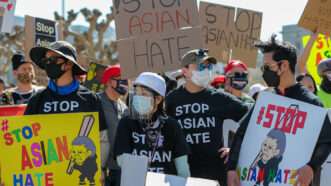
A holistic look at the data shatters the narrative about bias-based violence.
What happens when a community bail fund stops paying bail and starts trying to abolish it?
How spending got out of control and words lost their meaning.
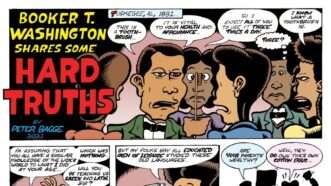
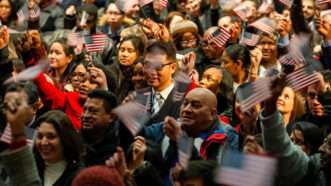
Relatively open borders helped halt the early 20th century welfare state.

The government's long and shameful history of intercepting people's letters
The agency best known for delivering mail has a side hustle in online snooping.

The USPS has overpromised and undersaved for its employees' retirements—all while losing nearly $9.2 billion last year.

Neither rain nor sleet nor snow will stop the U.S. Postal Service. But a pandemic on top of a political fiasco? That's a first-class problem.
"Redress for a federal officer's unconstitutional acts is either extremely limited or wholly nonexistent."
We can thank judges who were prepared to enforce constitutional limits on public health powers.

Reason tried out the field test kits used to test for drugs in prison. They were unreliable and confusing.

It wasn't until his thirties that the economist started to turn from Marxism.
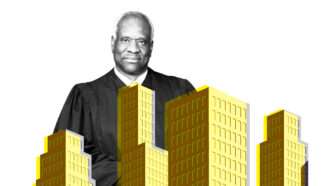
Like a number of other modern conservatives, Thomas seems to think that Twitter and other tech companies are effectively censoring right-of-center views.

How reactionary politicians are using monopoly concerns as cover to pursue pre-existing political agendas

Federal policies are subsidizing people's choices to build homes in harm's way.
Is there any hope to check the growth of the state?
Despite their professed goals, Democrats' pandemic policies have widened disparities between races, classes, and genders.
What the pandemic has re-taught us about the perils of planning, the power of incentives, and the complexities of externalities.
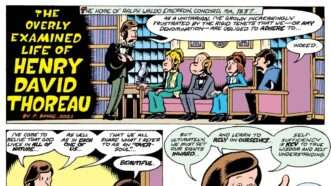
Cartoonist Peter Bagge looks at Henry David Thoreau's life at Walden and beyond

Technological breakthroughs and policy progress mean humanity may never again have to endure a disaster like COVID-19.

While overturning Roe v. Wade would lead to new restrictions in many states, legal access to abortion would be unaffected in most of the country.
Celebrate your independence with a subscription to Reason magazine, your most trusted source of honest, insightful news and analysis.




