COVID-19 Could Fundamentally Change America's Food Supply
Meat processors aren’t the only segment of the food economy that’s on the brink.


Meat processors aren’t the only segment of the food economy that’s on the brink.

The feds pushed cities to implement zoning restrictions. High prices and social inequality were the inevitable results.

Dr. Jeremy S. Faust talks about battling COVID-19 in the emergency room and how to safely reopen American society.

It seems unlikely that most Americans who owe fines for petty crimes will be in a better position to pay them in 60 to 90 days.

Possible really good news from a population screening antibody test study in Santa Clara County, California

Clarifying the prevalence and lethality of the virus will require wide testing that goes beyond a single rural county.

Restoring up to 2.2 million square miles to nature

The inability of the federal government, and the president specifically, to deliver reliable and consistent information to the American public will make economic recovery more difficult.

These subsidies were a bad deal for taxpayers even in good times. In the midst of a global pandemic, they're devastating.


We may find that we like making our own decisions.

There’s a lot of debate over the Swedish model of coronavirus response, but there are good reasons to think a Hippocratic approach to policy may pay off.

Politicians aren't the only crafty ones.

City officials have asked NYPD to reduce arrests since there's a global pandemic happening. The commissioner said he'd do no such thing.

The congresswoman claimed that Amazon is "refusing to provide basic protective equipment to workers." That's not true.

Plus: sensitive cellphone data swept up in coronavirus containment efforts, and more...

Government agencies and public utilities are the most preposterous examples of stasis. The coronavirus might force them, finally, to innovate and join the modern world.

Boys skateboard in the streets of Kabul, one student explains in the documentary, but girls would risk reprisals for daring to do so.

The focus on seemingly minor everyday questions of propriety makes the show's 10th season as insightful as it is funny.

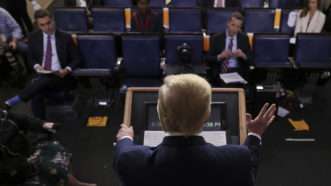
"A national shutdown is not a sustainable long-term situation," Trump said Thursday evening. "We are not opening all at once, but one careful step at a time."

STAT reports leaked comments of University of Chicago researcher

Dr. Oz deserves criticism, but he was clumsily referencing a real—and actually encouraging—scientific study.

"The best available evidence does not support the use of hydroxychloroquine in COVID-19."

No, they’re not frontline ventilators. Yes, they’re useful.

Economic historian Phillip W. Magness on classical liberalism and abolition, Abraham Lincoln's contested legacy, and why history matters in contemporary politics.

The president contemplates a sweeping exercise of executive authority.

Some protestors were nasty and went overboard, but her harsh tactics will sap her legitimacy at a critical juncture.

Plus: Puerto Rico criminalizes fake news about COVID-19, wide geographic disparity in U.S. income growth, and more...

Sometimes pressure causes breakdowns, but sometimes it causes breakthroughs.

"It's unconscionable that the Trump administration would do the bidding of the potato and junk food industries," noted one critic. But Trump's changes are relatively minor.


Bogus lawsuits threaten medical professionals who are fighting on the front lines against COVID-19.

The government has broad emergency powers, but that doesn't mean the Constitution is suspended.
"We question some restrictions that she has imposed as overstepping her executive authority."

None have yet emerged that can clearly stem the tide of the ongoing pandemic.

The $349 billion loan program is meant to help small companies hit hard by social distancing.
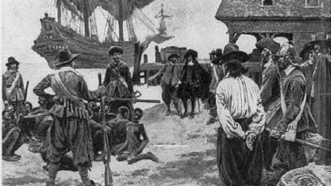
In a new collection, the economic historian documents how classical liberals pushed for abolition and equality in 19th-century America.

Here are 4 questions the independent congressman and the rest of the country will have to consider

He has no colleagues or staff, but he's supposed to provide oversight on $454 billion in coronavirus spending—nearly equal to the annual budget for Medicare.
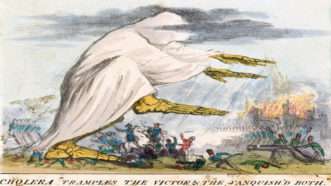
The more punitive the approach to public health, the fiercer the backlash.

Trump isn't absolved of his own failures in confronting the pandemic, but the WHO's response to the coronavirus destroyed much of its credibility and damaged the field of public health.
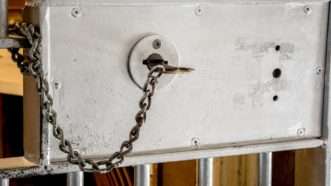
Judge Anne Marie Coyle has rejected every emergency attempt to reduce prison populations.

The WHO arguably failed at its most basic mission of stopping the spread of a global pandemic, but it's still willing to hector people about their drinking habits.

Border counties are now prohibited from selling to anyone without proof of residency.

Setting the cops on social-distancing scofflaws is dangerous to public health and a free society.

Alexandria, Virginia, is the latest city to entertain demands to cancel rent payments during the current pandemic.

Plus: Test Americans for the coronavirus every seven days? And more...
Celebrate your independence with a subscription to Reason magazine, your most trusted source of honest, insightful news and analysis.