
The Buffalo Bills Got Tons of Taxpayer Money for a Stadium With a Lot of Pretty Lame Problems
Plus: No one is drafting Enes Kanter Freedom into the WNBA, Congress fails to reform NCAA again, and why Field of Dreams nostalgia is no good


Plus: No one is drafting Enes Kanter Freedom into the WNBA, Congress fails to reform NCAA again, and why Field of Dreams nostalgia is no good
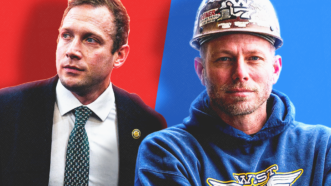
Plus: A setback for Mamdani's second-home tax, Jones Act waiver extended, Ross Douthat's final column, and more...

Did he make a true threat? Or was this just hyperbolic ranting about bad policy?

The Constitution assigns control of federal property to Congress, which never approved the president's demolition and replacement of the East Wing.

Food-related taxes are rising in popularity, though they hurt restaurants and customers—and may even fail as a revenue-raising tool.

The two measures combine unconstitutional provisions with performance art.

The proposed tax would rise with unemployment and fund a new federal jobs program—even though AI has yet to cause mass unemployment.

The ban would gut a growing industry, but the Trump administration’s position isn’t a principled stand against prohibition.

The DOGE project was the second Trump administration's best idea. Unfortunately, it was terribly executed.
Misconduct and misrepresentations by Justice Department lawyers have led some federal judges to question the traditional benefit of the doubt they give to the government.

The Senate Commerce committee advanced four bills related to online and AI safety in the name of protecting children.
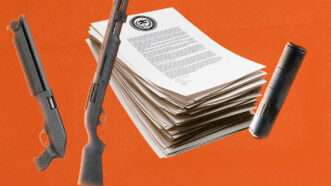
When Congress eliminated taxes on suppressors, short-barreled rifles, and short-barreled shotguns, it also eliminated the constitutional justification for regulating them.

A new Hawaii law reclassifies corporate political speech as a "power" the state can revoke at will.
A new podcast from the National Constitution Center
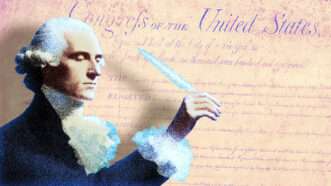
The “father of the Constitution” worried about federal and state overreach.
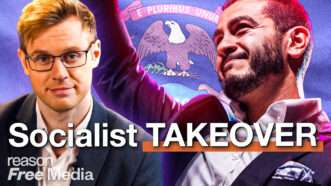
El-Sayed is pushing a mendacious claim: that people would be wealthier if they endured yet another massive transfer of money and power to a vast federal health bureaucracy.
The Senate’s funding bill stops the Trump administration from handing political appointees control over federal grants, but Congress isn’t eager to rein in spending.
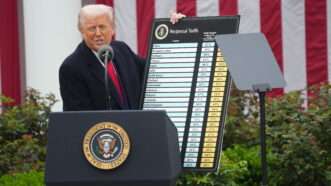
The article explains why the new tariffs are harmful and illegal for many of same reasons as those invalidated by the Supreme Court.
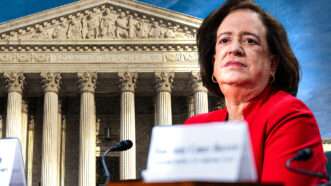
The liberal justice wants the Supreme Court’s harshest progressive critics to chill out.
A guest post by Georgetown legal scholars Peter E. Harrell and Jennifer Hillman.

The acting attorney general confirms his dishonesty in presenting that jaw-dropping scam as the resolution of a bona fide legal dispute.
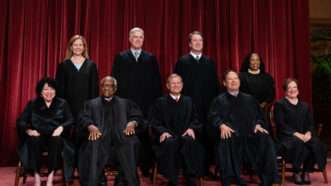
The prominent liberal legal scholar and former ACLU leader outlines how the Court has often checked Trump, but also critiques it for going against precedent.

Casting Kalshi as an out-of-control gambling platform makes it easier for the state to take money from the company and its users.

Paul Skalnik was a career criminal and jailhouse snitch whose unbelievable testimony secured dozens of convictions—including that of Jim Dailey, who awaits execution.
The Expedited Access to Biosimilars Act enables FDA approval of pharmaceutically equivalent biologic medications.

As U.S. attorney, Jay Clayton subpoenaed journalists for reporting embarrassing information about the president's new plane.

It is now available on SSRN. This revision adds additional points, and takes account of various recent events.

Robby Soave and Amber Duke talk about Fauci's appearance before Congress, where he pleaded the Fifth rather than address COVID's origin.

Plus: Congress struggling to regulate college sports, looking at the economics of World Cup hosts, and why are golf shows all the same?

That's more than one-third of the House. Those districts include more than 84 million Americans, whose input doesn't matter.
It responds to a creative court-packing proposal put forward by Andy Craig.

A bipartisan bill would give the Department of Homeland Security sweeping power to shut down powerful AI systems, with serious costs for competition and security.

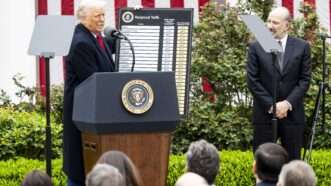
Economist David Hebert highlights an underappreciated danger of Trump's tariff mania. It's a serious problem, but one that can at least be mitigated.
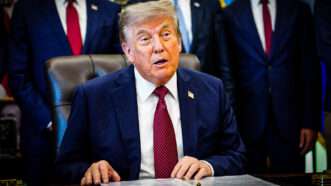
The administration this month denied thousands of clemency applications.

The BLT—a delicious celebration of the power of markets—exemplifies political attacks on the free movement of goods and people.

Standard minimum wage and overtime laws now apply to the state's goat herders, whose animals clear brush and reduce fire danger. The costs are unsustainable.
It was filed by several businesses, including Learning Resources, Inc., which was also involved in the IEEPA tariff litigation.

The Sentencing Project highlights the perverse consequences of the felony murder rule, a vestige of British law that still prevails in federal courts and all but two states.
The complaint explains why the tariffs violate the requirements of Section 301, and also run afoul of the major questions and nondelegation doctrines.

The Section 301 tariffs announced on Thursday overstep the powers granted by Congress and likely run afoul of the major questions doctrine.
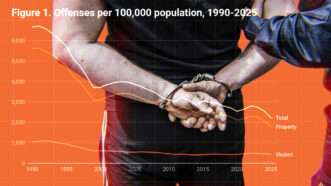
Facts don't care about the GOP's "crime wave" feelings.
The new policy is based on sham investigations, and runs afoul of the major questions and nondelegation doctrine.
In recent remarks before the Ninth Circuit Judicial Conference, Justice Kagan rejects the conventional liberal narrative about the Supreme Court.

Regulating search results when AI is upending the industry is a fool’s errand.

What’s at stake in Ream v. U.S. Department of the Treasury.


New from Reason: a look into what Javier Milei has accomplished and what it will take to make the most of Argentina’s window for real change. Out now for subscribers.

