

A Serial Liar Likely Sent an Innocent Man to Florida's Death Row. Why Is He Still There?
Paul Skalnik was a career criminal and jailhouse snitch whose unbelievable testimony secured dozens of convictions—including that of Jim Dailey, who awaits execution.
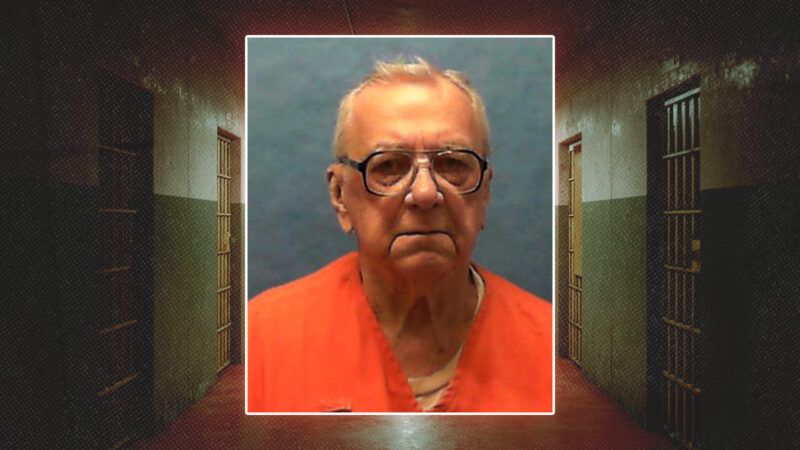
Paul Skalnik's resume was long. At different times throughout his life, he was a Southwest Airlines executive, a high-powered attorney, a Vietnam War hero, and one of the most prolific jailhouse snitches in American history. Even more impressive is that only the latter was actually true.
How is it possible for those things to coexist?
Such is one question at the heart of Catch the Devil, the New York Times best-selling book by Pamela Colloff. The author chronicles Skalnik's storied career as prosecutors' trusted tool for securing dozens of convictions—despite that the state was well aware Skalnik himself was a serial liar, fraudster, and criminal. Indeed, his adult life was essentially a revolving door between two places and two modes: crime sprees known for their escalating gravity and elaborate dishonesty, and jailhouse stints where he was suddenly supposed to be a beacon of sincerity.
Skalnik "would produce these incredible quote-unquote confessions," Colloff, a staff writer at ProPublica and The New York Times Magazine, tells me in the latest episode of The Reason Interview. "And in return for his testimony about those confessions, he would usually be let free….At what point does someone say, 'What are the odds that this guy in the jail has a better batting record than our best detectives?' No one ever says that."
In particular, how did this guy have a better batting record? A guy who lived double, triple, quadruple lives? A guy whose crimes included swindling multiple people out of their savings and sexually abusing children? Even still, Skalnik was relied upon to testify in case after case—with vivid, theatrical confessions he allegedly procured—helping send multiple people to prison or death row.
That includes one man awaiting execution who is now widely believed to be innocent. Jim Dailey was sentenced to die in 1987 for the murder of a Florida teenager named Shelly Boggio. The evidence against him, to put it mildly, was thin. That was not the case, however, for another man: Jack Pearcy, who was last seen with Boggio, who had a history of violence against women, and who had formerly been implicated in a murder-for-hire plot. As Catch the Devil recounts, Pearcy realized during his initial interrogation that things weren't looking good for him. So he pivoted to a new story that cast himself as a mere bystander and pinned the homicide on his roommate, Dailey. Pearcy was ultimately convicted and sentenced to life; Dailey to death.
"There's no physical or forensic evidence tying [Dailey] to the crime, or any motive whatsoever," says Colloff. The case against Dailey, who is now in his 80s, rested largely on a graphic confession he allegedly, and unbelievably, gave Skalnik—who, by that point, was well-known among inmates to be a snitch.
"Since the early '70s, there have been over 200 people in the U.S. who had been sentenced to death who have since been exonerated," notes Colloff in our interview. "And we know that jailhouse informants, who are notoriously unreliable, are a factor in 25 percent of those wrongful convictions." Catch the Devil, accordingly, is about the broader consequences of prosecutors relying heavily on such informants.
But it is also about how difficult it is to overturn a wrongful conviction. Over the years, as information comes to light potentially exonerating Dailey, Catch the Devil shows many onlookers finding it hard to ignore that something may have gone dreadfully awry in his case.
Yet his fortunes in the courtroom do not improve. "I am sort of obsessed with this idea that the system is built to compound its own errors," says Colloff. "There's a lot of new evidence that comes out over the years in this case that really points toward his innocence, that you would think that would be enough….But what you see as this moves through the [system] is that courts really look backward at precedent and jury verdicts, rather than forward at new evidence."
Colloff acknowledges that "for some very good reasons, a jury verdict is sacrosanct." But she also raises a harder question: Why should testimony from a liar like Paul Skalnik be deemed more worthy than evidence pointing to a condemned man's innocence, simply because the lies came first?




