

Economics

The Surprisingly Long History of Private Space Exploration
America returns to its roots, thanks to philanthropists who are literally shooting for the stars.
Humans of FreedomFest, Part 4: "My father used…'libertarian' as a swear word."
Portraits from the world's largest annual gathering of libertarians.
Can a Governor Save Rural Regions? Should He?
The Democratic gubernatorial candidate in Virginia unveiled a plan for economic growth in the rural parts of the state.
Loving Animals to Death: Rules to 'Protect' Animals Often Put Them At Risk
The Humane Society even opposes artificial rhino horn, which would lower demand for poachers' fare.


We Are The Economy They Want to Regulate
Strictly speaking, it's not markets that can and should be free-it's people.
Libertarians' Lost Voice in the Paid Leave Debate
Instead of sweeping new government entitlements, policymakers should instead seek policy reforms that help workers while minimizing economic disruption.
Is It Time to Start Dismissing 'Economics Deniers'?
Minimum wage laws have negative effects whether or not their advocates acknowledge them.
Released From Prison But Locked Out of Work
How licensing laws that block people with criminal records harm the formerly incarcerated and the economy.
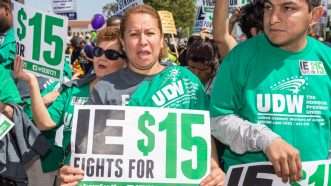
Seattle's $15 Minimum Wage is Hurting the Workers It's Intending to Help
A new study reminds us that the law of supply and demand still applies to labor
241 Years of Independence in America, 20 Years of Chinese Rule in Hong Kong
Economic dynamism and concomitant abundance are best served by a good dollop of freedom, which, alas, we are in the process of slowly losing.
There's More to a Job Than Making Money
More than 11 percent of prime working-age men in the U.S. are outside the job market.

Oregon Wants to Regulate Flexible Work Schedules Out of Existence
"Fair Work Week" would penalize employers and likely cost jobs, hours, and employee flexibility.
You Don't Need a Bread Czar to Know that the Bakery Will Be Stocked Every Morning
Watch Russ Roberts' animated ode to the magic of markets, "It's a Wonderful Loaf"
Seattle Surprise: When You Raise Prices by Gov't Diktat, People Usually Buy Less
A new "very credible" study on $15 minimum wage validates law of supply and demand.

Capitalism Should Be Our Weapon of Choice in Cuba
Embargoes don't work. Let capitalism and socialism duke it out.
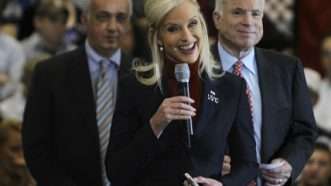
Cindy McCain's Charities Are Plagued With Scandal and Corruption. Now Trump Wants to Make Her Human Rights Ambassador
Examining McCain's philanthropic past reveals a long history of personal abuse of nonprofit resources, shady connections, and shoddy work.

Does Classical Liberalism Have a Chance in South Africa?
The long-ruling African National Congress is on its way to losing power, but could go with the "Zimbabwe option."
Overpopulation Scaremongering Never Gets Old
Neo-Malthusianism in the Sunday New York Times


Trump Is Right: Regulation Is Massively Slowing Down and Boosting the Costs of Modernizing Infrastructure
'Red tape is not the price of good government; it is the enemy of good government.'

Armless Droid Calls Cops After Being Assaulted by Drunken Man
The future of human-robot relations is silly and sensible, not sinister.
'Immigrants Are Responsible for Substantial Economic Growth'
New MassTLC study richly documents how newcomers grow the economy, cause less crime than natives, and do high-tech jobs that Americans won't do.
Are Robots Going to Steal Our Jobs?
Many technologists think so, but economists aren't so easily convinced.

EpiPen Not Overpriced, Despite New York Times Complaint
Contrary to what The New York Times claims, the outcry over EpiPen prices has made them lower.
A Spectacularly Stupid Idea: Governing Land as a Global Commons
Making an environmental resource a commons is tantamount to calling for its destruction.

George Clooney Leaves Free Market Solutions Out of Proposals to Fight World Poverty
Private enterprise helps global economic development in ways besides simple charity.
Noam Chomsky's Venezuela Lesson
Venezuela descends into chaos as Chomsky says he's right about Hugo Chavez's sharp poverty reduction.
Are You Ready for the "Intimacy Economy"?
Glenn Platt of Miami University says technology is shrinking the distance between celebrity and audience, business and customer. Radical disruption ensues.
Zoning Laws in New York, San Francisco, and San Jose Cut Americans' Wages by $8,775
And they've made the U.S. economy 9 percent smaller than it would it otherwise be.
Trump Budget: The Return of Rosy Scenario?
Congressional Budget Office projections vs. Office of Management and Budget projections
The Awful Health Policy and Cynical Politics of Trump's Budget Plan
The president wants to cut Medicaid but leave Medicare untouched, rewarding supporters at the expense of America's long-term finances.

Yes, the Population of Africa Will Grow Tremendously This Century
Fortunately, even if conditions don't improve, economic freedom (and consequently growth) benefits not only the people who have it, but also people who don't.
The New York Times' Tax Coverage Goes Off the Rails
The Times news columns have been openly campaigning against Trump's tax cuts from the moment they were rolled out.
How Washington Lost the War on Muscle
Steroid users hustle to stay one rep ahead of the law.

The Prospects for Progress in Africa
Nigeria will have a higher population than the U.S. by mid-century, when one in four people on Earth will live in Africa.
Lighten Up, Francis
The Pontiff ought to stick to flock-tending and lay off capitalism.
You Are Ignorant, But Not Necessarily Dumb.
A review of The Knowledge Illusion: Why We Never Think Alone

Rand Paul: Budget Deal Should Be Renamed 'The Status Quo Protection Act'
Libertarian-leaners are lonely voices on Capitol Hill opposing the latest bipartisan spending spree
Physical Scientists Are So Darned Cute When They Finally Understand Economics
Geologists analyze the myth of mineral resource exhaustion.
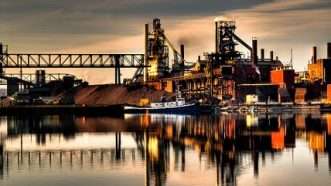
A Matter of Steel Industry Security
Steel imports are no more a threat to U.S. national security than imported sugar or lumber or tulips.


New Book Offers Bleak Look at Paul Ryan's Hometown
In 2008, Obama told GM factory workers in Janesville, Wisconsin, that the plant would "be here for another 100 years." It has since closed, leaving thousands unemployed.




