
The Economics of Prohibition Doom Plans To Reduce Drug Use by Busting Online Dealers
A study suggests that "selectively targeting large-scale drug vendors" on the dark web can succeed where all previous enforcement efforts have failed.


A study suggests that "selectively targeting large-scale drug vendors" on the dark web can succeed where all previous enforcement efforts have failed.

New work requirements will target those over age 50, but the debt ceiling deal also loosens existing work requirements for those under age 50.

From the American Founders to communist meme creators, people have long claimed Smith's endorsement for their ideas.
The CEO of Open To Debate wants us to disagree more productively—especially when it comes to presidential debates.

If the debt ceiling bill passes, the Education Department will be barred from extending the student loan repayment pause yet again.

Even taking all the money from every billionaire wouldn't cover our coming bankruptcy.

A more flexible model of oversight avoids hyper-cautious top-down regulation and enables swifter access to the substantial benefits of safe A.I.

But a lot of Republicans probably will.

Plus: A listener question cross-examines prior Reason Roundtable discussions surrounding immigration, economic growth, and birthrates.


Plus: Artificial intelligence and jobs, how government caused a lifeguard shortage, and more...
Biden still wants to explore the 14th Amendment—but it isn't a presidential authority, and the debt limit doesn't create a constitutional "trilemma."

The deal will freeze non-military discretionary spending this year and allow a 1 percent increase in 2024.

Norway hiked its wealth tax. A bunch of rich people got the hell out.

The old guard titans might have been monsters. But, the HBO series warns, the young wannabes vying for power might be even worse.
They are all looking for elephants in mouseholes, and even the "premium bonds" theory has its flaws.
The term gets thrown around loosely to refer to different concepts, but with very different implications.

The U.S. tax system is extremely progressive, even compared to European countries—whose governments rely on taxing the middle class.

If the FTC wants to know why there's such a notable lack of competition within America's baby formula market, it ought to ask other parts of the federal bureaucracy.
Critics of the limit are right that it wasn't intended as an ex post check on spending, but its history makes constitutional objections difficult to fathom.
Sometimes he calls for freedom, and sometimes he preaches something darker.

Plus: A listener asks if the Roundtable has given the arguments of those opposed to low-skilled immigration a fair hearing.

Hawley might call them "tariffs on China," but that's obvious nonsense: Tariffs are paid by Americans.

The debt ceiling isn’t the issue; excessive federal spending is the real problem.

The harm caused by marijuana abuse does not justify reverting to an oppressive policy that criminalized peaceful conduct.

J.D. Vance and Co. are trying to give themselves permission to wield public power unconstitutionally.
The ideology champions the same tired policies that big government types predictably propose whenever they see something they don't like.
Professor Prakash dispatches the arguments for unilateral Presidential authority to disregard the debt ceiling.

Join Reason on YouTube Thursday at 1 p.m. Eastern for a discussion about the limits of population control with Elizabeth Nolan Brown and Scott Winship.

A good example of why so few stadium deals end up on the ballot.
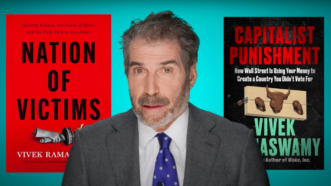
Why the businessman launched a long shot campaign for the presidency.
Plus: A listener question concerning the key to a libertarian future—should we reshape current systems or rely upon technological exits like bitcoin and encryption?
The current debate is a replay of debates we have had before (and will likely have again).
The co-creator of Skype says yes. The George Mason University economist says no.
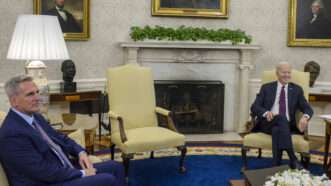
The longer we wait to address our debt, the more painful it will be.

"The greatest thing that ever happened to me was to be born in a free country of modest means and to have opportunities," says the Nobel Prize–winning economist.

Is this the new normal, and will Joe Biden pay a political price for it?

The hard lesson that free markets are better than state control may have to be relearned.

In a new report, the Center for Economic Accountability analyzed economic development data from all 50 states and the District of Columbia, and there's very little to show for billions in annual spending.

Last year, Biden was trying to take credit for "the largest drop ever" in the federal budget deficit. Now, the deficit is almost three times as large as it was a year ago.

Social Security will become insolvent in the early 2030s if Congress does nothing.
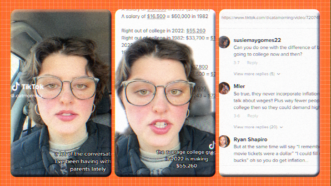
Not only is that claim factually incorrect, but it's also wrong to be so pessimistic about young people's economic future.

Plus: Kansas voting restrictions struck down, the legacy of the "vast wasteland" speech, and more…
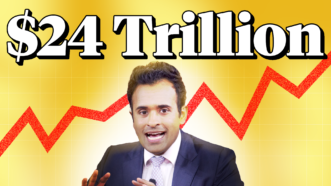
We can't grow our way out of its ruinous economic impact. The only way forward is to cut spending.

High taxes and heavy regulations are as effective as prohibition at creating black markets.

To address an "unpaid debt bubble," the proposed law would dictate contract terms and require regulators to intervene in commercial disputes.

The teachers union head honcho is trying to engage in some astonishing revisionism, claiming she actually wasn't opposed to school reopening.

Delayed payments will increase, and companies will respond by raising interest rates—or denying low-income applicants outright.


New from Reason: a look into what Javier Milei has accomplished and what it will take to make the most of Argentina’s window for real change. Out now for subscribers.

