Penn Law Should Not Fire Amy Wax
The professor's immigration views are wrong, but removing her would compromise academic freedom.

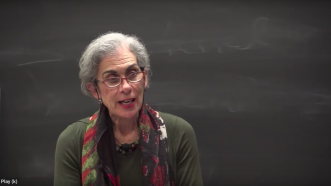
The professor's immigration views are wrong, but removing her would compromise academic freedom.

In order to fight crime, Americans must...make their data more susceptible to hacking?
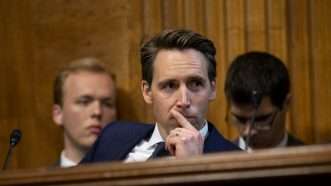
The Missouri senator thinks wasting time on Instagram is a problem so big that only the federal government can solve it.

Plus: Behind the bipartisan war on internet speech, New York "decriminalizes" pot (but you'll still get fined), and more...
The Sixth Circuit suggests an important limit on the Supreme Court's Nieves precedent, though it doesn't decide the question.
The Sixth Circuit expresses concern that such bans may be unconstitutionally vague or overbroad.
The parodist was arrested for "unlawfully impair[ing] the department's functions," but was acquitted; the Sixth Circuit just let the parodist's lawsuit against the city proceed.

While the teenager has a legitimate beef about coverage of his encounter with Native American activist Nathan Phillips, that doesn't mean he has a legal cause of action.
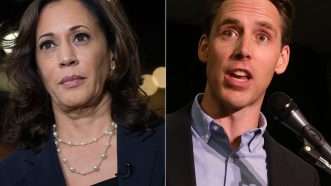
From Josh Hawley to Kamala Harris, online free speech is under attack.
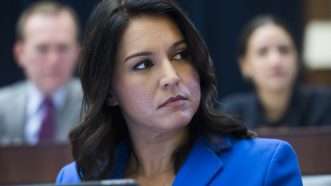
The presidential hopeful alleges the company violated her First Amendment rights when it suspended her campaign advertising site for 6 hours.
"I'm trying to figure out how the same links that are in this contract that you were paid $7,500 to remove end up in a fake court order with the client's name?"
Stephanie Gilliard argued "that offers of employment have been rescinded after Google searches of her name revealed the events of this case, namely her surreptitious recordings of her co-workers."
Both Democrats and Republicans are cheerleading for government action against Facebook, Google, Amazon, and the rest, but Americans should be skeptical.
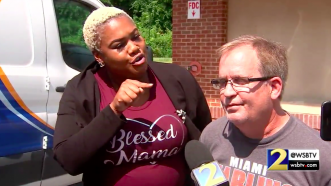
A trivial encounter between two irate grocery shoppers becomes a viral story, then a hate hoax.

Department of Homeland Security
A policy that allows for quicker deportations near the border could expand nationwide.

Fans of the state's new Chick-fil-A law should take a look at the anti–Boycott, Divestments, and Sanctions law.

So the D.C. Circuit held today.

Lindsey Graham, who once called Trump a "race-baiting, xenophobic, religious bigot," seems to agree.
Unsurprisingly, the exact allegations that are said to be libelous don't appear in the complaint.


Donald Trump is far from the only person who doesn't understand the Bill of Rights.

No diploma, no making money telling people how to eat better.
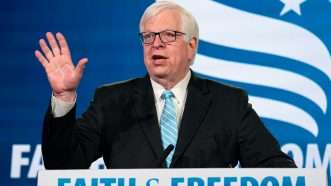
The pundit made the claim at a Senate hearing on allegations of tech censorship against conservatives.
The plaintiff, Yan Huang, is vice minister of China's Ministry of Housing and Urban-Rural Development. Defendant, Wengui Guo, who also goes by Miles Kwok, has been described as a "renegade Chinese billionaire," who fled China and now lives in New York.

The late Supreme Court justice was an inconsistent defender of civil liberties.
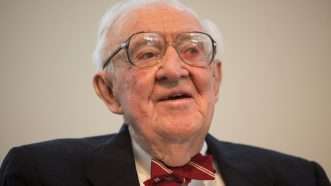
The retired Supreme Court justice has died at 99.
But they would prefer to be able to snoop on civilians who use the encrypted chat app.

The government shouldn't pass special laws that prevent people from revealing what's true.
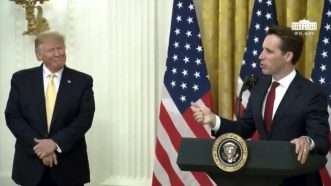
Trump supports a bill that would encourage censorship in the name of free speech.

Farm groups get politicians to pass laws against secret filming on farms.

And will the end result encourage companies to try to keep cybersecurity breaches secret?
Dr. Calvin Day had claimed that describing his suspension as based on "unprofessional conduct" was libelous. (He had also earlier sought to get dismissed criminal charges expunged, and tried to bind local news outlets to the expungement order.) He lost, and was ordered to pay over $80,000 in attorney's fees.

If there’s one thing government types can agree on, it’s that nobody should be allowed to buy and sell stuff without permission.

UC–Santa Barbara's Title IX office is "aware of this matter and actively engaged in a response."
(Disclosure: I had filed an objection, on my own behalf, to the motion to seal.)

A scientific consensus has emerged that trigger warnings just don't work—and student activists should stop demanding them.
More than just a mixed metaphor -- it's a legal doctrine.

Aggressive asset forfeiture collides with First Amendment rights.
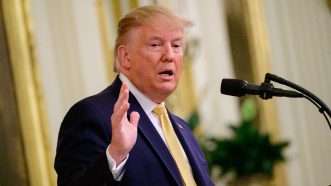
At his social media summit on Thursday, the president ranted incoherently about the media's "crooked," "dishonest," and "dangerous" speech.
The idea that the internet should enjoy minimal government oversight precisely because it was a technology that enabled open and free speech for everyone has been turned on its head.

The lawsuit alleges that MSU has denied due process rights to student defendants in order to placate critics of its sexual assault policies.
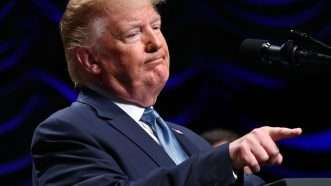
Plus: Air-launched rockets, the GOP becomes the party of Trump, and Pelosi feuds with AOC.
"The cost of not doing this is the harm done to other Googlers every time they encounter these terms," says the company's diversity and inclusion team.
An interesting D.C. trial court decision from last year, involving an image of nudity submitted as part of a court case.


New from Reason: a look into what Javier Milei has accomplished and what it will take to make the most of Argentina’s window for real change. Out now for subscribers.