
CNN's Mary Katharine Ham Loves Waffle House, Isn't So Sure About Twitter: Podcast
A conversation about social media, privacy, and the public-private, left-right free speech fight

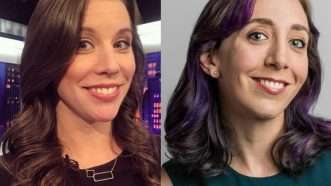
A conversation about social media, privacy, and the public-private, left-right free speech fight
"A northwest Arkansas judge who ordered that attack ads critical of Supreme Court Justice Courtney Goodson be taken off the air this week reported receiving [over $12,500 of] income, through his wife, from the law firm of Goodson's husband."
A customer reports that he was blocked from accessing us at a Nordstrom coffee shop; have you had similar experiences?
The ad criticizes Arkansas Supreme Court Justice Courtney Goodson; the TRO that she just got today is almost certainly an unconstitutional prior restraint.
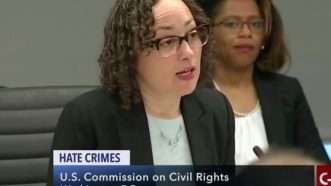
..and other things I learned when I spoke at a U.S. Commission on Civil Rights briefing.
"[Defendant's] posts inspired viewers' comments, which read like a nerd's version of a fist fight." More substantively, "In this context, and considering the cutting-edge nature of [plaintiff's] research into antimatter's theoretical applications [which defendant was sharply criticizing], a reasonable reader would expect zealous debate."
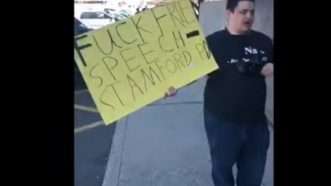
Stamford, Connecticut, police chief objects to salty language on a sign. That's not a crime.
Faced with the possibility of fines or legal battles, many will choose not to speak at all.
According to the group's theory, a vast range of political hardball is a crime.

"A bias response system has no place in America."
Too many people (and governments) want to shut down and punish speech they disagree with.
So concludes the Trademark Trial & Appeal Board, in rejecting rapper Dr. Dre's trademark claim against OB/GYN -- and OB/GYN-related writer and lecturer -- Draion M. Burch, who calls himself Dr. Drai.
A First Amendment violation, I think, notwithstanding the court's concern about the anonymous Tweeter's privacy.
The EU's GDPR should serve as a cautionary tale for Americans eager to reign in tech titans
"A horrifying and chilling example of political correctness."
The New Jersey Supreme Court answers.
So the New Jersey Supreme Court held this morning, in Petro-Lubricant Testing Laboratories, Inc. v. Adelman.
"Freedom of the press," as I've argued in earlier posts, was understood as protecting the freedom of all to use the printing press -- not just a freedom of the profession or industry that we might call "the press."
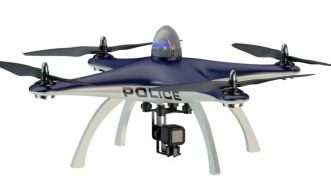
Rahm Emanuel wants to do the thing that critics of drone surveillance fear most.
Some judges in recent have years have reasoned that non-professional-media speakers have lesser First Amendment rights.

The government fears that the popular children's cartoon has taken on a "subversive hue" and may "hamper positive societal morale."
One activist is ordered "not [to] post photographs videos, or information about [the other] to any internet site."
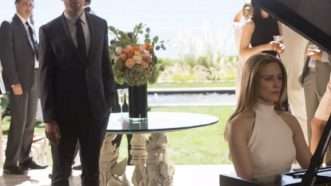
The HBO series turns Facebook and Twitter into a theme park filled with sex, violence, and robots.
"Freedom of the press," as I've argued in earlier posts, was understood as protecting the freedom of all to use the printing press -- not just a freedom of the profession or industry that we might call "the press."
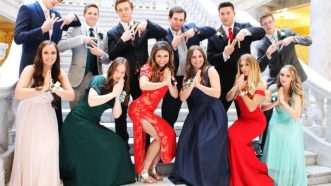
Social media can actually be pretty good at hosting heated conversations about racism and sexism.
At the end of one Avengers screening, a man started yelling, "If you were to die tonight, would your passage to heaven be guaranteed?"
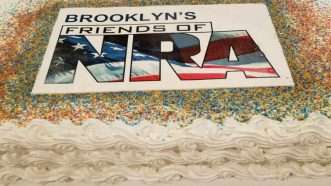
Brooklyn Council Member Justin Brannan crows via tweet that "we've successfully chased the @NRA underground in #Brooklyn."

Speakers' free speech rights threatened
More on why the freedom of the press wasn't seen as limited to "the press" in the sense of the institutional media, but extended to all who used the printing press.
The Wisconsin Court of Appeals let a case against gun-sales advertising site Armslist go forward -- and in the process undermined 47 U.S.C. § 230 protection for a wide range of web sites.
In 1980, the Minnesota Supreme Court said "yes"; yesterday, it agreed to hear a case that might lead it to reconsider.
Some argue that the "freedom of the press" must give special rights to the press-as-industry, because otherwise it would be redundant of the "freedom of the speech" -- but in the Framing era, the two were complementary, not redundant.

Journalism prof Michael Socolow has three simple rules to up your social-media literacy.
A new section for the brief I blogged about last week, ultimately arguing that an injunction is improper in Sindi v. El-Moslimany -- but not because of the First Amendment.
A Nevada school district unlawfully required a student not to wear a gun rights T-shirt, according to a First Amendment lawsuit filed today in federal court.
The Free Press Clause, my research led me to conclude, has long been understood as equally protecting all who speak using the means of mass communications -- not just professional journalists and the like.
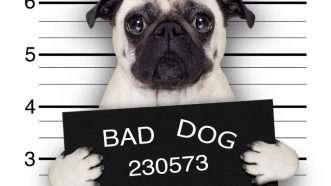
Court feels "menaced" by a pug.

The state law targeted people who share erotic photographs of others without their consent.
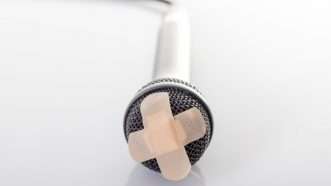
Why all Americans should be thankful for the First Amendment
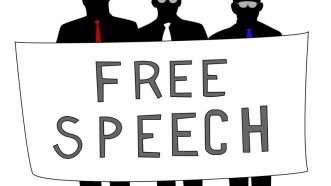
"Yes," the Minnesota Supreme Court said in 1980 -- now it's being asked to reconsider that.
But its illiberal tactics against liberal Muslim reformers remain extremely troubling.
Celebrate your independence with a subscription to Reason magazine, your most trusted source of honest, insightful news and analysis.




