Study Finds Texas' 6-Week Abortion Ban Resulted in 10,000 Additional Babies
A study from researchers at Johns Hopkins is the first to look at the effects of Texas' 2021 "Heartbeat Act" on live births.


A study from researchers at Johns Hopkins is the first to look at the effects of Texas' 2021 "Heartbeat Act" on live births.
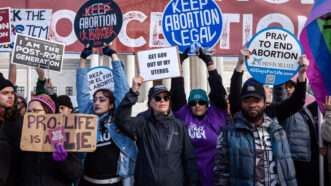
Plus: Court rules against judge who threw child stars in jail during parents' custody dispute, inside the FTC's attempt to stop Microsoft from acquiring Call of Duty, and more...

Legal scholar Julie Suk argues the answer is "yes." The idea has a solid basis in natural rights theory, but is at odds with longstanding legal doctrine. It also has potentially very broad libertarian implications.

Plus: APA says social media not inherently harmful for kids, senators propose Artificial Intelligence Regulatory Agency, and more...

Plus: The "Kids Online Safety Act" is back and as bad as ever, expect another interest rate hike today, and more…

Americans’ opinions are more nuanced than headlines suggest, leaving little room for total bans.

"Once a woman became pregnant for any reason, she would now become property of the state of South Carolina," said one state senator.

It's one small victory for free speech and due process, but similar battles continue to play out elsewhere.

If a national consensus on abortion ever emerges, it won’t be forged in the White House.

Mifepristone will remain on the market for now with no changes to how it can be prescribed.

Plus: More secrecy from the Global Disinformation Index, the public awaits another big Supreme Court abortion decision, and more...
The appeals court's unpublished order avoids some of the district court's errors, but still has some significant problems, especially with regard to standing.

It’s not the FDA’s job to tell doctors what to do.

Plus: New developments in the Texas abortion drug ruling, fallout from the Riley Gaines event at SFSU, and more...
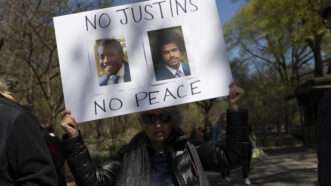
Plus: The editors respond to a listener question concerning corporate personhood.

The divergent orders from judges in Washington state and Texas may bring the battle over mifepristone to the Supreme Court.

On Good Friday, two district courts issued decisions on the FDA's approval of the abortion drug mifepristone.

Litigation over abortion drugs turns disagreements about individual rights into a bureaucratic tussle.

Plus: Australia's failed news media bargaining code, two ways government created an Adderall shortage, and more...

Abortion and gerrymandering are likely to be on the court's docket in the near future, and Janet Protasiewicz ran unabashedly to the left on both issues. Is this the best way to decide contentious topics?

Second in a two-part series published by Australian Outlook, a publication of the Australian Institute for International Affairs.

"Taking that child across the border, and if that happens without the permission of the parent, that's where we'll be able to hold accountable those that would subvert a parent's right," said one of the bill's sponsors.
And this lawsuit faces many of the same administrative law hurdles as does AHM v. FDA.
ADF's Erin Hawley responds to my post on the jurisdictional problems in AHM v. FDA and I reply.
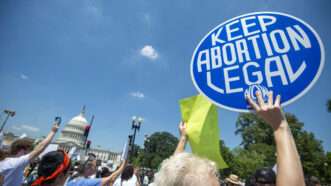
It examines whether people are likely to "vote with their feet" based on interstate differences in abortion policy, after Dobbs. The first in a series of two articles on this topic.
A nominee's work defending a state parental-notification law in 2005 may be a stumbling block to his confirmation.
The Court's newest justice questions whether her colleagues are too quick to vacate lower court decisions.
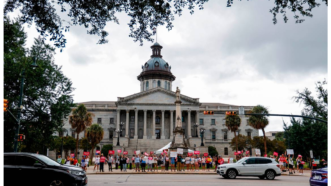
Plus: ACLU sues over low-flying helicopter during protests, Canada's Online News Act, and more...

"I know either way he will use it against me.... And after the fact, I know he will try to act like he has some right to the decision," said the woman in text messages to her friends named as defendants in the suit.

The law allows abortions when there is a "medical emergency"—but what qualifies as an emergency?
There's been lots of heat, but very little light in coverage and commentary about the lawsuit seeking to revoke FDA approval of mifepristone.

Plus: States move to curtail internet anonymity, Amsterdam cracks down on cannabis, sex, and booze, and more...

"I pray wherever I go, inside my head, for the people around me," said one priest. "How can it be a crime for a priest to pray?"


The Supreme Court's Dobbs decision gives states the ability to prohibit abortion. For a lot of pro-lifers, this highlights how much persuading they still have to do.

An underground network in Chicago helped women terminate thousands of pregnancies amid abortion prohibition.

Plus: Lawsuit challenges ban on scraping court records, state marijuana convictions lead to longer federal sentences, and more...
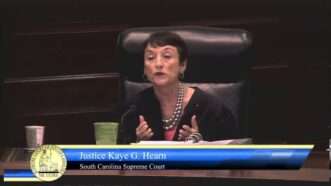
The court ruled that the state's six-week abortion ban violates the right to privacy.

Plus: House speaker still uncertain, teacher's MAGA hat protected by the First Amendment, and more...


Help Reason push back with more of the fact-based reporting we do best. Your support means more reporters, more investigations, and more coverage.
Make a donation today! No thanks
Every dollar I give helps to fund more journalists, more videos, and more amazing stories that celebrate liberty.
Yes! I want to put my money where your mouth is! Not interested
So much of the media tries telling you what to think. Support journalism that helps you to think for yourself.
I’ll donate to Reason right now! No thanks
Push back against misleading media lies and bad ideas. Support Reason’s journalism today.
My donation today will help Reason push back! Not today
Back journalism committed to transparency, independence, and intellectual honesty.
Yes, I’ll donate to Reason today! No thanks
Support journalism that challenges central planning, big government overreach, and creeping socialism.
Yes, I’ll support Reason today! No thanks
Support journalism that exposes bad economics, failed policies, and threats to open markets.
Yes, I’ll donate to Reason today! No thanks
Back independent media that examines the real-world consequences of socialist policies.
Yes, I’ll donate to Reason today! No thanks
Support journalism that challenges government overreach with rational analysis and clear reasoning.
Yes, I’ll donate to Reason today! No thanks
Support journalism that challenges centralized power and defends individual liberty.
Yes, I’ll donate to Reason today! No thanks
Your support helps expose the real-world costs of socialist policy proposals—and highlight better alternatives.
Yes, I’ll donate to Reason today! No thanks
Donate today to fuel reporting that exposes the real costs of heavy-handed government.
Yes, I’ll donate to Reason today! No thanks