The Volokh Conspiracy

Mostly law professors | Sometimes contrarian | Often libertarian | Always independent | Est. 2002

The Volokh Conspiracy

Copyright

"May Be The Most Helpful Brief I've Ever Read,"

said Judge Vince Chhabria (N.D. Cal.) about this amicus brief from Paul Alan Levy (Public Citizen) and Phillip R. Malone of the Juelsgaard I/P and Innovation Clinic (at Stanford).

|

Now that is rare and high praise (quoted in Tuesday's article in The Recorder). The brief, which is about the standards for unmasking anonymous defendants who are being sued for their speech, is here. Here's the Introduction:

Public Citizen submits this amicus brief in support of neither party to address the proper way to assess the balance between the First Amendment right to speak anonymously and the right to enforce based on the anonymous speech. Public Citizen agrees with Twitter and its amici that platforms such as Twitter have standing to assert the First Amendment rights of their users. We also agree that the Dendrite balancing test, often applied in this District in cases such as Highfields Capital Management v. Doe, 385 F. Supp.2d 969 (N.D. Cal. 2005), rather than the test of Sony Music Entertainment v. Does 1-40, 326 F. Supp.2d 556 (S.D.N.Y. 2004), supplies the proper legal standard. But in important respects, Public Citizen disagrees with Twitter and its amici about how to apply final prong of the Dendrite standard, under which a court balances the rights of the prospective plaintiff and the First Amendment right to speak anonymously.

Twitter and its amici variously argue that, under the Dendrite balancing prong, either a party seeking discovery bears the burden of making a showing at the balancing stage, or the mere fact that disclosure would strip the Doe of her anonymity is enough to strike the balance against identification. Properly applied, however, that stage of the analysis—which is reached only after a party claiming that the anonymous speech was wrongful has submitted both legal argument and evidence sufficient to show that it has a tenable basis for claiming a violation of its rights—provides an opportunity for both the party seeking enforcement of a subpoena and the party seeking to preserve anonymity to point to any special considerations that might warrant enforcing or denying enforcement in that the particular facts differ from the standard subpoena case. In addition, this amicus brief explains how the Court should approach this case in light of the interests presented, but does not take any position about how the Court should strike that balance here.

Trademarks

Hermes Birkin Handbags, NFTs, Trademark Law, and Rothschild (but not Controlling the Weather)

|

From Hermes Int'l v. Rothschild, an opinion issued today by Judge Jed Rakoff (S.D.N.Y.):

Around December 2021, defendant Mason Rothschild created digital images of faux-fur-covered versions of the luxury Birkin handbags of plaintiffs Hermes International and Hermes of Paris, Inc. (collectively, "Hermes"). Rothschild titled these images "MetaBirkins" and sold them using so-called "NFTs" (non-fungible tokens), explained further below. In response, Hermes filed a complaint, subsequently amended, claiming trademark infringement, trademark dilution, and cybersquatting….

Unless otherwise indicated, the following factual allegations are taken from the amended complaint. Hermes is a luxury fashion business known for, among other products, its unique Birkin handbag, which sells for anywhere from thousands of dollars to over one hundred thousand dollars. Hermes owns trademark rights in the Hermes and Birkin marks as well as trade dress rights in the Birkin handbag design.

NFTs, or "non-fungible tokens," are units of data stored on a blockchain that are created to transfer ownership of either physical things or digital media. When NFTs are created, or "minted," they are listed on an NFT marketplace where NFTs can be sold, traded, etc., in accordance with "smart contracts" that govern the transfers. Because NFTs can be easily sold and resold with a transaction history securely stored on the blockchain, NFTs can function as investments that can store value and increase value over time.

When an NFT is linked to digital media, the NFT and corresponding smart contract are stored on the blockchain and are linked to digital media files … to create a uniquely identifiable digital media file. {This means that an NFT could link to a digital media file that is just an image of a handbag or could link to a different kind of digital media file that is a virtual handbag that can be worn in a virtual world. Fashion companies are just starting to branch out into offering virtual fashion items that can be worn in virtual worlds online (most commonly, for now, in the context of videogames, but with potential to expand into other virtual worlds and platforms as those develop), and NFTs can be used to create and sell such virtual fashion items. However, while Hermes calls what Rothschild sells "digital handbags," they do not dispute that what Rothschild sells are digital images of (faux fur, not leather) Birkin bags, and not virtually wearable Birkin bags.} The NFTs and smart contracts are stored on the blockchain (so that they can be traced), but the digital media files to which the NFTs point are stored separately, usually on either a single central server or a decentralized network.

Fashion brands are beginning to create and offer digital replicas of their real-life products to put in digital fashion shows or otherwise use in the metaverse. NFTs can link to any kind of digital media, including virtual fashion items that can be worn in virtual worlds online. Brands sometimes partner with collaborators in offering co-branded virtual fashion products.

Defendant Mason Rothschild is a "marketing strategist" and "Entrepreneur" who "come[s] from the fashion industry." In or around May 2021, Rothschild created a digital image entitled "Baby Birkin," which depicted a 40-week-old fetus gestating inside of a transparent Birkin handbag. Rothschild sold the NFT linked to the "Baby Birkin" digital image for $23,500; it later resold for $47,000.

In or around December 2021, Rothschild created a collection of digital images titled "MetaBirkins," each of which depicted an image of a blurry faux-fur-covered Birkin handbag. Rothschild used NFTs to sell these "MetaBirkins" digital images. Each NFT in the "MetaBirkins" collection is titled with a number from 0 to 99 and not the "MetaBirkins" name. The NFTs have sold for prices comparable to real-world Birkin handbags.

Read More

Law & Government

Bad Day in Court for the Administrative State

Fifth Circuit panel finds several constitutional problems with the Securities and Exchange Commission

|

In Jarkesy v. Securities and Exchange Commission, a divided three-judge panel of the Fifth Circuit put a shot across the bow of the administrative state. In an opinion written by Judge Jennifer Walker Elrod, the court ruled against the SEC in a securities fraud enforcement case on several constitutional claims. The full opinion can be found here.

Petitioners raise several constitutional challenges to the SEC enforcement proceedings. We agree with Petitioners that the proceedings suffered from three independent constitutional defects: (1) Petitioners were deprived of their constitutional right to a jury trial; (2) Congress unconstitutionally delegated legislative power to the SEC by failing to provide it with an intelligible principle by which to exercise the delegated power; and (3) statutory removal restrictions on SEC ALJs violate Article II.

A nondelegation ruling against the SEC is a big deal, but the actual argument is somewhat more modest.  The claim is that Congress did not articulate an intelligible principle to guide the SEC on whether to bring enforcement actions in Article III courts or through administrative decision-making. Significant, but pretty fixable.

The third constitutional claim is potentially wide-ranging, though also fixable. The court concludes that administrative law judges are officers exercising substantial policy discretion, and thus cannot be regarded as mere inferior officers doubly insulated from presidential removal.

Judge W. Eugene Davis dissented from all three constitutional conclusions.

Politics

Bryan Caplan on "Misinformation About Misinformation"

One of the world's leading experts on public knowledge and ignorance explains why consumers of misinformation are often as much to blame as producers.

|

Economist Bryan Caplan is one of the world's leading experts on political ignorance and irrationality, author of the much-cited book, The Myth of the Rational Voter. In that work, he argues that misinformed voters are likely to be far worse than ones that are merely ignorant. Caplan takes the problem of political misinformation very seriously. But, in a recent post at his new substack blog, "Bet on It," he explains that the root of the problem is often misunderstood. The real danger is not the spread of misinformation by politicians and other unscrupulous elites, but the willingness of irrational voters to believe it:

"Nazis run Ukraine." "Biden stole the election." "You can cure Covid by injecting bleach." "Lizardmen run the world." These statements aren't merely false; they are "misinformation" that endangers democracy and the world.

Or so I keep hearing. My question: What exactly is the mechanism of misinformation supposed to be? For the critics, the story seems to be roughly:

  1. Self-conscious liars make up absurd lies to advance their agendas.
  2. Some listeners believe whatever they say.
  3. Some of these listeners repeat what they hear, sparking a cognitive contagion effect.
  4. Other listeners ignore the liars, but this sparks no contagion effect.
  5. The net effect, therefore, is to push public opinion in the desired direction. With strong contagion, the net effect is large.

One obvious follow-up question is: "Can anyone do this?" If this is how the world of ideas really works, why does anyone bother with facts or logic? Or does misinformation require some unmentioned silent partner to succeed?…..

The natural pushback is to say, "You're exaggerating. Facts and logic matter with some of the people some of the time. People have common sense, after all. If they choose, they can not only reject absurd lies, but heavily discount the words of habitual liars."

Fair enough. But this response reveals the severe misinformation at the heart of the standard misinformation story.

How so? The story focuses exclusively on the flaws of speakers, without acknowledging the flaws of the listeners. Misinformation won't work unless the listeners are themselves naive, dogmatic, emotional, or otherwise intellectually defective. In economic jargon, the problem is that the story mistakes an information problem for a rationality problem.

The motivation for this crucial omission is fairly obvious. Blaming listeners for their epistemic vices sounds bad. It makes the accuser sound elitist, if not arrogant…..

Once you acknowledge these ugly truths, however, you have to rethink how much misinformation even matters. Sure, lies can sway fools. But even unguided fools can do enormous social harm. If people are irrational enough to fall for "Nazis rule Ukraine" propaganda, maybe they're irrational enough to independently conclude that "Warmongers rule Ukraine."

If this seems implausible, remember the vast empirical literature on biased thinking. To take one of my favorite examples, people who have never studied economics are almost invariably protectionists. The reason can't be "misinformation," because people who have never studied economics spend near-zero time thinking about the subject. The story almost has to be, rather, that we're predisposed to error. Protectionism is much more emotionally satisfying for psychologically normal humans. The study of economics is necessary to move away from this default….

[T]he fundamental problem with the war on misinformation is that it scapegoats misinformation for the sins of irrationality. If human being were rational, misinformation would be basically harmless. Thomas Jefferson famously said, "Were it left to me to decide whether we should have a government without newspapers or newspapers without a government, I should not hesitate a moment to prefer the latter." Similarly, I say, "Were it left to me to decide whether we should have irrationality without misinformation or rationality with misinformation, I should not hesitate a moment to prefer the latter."

I largely agree with Bryan's point, and have made similar ones here, here, and here. Effective political misinformation works in large part because it finds willing audiences predisposed to believe it because of their own preexisting biases, which are in turn accentuated by voters' incentives to act as "political fans" rather than truth-seekers:

[T]he low odds that any one vote will make a difference to the outcome of an election ensure that many consumers of political information are acting not as truth-seekers, but as "political fans" eager to endorse anything that supports their position or casts the opposing party and its supporters in a bad light. These biases affect not only ordinary voters, but also otherwise highly knowledgeable ones, and even policymakers and politicians.

This demand for misinformation is the real root of the problem. If it were lower, the supply would not be much of a danger, and at the very least would not affect many voters' political decision-making.

In recent years, right-wingers' susceptibility to disinformation that confirms their priors has been especially notable, as in the case of Donald Trump's lies about how the 2020 election was supposedly "stolen" from him. But…. [s]ocial science evidence indicates that bias in evaluation of political information is roughly equal across the political spectrum. Each side is relatively more susceptible to misinformation that confirms their priors. Examples that appeal disproportionately to the left include 9/11 "trutherism…" and claims that GMO foods should be banned or tightly restricted because they are supposedly more dangerous than "natural" ones.

One can easily extend this list of examples for both left and right. On the left, we have the popular conspiracy theory that inflation is caused by the "greed" of corporations plotting to raise prices; this belief  leads many to support harmful policies in response, while ignoring ones that are actually likely to work. On the right, there is the growing popularity of "great replacement theory."

These crackpot ideas and others like them would get little traction in an electorate that carefully and objectively assesses arguments and evidence. But they get a lot more buy-in thanks to the existence of huge numbers of "political fans" who care more about cheering on their team and validating preexisting views.

I do have a few disagreements with Bryan's analysis. Most notably, I think that people who are ignorant, but objective in their evaluation of evidence, are likely to be more susceptible to misinformation and other kinds of error than he lets on. I outline the basis for this difference in Chapter 3 of my book Democracy and Public Ignorance. Thus, I believe political ignorance would be a serious problem even in a world where most voters were careful to avoid bias in their assessment of the information they do know.

I also think misinformation carefully targeted to exploit voter ignorance and bias may sometimes have worse effects than the mere "spontaneous" misunderstandings of Bryan's "unguided fools." I am not sure to what extent we differ on this point, whose significance may well vary from case to case.

Despite these reservations, Bryan's central insight is well-taken. The root of the problem lies far more in voters' demand for misinformation than in the supply provided by unscrupulous elites (even though the latter certainly deserve great blame for their activities). So long as that demand remains high, we can expect supply to keep up. We have met the misinformation enemy, and he is us.

Efforts to combat the harmful effects of misinformation must take account of this unpleasant reality. I summarize some ways in which we can do that here and here.

Deep State Constitutionalism

My review of Adrian Vermeule's book, "Common Good Constitutionalism"

|

My review of Adrian Vermeule's new book Common Good Constitutionalism in the Claremont Review of Books is now posted. You can download it here. There was more in the book with which I agreed than I expected. But ultimately, I think it fails as either a critique of originalism or as a presentation of a viable alternative to it. Here is the abstract:

In this review, I explain how "Common Good Constitutionalism" taps into a deficiency of the conservative legal movement: namely, its exclusive focus on the law "as it is" at the expense of the underlying abstract normative principles that justify the positive law of our written Constitution. Due to this deficiency, the conservative legal movement gives short shrift to the Declaration of Independence and the Ninth Amendment and the natural rights to which both refer. This deficiency is in need of correction. But any such correction does not justify the jettisoning of originalism as Vermeule proposes. Nor does Vermeule defend his own conception of the common good, preferring instead merely to assert it without considering other serious alternatives.

To make his case against originalism, Vermeule adopts the approach of Ronald Dworkin, which Dworkin formulated before the development of modern originalist theory. This leads Vermeule to seriously mischaracterize modern originalism, which enables him to dismiss a straw man version of it. And yet, in defending himself from the charge that his is just a version of living constitutionalism, Vermeule adopts the fundamental tenets of modern originalism: fixation and constraint. Like living constitutionalists who are "arm chair originalists," however, Vermeule then asserts without showing that the fixed original meaning of the text of the Constitution is so abstract and thin that it permits the direct pursuit of the common good by the government actors unconstrained by the text of the Constitution.

Surprisingly, the government actors Vermeule thinks are most well suited to pursue the common good and implement the natural law are those who work in the federal administrative state. To these bureaucrats he would have the judiciary largely defer--oddly except for environmental regulations where he would allow "public interest" lawsuits to protect the environment. Vermeule provides absolutely no reason to believe that his version of the public good--assuming it is correct--will actually be adopted and served by the administrative state.

Throughout Common Good Constitutionalism, Vermeule fails to confront the strongest versions of the positions he opposes, especially when it comes to originalism. But this book is not really a scholarly project. In my review, I situate it in the current political context to show how Common Good Constitutionalism is largely a work of constitutional polemics, which some social conservatives are finding appealing. But there is very little that is conservative--socially or otherwise--about Adrian Vermeule's commitment to the unfettered regulation of Americans by the deep state.

Supreme Court

Isaac Chotiner Interviews Professor Laurence Tribe

A revealing interview on the Supreme Court, Chief Justice Roberts, climate change, and Tribe's tweeting habits.

|

The New Yorker's Isaac Chotiner interviews noted Harvard law professor Laurence Tribe for the latest issue. The brief-yet-broad interview covers a range of topics, and includes some of the "gotcha" questions for which Chotiner is known.

In the interview, Professor Tribe describes how he embraced the Supreme Court's ideological direction during the Warren and Burger Courts, but became disillusioned as the Court became less progressive. This disillusionment ultimately led to Professor Tribe's decision not to finish the much-awaited third edition of his constitutional law treatise.

I think there's always been a powerful ideological stream, but the ascendant ideology in the nineteen-sixties and seventies was one that I could easily identify with. It was the ideology that said the relatively powerless deserve protection, by an independent branch of government, from those who would trample on them. . . .

. . . Justice Brennan had a project whose architecture was really driven by his sense of the purposes of the law, and those purposes were moral and political. No question about it. I'm not saying that somehow the liberal take on constitutional law is free of ideology. There was, however, an intellectually coherent effort to connect the ideology with the whole theory of what the Constitution was for and what the Court was for. Mainly, the Court is an anti-majoritarian branch, and it's there to protect minorities and make sure that people are fairly represented. I could identify with that ideology. It made sense to me, and I could see elements of it in various areas of doctrine. But as that fell apart, and as the Court reverted to a very different ideology, one in which the Court was essentially there to protect propertied interests and to protect corporations and to keep the masses at bay—that's an ideology, too, but it was not being elaborated in doctrine in a way that I found even coherent, let alone attractive.

Maybe I'm wrong about this, but I see more internal contradiction and inconsistency in the strands of doctrine of the people who came back into power with the Reagan Administration and the Federalist Society. I'm not the person to make sense of what they're doing, because it doesn't hang together for me. Even if I could play the role that I think I did play with a version that I find more morally attractive, it's a project that I would regard as somewhat evil and wouldn't want to take part in.

While Professor Tribe is no fan of the current Court, he agrees with those who have condemned the leak of Justice Alito's draft Dobbs opinion. Notes Tribe, "no governmental institution can function very effectively if it can't have at least some internal confidentiality when half-baked ideas are circulated."

At one point in the interview, Professor Tribe suggests he was not surprised by Chief Justice John Roberts' decision in NFIB v. Sebelius because, as a law student at Harvard, a young Roberts appreciated that the taxing power was much broader than the power to regulate interstate commerce.

At one point, Chotiner challenges Tribe about his controversial work for coal companies challenging the Environmental Protection Agency's authority to adopt the Clean Power Plan.  At the time, Professor Tribe argued that the Obama Administration's plans were unlawful under the Clean Air Act and unconstitutional. Now that the EPA's authority to adopt the Clean Power Plan is before the Court, he sings a slightly different tune,.

Well, right now I'm very much opposed to what the Supreme Court looks like it's going to do in the case of West Virginia against the E.P.A., where it's going to strip the E.P.A. of the power to control greenhouse gases under Section 112. Maybe I was wrong, but I thought that the Obama Administration's E.P.A. was using the wrong provision of the Clean Air Act. I didn't think, and I still don't think, that Section 112 of the Clean Air Act provided the authority that the E.P.A. was using. But I'm very much in favor of regulating the fossil-fuel industry to deal with the problem of global warming. And I'm working with various people that encourage the use of a different section, Section 115 of the Clean Air Act. And I wouldn't, for all the money in the world, oppose the use of Section 115. So that was a case where it was kind of unfortunate. I taught the first environmental-law class in the history of the country.

Professor Tribe says he opposes what the Supreme Court might do in West Virginia v. EPA, but what precisely does he object to? In the West Virginia case the Court might conclude that the EPA lacks the authority to adopt something like the Clean Power Plan. Yet that is also what Tribe argued, albeit on slightly different (and more expansive) grounds. In West Virginia it looks as if the Court might hold that the Clean Air Act does not authorize something like the Clean Power Plan. Tribe likewise argued that the EPA lacked such authority, but also argued that the Clean Power Plan was unconstitutonal! He also supported an effort to enjoin the EPA's rulemaking process. Now, however, Tribe has second thoughts:

it was unfortunate that I found myself in a situation where I was convinced that the law and the Constitution pointed in one way, and the problem of global warming pointed the other way. The Administration was stretching a provision of the Clean Air Act that simply didn't apply. It's a kind of technical thing, but in hindsight, because of all the criticism I took . . . I mean, I don't mind the criticism I took for testifying against Robert Bork in 1987. I would do that again in a heartbeat. This one I wish I really hadn't done. Not because I think I was wrong, but because it created a distraction from something I deeply care about, and that is finding a good solution to the problem of global warming.

Tribe also makes some errors in the above passage. At issue is not the scope of EPA's authority under Section 112 of the Clean Air Act, but Section 111. It is also not true that Tribe taught the first environmental law class in the country. He did not even teach the first environmental law class at Harvard. (Though I'm proud to note that CWRU appears to have been the first school to have a professor, Arnold Reitze, teaching environmental law full time.)

It would not be a Chotiner interview without some "gotcha" questions, and this one does not disappoint. At the close, Chotiner asks Tribe about his twitter habits, including his intemperate language and retweeting inaccurate or conspiratorial information.

More recently, you tweeted that "the GOP's Trump wing appears to be throwing its weight behind Putin. If Putin opts to wage war on our ally, Ukraine, such 'aid and comfort' to an 'enemy' would appear to become 'treason' as defined by Article III of the U.S. Constitution."

I don't think I ever said they'd be committing treason. I've always been careful under Article III—

You said that it "would appear to become 'treason' as defined by Article III."

Well, it was a stupid thing to say. And I withdrew it almost immediately. I try to be careful about the word "treason." I'm not as cautious, because I don't want to spend a lot of time on Twitter. I just do that while I'm doing other things. I'm probably less cautious than I wish I were, and I sometimes use words that are not as carefully considered, and sometimes when it's pointed out—certainly if it's pointed out—I withdraw it.

The whole interview is worth a read.

My Published Inaugural Edwin Meese III Originalism Lecture

"Originalism and Stare Decisis in the Lower Courts"

|

On March 24, 2022, I delivered the inaugural Edwin Meese III Originalism Lecture at the Heritage Foundation. The primary topic of my remarks was "Originalism and Stare Decisis in the Lower Courts."

The Heritage Foundation has now published my remarks. Here is a summary:

Lower-court judges can expand their use of constitutional originalism, and judges who adopt this framework will influence the bench and the bar to become more familiar with originalism. Law firms that want to persuade originalist judges will rationally incorporate originalist arguments into their briefs—whether voluntarily or in response to a court order. Public defenders in particular would be well-served to think in terms of originalism: Conservative jurists may be personally opposed to the plight of the accused but still favor the rights of the accused as originally understood. As the bench and bar are acculturated to originalism, it will become far more normal for the Supreme Court to base its decisions on originalism.

I am honored to have been selected for this distinguished award.

Free Speech

Does the First Amendment Bar Public Schools from Removing Library Books Based on Their Viewpoints?

The Supreme Court split on this 4-4 in 1982, and the matter remains unsettled.

|

The question came before the Court in Bd. of Ed. v. Pico, and four Justices (led by Justice Brennan) took the view that "local school boards may not remove books from school library shelves simply because they dislike the ideas contained in those books." Four other Justices (led by Chief Justice Burger) expressly rejected this view (except in the narrow situation where the disagreement was based on pure partisanship, for instance if a Democrat-run board removed books because they were written by Republicans or because they praised Republicans). And the swing vote, Justice White, expressly refused to opine on this issue:

The plurality … issue[s] a dissertation on the extent to which the First Amendment limits the discretion of the school board to remove books from the school library. I see no necessity for doing so at this point….

[This case] poses difficult First Amendment issues in a largely uncharted field. We should not decide constitutional questions until it is necessary to do so, or at least until there is better reason to address them than are evident here.

Read More

Law & Government

Electronic Signatures Not Good Enough for Montana Candidate Nomination Petitions

|

From today's Montana Supreme Court opinion in Meyer v. Jacobson, written by Justice Beth Baker and joined by Justices Mike McGrath, James Jeremiah Shea, Dirk Sandefur, and Jim Rice:

John Meyer sought to run as an Independent candidate for Montana Attorney General in the 2020 general election, but the Gallatin County Election Administrator (Administrator) denied his petition for nomination forms because they contained only electronic signatures….

That rejection was correct under Montana election law, the majority held:

Read More

Free Speech

Special Signage Requirement for "Trans-Inclusive" Restrooms Unconstitutionally Compels Business's Speech

So holds a federal district court today; striking down a Tennessee statute.

|

The result may be loosely labeled "pro-trans," but the reasoning may also support a First Amendment right of businesses or some others to decline to use pronouns that they don't wish to endorse.

The opinion is by Judge Aleta Trauger (M.D. Tenn.), in Bongo Productions, LLC v. Lawrence:

[C]ompelled speech is [not] always unconstitutional. Rather, courts have closely looked at the various situations in which compelled speech issues arise—from product labeling to compulsory displays of patriotism—and have concluded that some types of compelled speech are more constitutionally suspect than others. Although a complex range of factors may come into play, the type of forced-speech policy most likely to run afoul of the First Amendment is, generally speaking, one in which "individuals are coerced into betraying their convictions" by "involuntar[ily] affirm[ing]" the government's position on a "controversial" topic. That is particularly true when the controversial speech being compelled is not "purely factual" in nature.

The Supreme Court has expressly recognized that "sexual orientation and gender identity" are among the "controversial subjects" capable of raising such constitutional concerns. In 2021, however, the Tennessee General Assembly passed a law mandating that private parties voice a specific message on precisely that issue. The newly-enacted law requires any qualifying business with what the court will, for efficiency's sake, refer to as a "trans-inclusive" restroom policy—that is, a formal or informal policy of allowing transgender and nonbinary patrons to use the restrooms that they earnestly believe to be appropriate for them—to post a garish warning sign announcing that policy in specific language of the government's, not their, choice…. Because that kind of forced affirmance of a contestable message violates the Constitution, the plaintiffs argue, the enforcement of the Act should be enjoined….

Read More

Immigration

"Great Replacement Theory" and the Perils of Zero-Sum World Views

The racist Buffalo mass murderer's ideology drew on dangerous ideas common on both the ethnonationalist right and the far left.

|

The racist murderer who killed ten people in Buffalo on Sunday was a devotee of "great replacement theory": the idea that there is a plot to "replace" white Americans with immigrants from poor, nonwhite nations, and thereby seize the resources of the former for the benefit of the latter and of various nefarious elites. GRT advocates often also attribute the plot to the Jews, adding an anti-Semitic twist to their racism. The Buffalo shooter targeted blacks because he hoped reducing their numbers would bolster white interests.

Sadly, this is not the first time GRT has inspired mass murder. Similar ideas were espoused by perpetrators of mass murders targeting  Muslim immigrants in New Zealand and Hispanics in El Paso, Texas, both in 2019. The Buffalo killer praised both of these earlier atrocities in his manifesto.

While GRT originated among marginal extremists, its precepts have  been embraced by a good many mainstream right-wing politicians and political commentators, including Tucker Carlson. This helps underscore the right-wing pedigree of the theory. But devotees, including the various mass killers, also espouse ideas traditionally associated with the political left, including hatred of major corporations, and concerns about the degradation of the environment (which they attribute in large part to immigration). The Buffalo killer, for example, describes himself as an "eco-fascist," and opposes non-white immigration in part because he thinks it destroys the environment (along with "uncontrolled urbanization" promoted by corporate elites).

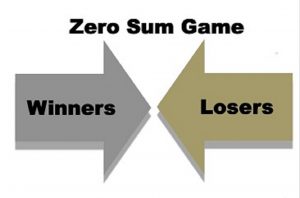
What unites the racist, nationalist, and seemingly left-wing elements of these peoples' world views is the assumption that the world is a zero-sum game: immigrants can only gain at the expense of natives, the rich at the expense of the poor. Whites can only thrive and prosper by excluding blacks and other groups, and so on.

Unfortunately, this kind of zero-sum thinking goes far beyond a few extremists, and is not solely confined to the nationalist right, though the latter is a particularly egregious and dangerous manifestation. What I wrote in the aftermath of the New Zealand and El Paso killings remains relevant:

Some may find it surprising that the perpetrator of the recent horrific New Zealand terrorist attack that killed fifty Muslim worshipers in two mosques, combined seemingly right-wing nationalism with seemingly left-wing socialism and environmentalism….

But in this case, the terrorist's worldview is less unusual than it might seem. A similar combination of views is evident in many xenophobic nationalist movements, both past and present. Socialists and nationalists have their differences. But they also have much in common, including a zero-sum view of the world.

Anti-immigrant nationalist parties in Europe often combine hostility to nonwhite immigration with support for extensive government control of the economy. That's true of such cases as the National Front in France (now renamed as the "National Rally") and the AfD in Germany. Such parties often also often blame immigrants for real and imagined environmental degradation, just as the perpetrator of the New Zealand attack does….

Similarly, the perpetrator of the New Zealand attack argues that environmentalism and immigration restriction "are the same issue [because] the environment is being destroyed by over population,…" Some influential far-left environmentalists have also advocated coercive population control, including defending China's cruel "one child" policy….[note: the El Paso killer also uses the supposed need for population control as a justification for keeping out immigrants].

Racial nationalists and socialist far leftists share a common zero-sum view of the world under which some groups can succeed and prosper only at the expense of others. It is easy to see how that sort of world view often leads adherents to believe that drastic action—including violence—is essential to ensure that the "right" people end up as winners in this cruel zero-sum world. I discussed this crucial commonality in greater detail here…

Zero-sum thinking need not always lead to racial and ethnic hostility, or xenophobia. It is also often channeled in other directions, such as hostility to the wealthier members of one's own ethnic group or society. In some cases, it leads to a combination of both fear of foreigners and fear of the wealthy.

For example, unexpectedly popular Democratic presidential candidate Bernie Sanders echoes Donald Trump's hostility to international trade, while simultaneously arguing that ordinary Americans can only be economically successful by redistributing vast wealth from "the 1 percent." Until recently, he also expressed considerable hostility towards immigration, denouncing the idea of free migration of labor as a plot by "the Koch brothers" and other malevolent billionaires, which would impoverish the working class and end up "doing away with the concept of a nation state…."

Fortunately, most nationalists and socialists aren't willing to go so far as to personally commit acts of terrorism. But all too many are willing to advocate large-scale coercion that inflicts great harm on large numbers of people, in order to ensure that they and their preferred causes don't end up as losers in a zero-sum world. Everything from barring migrants fleeing horrible oppression, to separating immigrant children from parents in order to deter them from entering, to coercive population control, to massive expropriation of property, and repression of "capitalists" in order to transfer the nation's wealth to "the people." The list can easily be extended….

There is no easy antidote to the spread of dangerous zero-sum ideas. But perhaps the beginning of wisdom is to recognize the danger they pose, and understand why they are wrong…

Far from enriching natives, immigration restrictions often end up undermining their freedom and prosperity as well as that of potential immigrants. Standard economic estimates indicate that free migration throughout the world would double world GDP, with many of the gains going to natives, not just migrants. Natives lose the gains from trade with immigrants, and also suffer from the civil liberties violations inherent in efforts to keep out and deport migrants. Rich and poor are not locked in a zero-sum game either. To the contrary, they can prosper together through mutual exchange, and historically often have.

Pollution and global warming are genuinely serious problems. But addressing them does not require massive coercion or keeping millions of people in poverty. Historically, increasing wealth has actually led to reductions in pollution (after an initial increase early in the process of industrialization), as wealthy societies can more easily afford to invest in reducing pollution. Even when it comes to the particularly difficult challenge of climate change, there are ways to combat that simultaneously increase prosperity rather than stifle it. They include reducing regulatory obstacles to using nuclear power, cutting back on zoning restrictions that make it hard to build denser housing, and offering prizes for the development of new "clean" energy technologies. Where regulation is needed to cut back on carbon dioxide emissions, it should take the the scalpel form of a revenue-neutral carbon tax, rather than the meat cleaver of coercive population control and government takeovers of huge portions of the economy.

I would add that some forms of left-wing identity politics also promote the idea that relations between ethnic and racial groups are a zero-sum game. For example, prominent "anti-racism" advocate Ibram X. Kendi famously wrote that "[t]he only remedy to racist discrimination is antiracist discrimination. The only remedy to past discrimination is present discrimination. The only remedy to present discrimination is future discrimination." On this theory, black progress is dependent on discrimination against whites. White nationalists and GRT advocates hold much the same view - differing primarily in their evaluation of which groups they want to win out.

The zero-sum ethnic nationalism of racial majorities is much more dangerous than the espousal of comparable ideas for minorities by the likes of Kendi. Among other things, majority groups generally wield more power (especially in democratic societies) and thus can inflict greater injustices as a result of adopting misguided ideas. But the two types of zero-sum identity politics can be mutually reinforcing, with one helping to promote the other.

Recent events provide yet more evidence that the interests of immigrants and natives - and those of different racial and ethnic groups - are, mostly mutually reinforcing, rather than mutually exclusive. Immigration restrictions harm natives in a wide variety of ways, including by reducing scientific innovation of the kind that led to the development of first two successful Covid vaccines. I discuss more such synergies of interests (as well as ways to alleviate potential negative side effects of migration by means other than exclusion) i my book Free to Move: Foot Voting, Migration, and Political Freedom.

Minorities and whites could massively benefit from reforms that expand freedom and opportunity for both, such as breaking down exclusionary zoning, thereby making it easier for both to move to areas with greater opportunity, thereby making our entire society more innovative and productive.

Most fundamentally,  immigrants, natives, and people of all racial and ethnic backgrounds could benefit from a society that rejects zero-sum thinking and deemphasizes racial and ethnic identity. We should instead promote universal liberal principles, of the kind that inspired the American Revolution and the abolition of slavery. These ideas have led to enormous progress, even if the nation has never fully lived up to them. And they can achieve still more, if we give them more of a chance.

NOTE: Because perpetrators of terrorist attacks often undertake them in large part to gain fame and media attention for themselves and their ideas, I have refrained from mentioning the names of the men who committed the New Zealand,  El Paso, and Buffalo attacks, or linking to their "manifestos." I have instead linked to others' summaries of their ideas. But both the names and the manifestos are easily found online, for those who wish to see them.


Law & Government

Lawyer's Asking School Employee Whether She Had Ever Kissed a Woman Not Workplace Harassment,

when the lawyers are investigating allegations that the employee "had romantic or sexual feelings for one of the students she coached."

|

An excerpt from Rys v. Clinton Central School Dist., decided yesterday by Frederick J. Scullin, Jr. (N.D.N.Y.) (there are also other things going on in this case, but I focus on the lawyer questions):

Plaintiff, a former middle school teacher and high school coach at Defendant Clinton Central School District …, commenced this action in October 2019, alleging, among other things, that she was discriminated against, suffered a hostile work environment, and was terminated after false allegations surfaced that she had romantic or sexual feelings for one of the students she coached, "K.S." … In addition to suing Defendant CCSD, Plaintiff also named various members of Defendant CCSD's faculty, … and two attorneys for Defendant CCSD ….

Plaintiff … alleges[, among other things,] that, on April 16, 2018, she met with the Attorney Defendants who "asked whether she had ever been in a relationship with a woman or had ever kissed a woman." According to Plaintiff, the Attorney Defendants questioned her "about her sexual orientation and her intimate relationships," focusing primarily on Plaintiff's relationships with women.

Read More

Libel

Calling Someone "White Supremacist" Based on Comments in Heated Online Debate Is Opinion, and Thus Not Libel

|

From Murphy v. Rosen, decided yesterday (generally correctly, I think) by Judge Matthew Dallas Gorton (Conn. Superior Ct.):

This is a defamation action in which the plaintiff, Sean Murphy, claims that the defendant, Beth Rosen, defamed him by posting comments on the Town of Southbury Facebook page describing him as a "white supremacist." …

On June 3, 2020, Southbury First Selectman Jeff Manville, Middlebury First Selectman Ed St. John, and School Superintendent Joshua Smith posted the following Joint Statement on the Town of Southbury Facebook page in response to the killing of George Floyd: [Details omitted. -EV] [A long online debate ensued. -EV]

The defendant later posted: "I am so deeply disappointed and enraged by this statement. 'All means all' is a slap in the face to every oppressed and marginalized person in our community. Shame on you for not standing up for those who most need support right now." The defendant also posted: "I've been working for almost seven years within the district to bring about change with the way people who are not white/Christian/ heterosexual/gender-normative are treated and this was like throwing the whole movement in reverse and dropping a brick on the accelerator."

The plaintiff responded to the defendant's posts by saying: "[W]hat a racist and bigoted comment. You are lumping people by race and religion. Gender non-normative is a comment that needs clarification. It means that people like you think it is acceptable to have a five-year-old boy dress as a girl. Normal and sane people call that child abuse." The plaintiff also posted: "Do you think some people should be excluded? She sure does. White Christian males, conservatives, come to mind." (Emphasis added.)

The defendant then posted: "[I]ncluding others does not mean that white, christian, conservative males are excluded. Your fear is that by including the others you will lose your privilege as a white Christian conservative male. That's what White Supremacy is all about. In reality, there can be room for all of us to be equal, but since we live in a patriarchal, misogynist society it's better for you not to have everyone included for fear that equality for all will take away your power. {The plaintiff responded to this post by stating: "Again your post is racist. You are the poster child for the uninformed, brainwashed, self-loathing Caucasian in town."}

Read More

Free Speech

Florida Bans Residential Picketing with "Intent to Harass or Disturb" -- but What Exactly Does That Mean?

A content-neutral ban on all residential picketing would be constitutional; but the "intent to harass or disturb" limitation may make the law unconstitutional or ineffective.

|

The law, signed by Gov. Ron DeSantis yesterday, provides:

(1) As used in this section, the term "dwelling" means a building, structure, or portion thereof which is occupied as, or designed or intended for occupancy as, a residence by one or more families.

(2) It is [a misdemeanor] for a person to picket or protest before or about the dwelling of any person with the intent to harass or disturb that person in his or her dwelling….

(4) Before a person may be arrested for a violation of this section, a law enforcement officer … must go as near to the person as may be done with safety and shall command any person picketing or protesting before or about the dwelling of a person to immediately and peaceably disperse. If any such person does not thereupon immediately and peaceably disperse, he or she may be arrested for a violation of this section.

Now a flat ban on all "focused picketing taking place solely in front of a particular residence" would be constitutional, as the Court expressly held in Frisby v. Schultz (1988), interpreting an ordinance that used the "before or about" language. (In Carey v. Brown (1980), the Court had held that a content-based residential picketing ban was unconstitutional, but Frisby held that content-neutral ones are fine.)

But this statute wouldn't ban all such residential picketing, but only picketing "with the intent to harass or disturb." I appreciate the desire to narrow the ordinance; consider Justice Stevens' dissent in Frisby, which faulted the ordinance for making it a crime "for a fifth grader to carry [a] sign" outside a friend's home saying, "Get well Charlie—our team needs you." But I think this attempt to narrow it might actually make it unconstitutionally content-based, unconstitutionally vague, or perhaps effectively meaningless.

The problem is that the ordinance doesn't define "harass," and the closest state law analog—the Florida stalking statute—defines "harass" to "mean[] to engage in a course of conduct directed at a specific person which causes substantial emotional distress to that person and serves no legitimate purpose." What counts as a "legitimate purpose"? The stalking cases haven't set forth a categorical test, and indeed acknowledge its uncertainty (and circularity):

Read More

Supreme Court

The Indian Commerce Clause: The Natelson/Ablavsky Debate

|

Professor Greg Ablavsky, perhaps the leading historian of Federal Indian Law, has a short piece up on SSRN replying to a short piece by Professor Rob Natelson, whose work frequently appears on this blog. Since the Supreme Court has a case about some of their debates pending next term, I thought the entire exchange might be of interest to some readers.

In 2007, Natelson published The Original Understanding of the Indian Commerce Clause. The article was repeatedly cited by Justice Clarence Thomas in a subsequent case.

In 2019, Ablavsky filed an amicus brief in the Fifth Circuit Brackeen litigation (now on review at the Supreme Court). The brief argues that Natelson's work "is deeply flawed, marred by inaccurate versions of sources and unsupported assertions directly at odds with explicit Founding-era evidence."

In 2022, Natelson apparently discovered the brief and published a short response, claiming that Ablavsky's brief "has a shyster-like quality:"

(1) It misrepresents my conclusions and then attacks the misrepresented version rather than what I actually wrote.

(2) It wrenches quotations out of context to make them appear to say things they did not.

(3) It seeks to divert attention away from how the ratifiers understood the Constitution during the ratification process and toward how federal congressmen and officials may have understood it after ratification. Of course, self-interested federal officials' subsequent interpretation of their own powers is virtually worthless as evidence of the previous ratification bargain.

Ablavsky now has a response posted on SSRN. Here's the abstract:

Robert Natelson recently responded to a three-paragraph critique of his 2007 law review article that I offered in an amicus brief in the ongoing Brackeen litigation. Though Natelson concedes that critical examination is an integral part of the scholarly process, he claims that my brief was not only unscholarly but "shyster-like."

I disagree. In this reply, I rebut his critiques. I reiterate the key, uncontested point that his original article relied on an inaccurate version of a vital piece of evidence from ratification, Sydney's New York Journal essay. In the correct version, Sydney observed that ratification would "totally surrender into the hands of Congress the management and regulation of the Indian affairs." Natelson's response attempts to explain away this language as a mere slip of Sydney's pen. But in my view this effort to rewrite the historical source's explicit language to agree with Natelson's original hypothesis is unpersuasive.

I then challenge Natelson's claims that I distorted his arguments. As I show, nearly all the critiques that my brief offered drew from near identical arguments in my 2015 Yale Law Journal article that Natelson himself concedes was "generally respectful." Moreover, I argue that each of my characterizations of Natelson's article, while necessarily a summary, accurately reflected his arguments and underscores the substance of our scholarly disagreement.

It is unfortunate that Mr. Natelson took my brief so personally. This case is not about either Mr. Natelson or me. As all parties would agree, the outcome will significantly impact people's lives. I briefly discussed Mr. Natelson's scholarship in the amicus not to denigrate him but because I have spent my academic career researching the history at issue here, and because, in my scholarly assessment, Mr. Natelson's frequently invoked article was flawed and at odds with historical evidence. I am disheartened that this important academic discussion has devolved to ad hominem attacks.

The exchange was also linked last week on The Originalism Blog, where Mike Ramsey added "I'm carefully not taking sides on this one, which readers can judge for themselves."

I agree that the personal turn this debate has taken is unfortunate. In any event, the underlying question -- what are the scope of the Indian Commerce Clause and other congressional powers -- is an important one, and one that the Supreme Court will likely turn to next year. Natelson has suggested that he will have future work forthcoming on this question; I assume that Ablavsky will file a brief with the Court in due course.

My own tentative hypothesis is that Congress's Article I power to define and publish offenses against the law of nations may also be an important source of Article I power here. And in addition to Ablavsky's and Natelson's work, I also recommend Chris Green's Tribes, Nations, States: Our Three Commerce Powers, which tries to reconcile the evidence of a broad tribal and foreign commerce power with that for a narrower interstate commerce power.

I hope to write more about this as the issue ripens next term.

Some Unsolicited Advice on Abortion and the Religion Clauses

The Free Exercise Clause, the Establishment Clause, and the Third-Party Harm Doctrine.

|

Today Politico explored various strategies that abortion-rights groups will pursue if Roe is overruled. Most of these approaches do not begin in the courts. These groups will lobby Congress and state houses for protections, and promote state constitutional amendments. Democracy in America! Moreover, we should expect some creative executive actions from the Biden administration, which will invariably end up in Court. For example, the executive branch will "interpret" old statutes in new ways that conveniently recognize abortion protections. Who knew that the Emergency Medical Treatment and Labor Act, which President Reagan signed into law in 1986, requires hospitals to perform certain abortions!

Still, the most intriguing strategy involves the Free Exercise of Religion. Politico spells out how this argument could work:

Attorneys are also exploring a tactic long used by the anti-abortion side — religious freedom — as a tool to fight state bans on abortion. Specifically, they're looking into mobilizing Jewish plaintiffs whose religion allows abortion and even requires it in some circumstances, such as a threat to the life of the mother.

"The Supreme Court has never ruled on the application of the free exercise clause of the First Amendment to the right to access abortion services," said Nancy Northup, president and CEO of the Center for Reproductive Rights. "And there are religions which are supportive of abortion rights, and so a free exercise claim is absolutely on the table."

The free exercise clause prohibits states from passing laws that substantially burden the ability of people to exercise their religious beliefs. Leila Abolfazli, director of federal reproductive rights at the National Women's Law Center, said such cases brought by Jewish plaintiffs could present "a profound moment for a country that has only talked about abortion in negative terms for nearly 49 years."

"Those types of cases really help people understand this is not a black-and-white issue," she said. "People come to it with incredible passion and some with incredible religious beliefs that drive them, and that's an important part that the other side has tried to dominate."

I think abortion rights advocates are especially keen on this argument because it sets up the conservative Justices as hypocrites! Conservatives have religious liberty, but liberals do not?! The Slate pitches write themselves.

Still, as someone with experience litigating religious liberty cases, I offer some unsolicited advice to my fair-weathered friends.

First, we must begin with sincerity. The federal courts will (generally) not scrutinize the specific aspects of religious doctrine. Courts will not actually decide if Judaism, or other faiths, in fact imposes some sort of religious obligation to perform or receive abortions. Nor will the courts mediate whether teachings of Reform Judaism or teachings of Orthodox Judaism are the "true" faith. But courts can scrutinize whether an individual plaintiff sincerely holds such beliefs. It is well known that during military drafts, people suddenly discover pacifist faiths like Quakerism. And during the pandemic, many people who were looking for an excuse to avoid vaccination mandates found religion. I think it will be difficult for a pregnant woman, who has never before expressed any connection to these religious teachings, to demonstrate the necessary sincerity to obtain a time-sensitive abortion. But some abortion doctors, who routinely perform these procedures, may be able to establish this showing of sincerity. Some doctors--not all doctors. Atheist doctors need not apply. Or these groups could follow the lead from the International Church of Cannabis, and form a new faith in which abortion is a sacrament. Call them Roetarians, not to be confused with Rotarians. Norma McCorvey could be the patron saint.

Second, I am intrigued by the focus on Jewish plaintiffs. Eugene's recent post focused more broadly on a religious person, in general, who "sincerely believes that he has a religious obligation (perhaps based on his view of the parable of the Good Samaritan)." In January, Professor Sherry Colb wrote about this issue from the Jewish perspective:

I even received a message from a scholar of Jewish law proposing that protecting the free exercise of Judaism might in some cases require the government to allow a woman to get an abortion. Here is the example: a woman is sick because of her pregnancy, but she is not in danger of dying. She is, however, becoming increasingly depressed because of the physical debilitation. In Jewish law, the raw material inside a woman's uterus is not a person until a designated stage of labor. Therefore, if a woman is sick and depressed because she is pregnant, she may have a religious obligation to terminate her pregnancy. With a robust protection of the free exercise of religion, couldn't this Jewish woman and her doctor obtain an exemption from a law prohibiting abortion?

For purposes of this analysis, I will presume that the Jewish doctor and Jewish woman sincerely hold these religious beliefs. And I'll presume the Free Exercise claim is successful. What remedy would a court craft? There could be an as-applied challenge: in this particular case, a state's abortion laws could not be applied to the particular doctor and patient. Still, I'm skeptical courts could move quickly enough to enter a temporary restraining order based on very difficult questions about religious doctrine. Courts have mandated fast-track procedures for judicial bypass with minor abortions, for example. But I don't think similar procedures would exist for free exercise claims. I suppose lawyers could certify a class of all Jewish patients and all Jewish doctors who share these beliefs about abortion. Due to the intricacies of faith, I think certification will be difficult. But let's assume Rule 23 works. What would that remedy look like? Only Jewish doctors can perform abortions? Only Jewish patients can receive abortions?

Third, welcome to the Establishment Clause. With these sorts of remedies, only religious people could perform and receive abortions. But non-religious doctors and patients would be out of luck. Pregnant atheists would be stuck. Generally, the government violates the Establishment Clause by granting a benefit only to religious people, but denying that same benefit to non-religious people. What, then, should the courts do? Level up or level down? Perhaps the courts could say that it would be unconstitutional to only allow religious people to perform and receive abortions, so everyone gets an abortion, regardless of faith! This argument would invoke Eisenstadt v. Baird--it violates Equal Protection to only provide contraception to married couples. Or the courts could find that a remedy only for Jewish patients and doctors would be unconstitutional, so they would deny relief for everyone on those grounds. I don't think there is that much play in the joints.

Fourth, don't forget about the third-party harms doctrine. I'm old enough to remember Justice Ginsburg's poignant Hobby Lobby dissent:

In sum, with respect to free exercise claims no less than free speech claims, "'[y]our right to swing your arms ends just where the other man's nose begins.'" Chafee, Freedom of Speech in War Time, 32 Harv. L. Rev. 932, 957 (1919).

If the draft Dobbs majority opinion holds, the Court need not resolve at what point life begins. But this opinion does defer to Mississippi's finding that the state's compelling interest to protect life begins at fifteen weeks--and presumably earlier. And, it follows, that a doctor or patient who seeks an exemption from the abortion ban will have to overcome that third-party harm to the fetus. This harm is far more clearly defined than the harm at issue in Hobby Lobby. In that case, female employees had ample alternative means to obtain certain forms of contraception. But if the abortion is performed, the harm to the fetus is unavoidable.

Plus, there is longstanding precedent on point. Indeed, Reynolds v. United States (1879) is one of the oldest Free Exercise Clause precedents. Chief Justice Morrison Waite explained:

Laws are made for the government of actions, and while they cannot interfere with mere religious belief and opinions, they may with practices. Suppose one believed that human sacrifices were a necessary part of religious worship; would it be seriously contended that the civil government under which he lived could not interfere to prevent a sacrifice? Or if a wife religiously believed it was her duty to burn herself upon the funeral pile of her dead husband; would it be beyond the power of the civil government to prevent her carrying her belief into practice?

Reynolds is even older than Jacobson v. Massachusetts, so it must be a valid and current statement of constitutional law!

Fifth, Roe and Casey were tethered to fetal development: as the fetus gets closer to term, the state's interest in protecting life would increase. But the Free Exercise Clause claim would not be premised on fetal development. Rather, the religious belief in terminating the pregnancy would exist throughout all nine months. If this argument is granted, abortion providers and women would have an even greater right to abortion that Roe and Casey permit.

Sixth, abortion rights groups should be careful what they wish for. If the Court recognizes a Free Exercise right to perform or receive an abortion, then conservatives can cook up even more aggressive religious liberty strategies. I'll bring the bagels for the next meeting of the Temple of Automatic Weapons.

These thoughts are only tentative. And I'm sure that abortion rights groups are not interested in what I have to say.


More