The Volokh Conspiracy

Mostly law professors | Sometimes contrarian | Often libertarian | Always independent | Est. 2002

The Volokh Conspiracy

Justice Sotomayor Asks Texas Governor Abbott To Grant Executive Reprieve To Death Row Prisoner

Case of the Speluncean Explorers Redux

|

Tonight the Supreme Court denied a stay of execution in Roberson v. Texas. There were no noted dissents, but Justice Sotomayor issued a ten-page statement respecting the denial of the application. Justice Sotomayor acknowledged that the defendant "presents no cognizable federal claim." Therefore, the Court cannot grant relief. But the final paragraph includes an unusual plea:

Under these circumstances, a stay permitting examination of Roberson's credible claims of actual innocence is imperative; yet this Court is unable to grant it. That means only one avenue for relief remains open: an executive reprieve. In Texas, as in virtually every other State and the federal government, "[t]he Executive has the power to exercise discretion to grant clemency and affect sentences atany stage after an individual is convicted[.]" Vandyke v. State, 538 S. W. 3d 561, 581 (Tex. Ct. Crim. App. 2017).Preventing the execution of one who is actually innocent bymeans of a review "unhampered by legal technicalities" is a core historical purpose of the executive power to grant pardons or reprieves. Christen Jensen, The Pardoning Power in the American States 49 (1922); see also Herrera v. Collins, 506 U. S. 390, 417 (1993) ("History shows that the traditional remedy for claims of innocence based on new evidence, discovered too late in the day to file a new trial motion, has been executive clemency"); Graham v. Texas Bd. of Pardons and Paroles, 913 S. W. 2d 745, 748 (Tex. Ct.Crim. App. 1996) (same). An executive reprieve of thirty days would provide the Texas Board of Pardons and Paroles with an opportunity to reconsider the evidence of Roberson's actual innocence. That could prevent a miscarriage of justice from occurring: executing a man who has raised credible evidence of actual innocence.

Yes, you read that right. Justice Sotomayor issued a plea for clemency to Texas Governor Greg Abbott.

Last week I wrote about the potential for clemency in Glossip v. Oklahoma. I noted that one of the justices in the fictional "Case of the Speluncean Explorers" likewise asked the Executive for clemency. I can't recall a Supreme Court justice making a similar request. But Justice Sotomayor may be one of the first.

Free Speech

Court Holds the First Amendment Bars Florida from Threatening Media with Criminal Punishment for Spreading Supposed Health-Related Disinformation

The ACLU’s wise decision to defend the NRA in NRA v. Vullo bears fruit.

|

From Chief Judge Mark Walker's opinion today in Floridians Protecting Freedom, Inc. v. Ladapo:

Floridians will vote on six proposed amendments to their state constitution this election cycle, including Amendment 4, titled "Amendment to Limit Government Interference with Abortion." Voting has already begun.

The State of Florida opposes Amendment 4 and has launched a taxpayer-funded campaign against it. Floridians Protecting Freedom, Inc., the Plaintiff in this case, has launched its own campaign in favor of Amendment 4.

Plaintiff does not challenge the State's right to spend millions of taxpayer dollars opposing Amendment 4. The rub, says Plaintiff, is that the State has crossed the line from advocating against Amendment 4 to censoring speech by demanding television stations remove Plaintiff's political advertisements supporting Amendment 4 or face criminal prosecution.

Plaintiff's argument is correct. While Defendant Ladapo refuses to even agree with this simple fact, Plaintiff's political advertisement is political speech—speech at the core of the First Amendment. And just this year, the United States Supreme Court reaffirmed the bedrock principle that the government cannot do indirectly what it cannot do directly by threatening third parties with legal sanctions to censor speech it disfavors. The government cannot excuse its indirect censorship of political speech simply by declaring the disfavored speech is "false." "The very purpose of the First Amendment is to foreclose public authority from assuming a guardianship of the public mind through regulating the press, speech, and religion." "In this field every person must be his own watchman for truth, because the forefathers did not trust any government to separate the true from the false for us." To keep it simple for the State of Florida: it's the First Amendment, stupid….

Read More

Elections

7 J-------S, 8 Opinions

|

Unfortunately, in this instance, it's "Justices," not "Jews" (at least not mostly), which would have been funnier. The case is State ex rel. Spung v. Evnen, from the Nebraska Supreme Court, and deals with a state constitutional separation of powers question related to a felon reenfranchisement statute; the opinions are an unsigned per curiam announcing the judgment of the Court, with each Justice also writing a separate opinion (shades of the Pentagon Papers case, which had one per curiam plus an opinion from each of the nine Justices). Here's the per curiam:

The Nebraska Secretary of State (Secretary) announced in the summer of 2024 that he would not implement recent statutory amendments providing that individuals who have been convicted of felonies are eligible to vote as soon as they complete their sentences. The Secretary took the position that the statutory amendments were unconstitutional. Individuals who were convicted of felonies and who had completed their sentences responded by filing this action in which they seek a writ of mandamus directing the Secretary and two named county election commissioners to implement the 2024 amendments and allow them to register to vote. Because the requisite number of judges have not found that the statutory amendments are unconstitutional, we issue a peremptory writ of mandamus directing the Secretary and the election commissioners to implement the statutory amendments immediately….

The Nebraska Constitution divides the powers of state government "into three distinct departments, the legislative, executive, and judicial." Neb. Const. art. II, § 1. It also states that "no person or collection of persons being one of these departments shall exercise any power properly belonging to either of the others except as expressly directed or permitted in this Constitution." Id. This separation of powers provision has been a part of the Nebraska Constitution since 1875.

Provisions governing voting rights and elections have also been part of the Nebraska Constitution since 1875. The constitution provides that "[a]ll elections shall be free; and there shall be no hindrance or impediment to the right of a qualified voter to exercise the elective franchise." Neb. Const. art. I, § 22. Qualified voters are defined in article VI, § 1, of the constitution to mean "[e]very citizen of the United States who has attained the age of eighteen years … and has resided within the state and the county … for the terms provided by law … except as provided in section 2 of this article …." Article VI, § 2, identifies voters who are disqualified from voting. It provides, "No person shall be qualified to vote who is non compos mentis, or who has been convicted of treason or felony under the laws of the state or of the United States, unless restored to civil rights." Neb. Const. art. VI, § 2.

Read More

Supreme Court

Supreme Court Refuses to Stay Biden EPA Power Plant Rule

Some were surprised by the Supreme Court's action, but they should not have been.

|

This past spring, in Ohio v. EPA, a 5-4 Supreme Court stayed the implementation of an Environmental Protection Agency rule governing interstate air pollution pending legal proceedings challenging the rule on the merits. This decision was unusual, but not without precedent. Back in 2016 the Supreme Court had also stayed the Obama Administration's Clean Power Plan--also by a 5-4 vote.

The Court's apparent willingness to press pause on major air pollution regulations, combined with an overall increase to consider aggressive "shadow docket" filings, encouraged industrial groups and conservative states to file multiple applications for stays of other EPA rules. After all, if the Court did it twice, it could do it again. None of these recent applications have been successful however.

At the Court's long conference, the justices denied multiple applications seeking stays of EPA rules governing hazardous air pollutants and methane emissions. Then, yesterday (in a more closely watched case), the Court rejected applications seeking a stay of the Biden Adminsitration's rules limiting greenhouse gas emissions from power plants (basically the Biden Administration's replacement for the CPP). Only Justice Thomas dissented. (Justice Alito did not participate.) [See also Sam Bray's post on the application denial.]

Some seem surprised by the Court's actions, but I don't think they should be. The reasons for granting stays of the CPP and interstate air pollution rule were not present in these other cases.

The stay of the CPP was somewhat unusual, but it also presented the Court with an unusual dilemma (as I noted at the time). The Court had recently decided Michigan v. EPA, in which the justices concluded that EPA regulations governing mercury emissions from power plants were arbitrary and capricious. The EPA did not care much about this ruling, however, and trumpeted that fact. After the decision, EPA put out a press release saying (correctly) that nearly all of the regulated utilities had already made the required capital investments while the litigation was pending because there was no way to comply with the deadlines otherwise. Those who sought to stay the CPP highlighted this, basically telling the Court the EPA was celebrating its ability to impose regulations without complying with the law. That the EPA also declared that the CPP represented a pathbreaking and unusually aggressive assertion of agency authority was only icing on the cake.

While the interestate air pollution rule did not present the same sort of major question as the CPP, it was another instance in which the petitioners--and utilities in particular--could plausibly claim that they would have no choice but to make substantial and irreversible capital investments to comply with the rule while judicial review was ongoing. Thus, they could claim some degree of irreparable harm (and more harm than routine compliance costs; on this point, see Sam Bray's excellent post below).

The more recent stay applicaitons tried to present the rules in question as presenting the same sorts of issues, but they were unsuccessful at doing so. These other rules are not as broad or aggressive as the CPP, and do not present the same sort of risk of irreparable harm, in part because the EPA has been more attentive to providing compliance deadlines that accommodate some amount of judicial review. In the case of the most recent power plant rules, it is also notable that the U.S. Court of Appeals for the D.C. Circuit, in its order denying the stay, took the time to explain its decision while also expediting the petitioners' legal challenges so that regulated entities would not be forced to make major compliance expenditures before the litigation could proceed.

Justice Kavanaugh (joined by Justice Gorsuch) made note of some of this in a brief opinion respecting the denial of the applications.

In my view, the applicants have shown a strong likelihood of success on the merits as to at least some of their challenges to the Environmental Protection Agency's rule. But because the applicants need not start compliance work until June 2025, they are unlikely to suffer irreparable harm before the Court of Appeals for the D. C. Circuit decides the merits. So this Court understandably denies the stay applications for now. Given that the D. C. Circuit is proceeding with dispatch, it should resolve the case in its current term. After the D. C. Circuit decides the case, the nonprevailing parties could, if circumstances warrant, seek appropriate relief in this Court pending this Court's disposition of any petition for certiorari, and if certiorari is granted, the ultimate disposition of the case.

Going forward, what I think this means is that the Court is settling on a reasonable standard for evaluating stay requests for major regulations. As a general matter, particularly if the EPA sets reasonable compliance deadlines, such stays should be denied. But where we have some combination of a particularly aggressive assertion of agency authority (again, think "major question") and a compliance schedule that will prematurely force regulated entities to make substantial capital investments (perhaps, particularly, if those regulated entities are rate-regulated utilities, which operate under greater constraints), a stay is more likely. This also means that regulatory agencies and the D.C. Circuit can make stays less likely by taking care to consider such factors themselves.

This is all a long way of saying that the justices are willing to offer extraordinary relief in extraordinary cases, but that it is far from open season on major environmental rules.


Free Speech

Journal of Free Speech Law: "Thinking the Unthinkable about the First Amendment," by Nicholas Lemann

A new article from the Daedalus (Journal of the American Academy of Arts and Sciences) Future of Free Speech Symposium.

|

The article is here; the Introduction:

On my bookshelf is a treasured relic of a bygone age, a full print edition of The Oxford English Dictionary (OED): twelve volumes plus five supplements, the last of them published in 1986. The OED puts the first use of journalism, "the occupation or profession of a journalist; journalistic writing; the public journals collectively," at 1833. Journalistic, "of or pertaining to journalists or journalism; connected or associated with journalism," arrived a few years earlier, in 1829. Reporter, "one who reports, debates, speeches, meetings, etc., especially for a newspaper; a person specially employed for this purpose," originated earlier still, in 1813. And interview, "to have an interview with a person; specifically on the part of a representative of the press," didn't appear until decades later, in 1869.

I served as dean of Columbia University's Graduate School of Journalism for ten years, from 2003 to 2013. During that time, I was privileged to attend dozens, or maybe even hundreds, of official journalism events: banquets, prize ceremonies, and so on. Almost invariably, the speakers would extol the First Amendment as a sacred constitutional enshrinement of our profession. Often one of them would observe that we are the only field of endeavor specifically mentioned in the Constitution, or assert that it was the framers' special intent to put the amendment that mentioned us first because it was so important to them.

But as we see from the OED, such sentiments are self-celebratory historical fantasies, because there were no journalists in 1791, when the First Amendment was ratified. At the Constitutional Convention, in 1787, the framers specifically declined to include a press freedom clause in the original document, which is why the First Amendment, along with the rest of the Bill of Rights, was added a few years later by Congress. In the original version of the Bill of Rights, the current First Amendment was actually the Third Amendment, in line behind two others that were dropped because they couldn't attract majority support.

Read More

Free Speech

Free Speech Unmuted Videos

|

Now that Jane Bambauer and I are up to a dozen videos in the series, I thought I'd pass along the whole list; if you find some of the titles interesting, please check them out. The videos were made starting this Spring, but they mostly talk about broad topics that aren't especially time-sensitive.

Politics

Universities After October 7: The Role of Title VI

Panel discussion at the NYU Federalist Society Chapter

|

On October 15, I spoke on a panel at the NYU Federalist Society with Ken Marcus of the Brandeis Center. We discussed the role that Title VI plays on college campuses in the wake of October 7. It was a thoughtful and informative event, with no disruptions. Alas, at the very end, after the event concluded, several students started chanting "Free Palestine" as they exited the room. Whatever.

I am grateful to the NYU Chapter for hosting us.

Politics

Oregon Court Strikes Down Limit on Vape Pen Packaging

|

From Bates v. Oregon Health Authority, decided yesterday by the Oregon Court of Appeal (Judge Scott Shorr, joined by Judges Josephine Mooney and Ramón Pagán):

In 2015, the legislature passed House Bill (HB) 2546, which addressed a number of issues involving "inhalant delivery systems," commonly known as "vape pens" or "e-cigarettes." The bill, among other things, outlawed the sale of such products to minors, banned vaping indoors by adding inhalant delivery systems to the Oregon Indoor Clear Air Act, and, as relevant to the current matter, created certain requirements surrounding the sale and packaging of inhalant delivery systems…. [The bill] states: "It is unlawful: … (f) To distribute, sell or allow to be sold an inhalant delivery system if the inhalant delivery system is packaged in a manner that is attractive to minors, as determined by the [Oregon Health Authority] by rule."

The Oregon Health Authority (OHA) subsequently promulgated a number of regulations regarding packaging of inhalant delivery systems, including OAR 333-015-0357, which stated:

"(1) An inhalant delivery system is packaged in a manner that is attractive to minors if because of the packaging's presentation, shape, graphics, coloring or writing, it is likely to appeal to minors.

"(2) The Authority considers the following non-exclusive list to be likely to appeal to minors:

"(a) Cartoons;

"(b) Celebrities, athletes, mascots, fictitious characters played by people, or other people likely to appeal to minors;

"(c) Food or beverages likely to appeal to minors such as candy, desserts, soda, food or beverages with sweet flavors including fruit or alcohol;

"(d) Terms or descriptive words for flavors that are likely to appeal to minors such as tart, tangy, sweet, cool, fire, ice, lit, spiked, poppin', juicy, candy, desserts, soda, sweet flavors including fruit, or alcohol flavors; or

"(e) The shape of any animal, commercially recognizable toy, sports equipment, or commercially recognizable candy."

The court held that that the law violated the Oregon Constitution's free speech provision. Oregon courts have developed an unusual framework for dealing with that provision, and I won't dwell on it here. Here, though, is the heart of the argument; I expect it would also be a powerful argument under a federal commercial speech challenge, though perhaps not as conclusive as it is under Oregon constitutional law:

Read More

AI in Court

Corpus Linguistics v. LLM AIs

The selling points of LLM AIs are insufficient; corpus tools hold the advantage.

|

What is the allure of LLM AI chatbots in the search for empirical evidence of ordinary meaning? Judge Newsom's two concurring opinions channel recent scholarship in developing four main selling points. And they advance those points as grounds for endorsing LLM AIs over tools of corpus linguistics.

Our draft article presents our opposing view that corpus tools have the advantage notwithstanding—or even because of—the purported features of LLM AIs. We outline some key points below.

LLM AIs are enormous

The first claim is that LLMs "train on" a "mind-bogglingly enormous" dataset (400-500 billion words in GPT-3.5 turbo)—language "run[ning] the gamut from … Hemingway novels and PhD dissertations to gossip rags and comment threads." The focus is on the size and the breadth of LLMs. The assertion is that those features assure that the LLMs' training "data … reflect and capture how individuals use language in their everyday lives."

Corpus size can be an advantage. But size alone is no guarantee of representativeness. A corpus is representative only if it "permits accurate generalizations about the quantitative linguistic patters that are typical" in a given speech community. Representativeness is often "more strongly influenced by the quality of the sample than by its size." And we have no basis for concluding that an LLM like ChatGPT is representative. At most, OpenAI tells us that ChatGPT uses information that is "publicly available on the internet," "licensed from third parties," and provided by "users or human trainers." This tells us nothing about the real-world language population the creators were targeting or how successfully they represented it. And it certainly doesn't tell us what sources are drawn upon in answering a given query. In fact, "it's next to impossible to pinpoint exactly what training data an LLM draws on when answering a particular question."

Read More

Politics

My New Article on the Role of Mercy and Crime Victims in the Criminal Justice Process

I argue that the criminal justice actors need to listen to all crime victims ... merciful and otherwise.

|

I recently published a law review article in the Texas Law Review's symposium on mercy and the law, concerning the proper role of crime victims in the criminal justice process. Here's the abstract:

What role should mercy play in the criminal justice system? While several of the other symposium's articles here in the Texas Law Review argue for expanding mercy's role, I write to raise a cautionary note. Expanding mercy could potentially conflict with another important feature of contemporary criminal justice: the expanding role of crime victims. Because considerations of mercy focus exclusively on the offender, greater attention to mercy necessarily means less attention to victims. This change in focus would be at odds with a broadly advancing crime victims' movement in this country and, indeed, in many countries around the world. This cautionary point does not assume that all crime victims want a more punitive criminal justice system. To the contrary, many crime victims may argue for mercy. But allowing victims' voices to carry weight only when they advance merciful arguments is inconsistent with the underlying rationale for victim involvement: that victims should have agency to advance their own claims in criminal justice processes.

You can read the whole article here.

Immigration

More on "Invasion," the Alien Enemies Act, and the Political Question Doctrine

Legal scholar Michael Ramsey points out another way courts could reject Trump's plan to use the act as a tool for peacetime mass deportation.

|

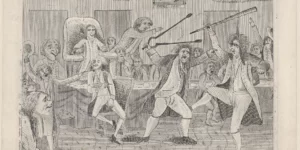
Cartoon depicting congressional debate over the Alien and Sedition Acts. (NA)


In a previous post, I argued that Donald Trump's plan to use the Alien Enemies Act of 1798 as a tool for peacetime mass deportation is illegal, but also noted that courts might nonetheless refuse to invalidate the plan, because they might (wrongly) conclude that the issue is a "political question" that judges are not allowed to consider. The Alien Enemies Act gives the president the power to detain and deport migrants when there "is a declared war between the United States and any foreign nation or government, or any invasion or predatory incursion is perpetrated, attempted, or threatened against the territory of the United States by any foreign nation or government." In that event, the president can detain or remove "all natives, citizens, denizens, or subjects of the hostile nation or government, being of the age of fourteen years and upward, who shall be within the United States and not actually naturalized."

In a post at the Originalism Blog, Michael Ramsey - a leading scholar of constitutional foreign affairs law - largely agrees with my analysis. But he suggests the political question issue is more easily resolved than I thought:

I think the analysis can be more simple. The question, in my view, isn't whether there is an invasion (which indeed might be a political question, even under the original concept of political questions), but whether it -- whatever it is -- is "perpetrated … by any foreign nation or government." Since that's clearly not the case, for the reasons Professor Somin says, a court would simply be called on to enforce the statute as written, which is comfortably within the judicial power.

Focusing on the words "foreign nation or government" could indeed be an alternative way to reject the argument that the issue here is a political question. Prof. Ramsey is absolutely right about that. But I worry that, if courts rule that the definition of "invasion" is a political question, they could say the same thing about the issues of whether the perpetrator of supposed invasion qualifies as a "nation or government" and whether that entity was in fact the true perpetrator.

The political question doctrine is, as I have previously argued, an incoherent mess; Michael Ramsey is no fan of it either. But, precisely because of the doctrine's vagueness and incoherence, judges have a lot of discretion on how to apply it. A court wishing to use the doctrine to avoid the issues raised by the use of the Alien Enemies Act as a tool of peacetime deportation might well be able to find a way to do so. Such a ruling would be a grave error, but not one completely barred by current precedent.

Three Thoughts on the Stay Denial in West Virginia v. EPA

|

Today the Supreme Court denied the application for a stay in West Virginia v. EPA, a challenge to an EPA rule regulating power-plant emissions of carbon dioxide. You can read Amy Howe's summary for SCOTUSBlog here. There was one noted dissent from the denial (Justice Thomas), and one justice not participating (Justice Alito). Justice Kavanaugh wrote a statement respecting the denial of the stay, joined by Justice Gorsuch. The main point of the statement was to say that the challengers were likely to win on the merits, but no stay was needed because there was no irreparable injury, since "compliance work" would not need to start for another eight months. In the meantime, Justice Kavanaugh said, the lower court litigation was proceeding apace.

Three thoughts:

  1. It is a good development that the Court is reaching the merits less often in emergency docket orders. As Justice Barrett previously noted, litigants use "the emergency docket to force the Court to give a merits preview in cases that it would be unlikely to take—and to do so on a short fuse without benefit of full briefing and oral argument." (Shadow docket critics, time for Bayesian updating!) Avoiding the merits on a stay application fits with an emerging body of literature on stays, including Rachel Bayefsky, Administrative Stays: Power and Procedure, 97 NOTRE DAME L. REV. 1941 (2022); and Jill Wieber Lens, Stays of Injunctive Relief Pending Appeal: Why the Merits Should Not Matter, 43 FLA. ST. U. L. REV. 1319 (2016).
  2. Given that welcome trend, it is a little surprising to have a statement that reaches out to unnecessarily express a view of the merits—especially since Justice Kavanaugh's statement could have made the very same point about irreparable injury without expressing a merits prediction.
  3. The statement's reference to "compliance work" points to a very big question about compliance costs and irreparable injury that will come to the Court sooner rather than later. It may be that compliance costs for the EPA rule are massive and existential for the regulated entities—I have not followed the litigation in the D.C. Circuit and express no view on that. If so, they could count as irreparable injury (a ruinous choice in the style of Ex Parte Young). But the mere fact that compliance work is necessary is not enough to show irreparable injury for a stay or preliminary injunction. That, at least, is the traditional view: routine compliance costs do not count as irreparable injury. But over the last decade, the Fifth and Sixth Circuits have adopted a different position, creating a circuit split. Their position is emptying the irreparable injury requirement of any meaning in challenges to government regulation, and it is exacerbating the trend to collapse the four-factor preliminary injunction test into just the merits. I discuss this in The Purpose of the Preliminary Injunction. Here is an excerpt from that article on compliance costs:

Read More

You Can Now Pre-Order "The Digital Fourth Amendment"

My book will be out January 10th, but you can pre-order it now.

|

I'm pleased to say that you can now pre-order my book, The Digital Fourth Amendment: Privacy and Policing in Our Online World. 

I've been a professor for almost twenty-five years, and I've written a bunch of casebooks and something like eighty law review articles.  But this is my first book for a general audience. Lawyers and law students will enjoy it, I hope, but I also aimed the book at non-lawyer readers who are interested in law, technology, and privacy.  And I was pleased to get the price down to something reasonable, as it lists for $35.

I'll blog some more about the book later, but for now I just wanted to post the link to pre-order it for anyone interested.

Cover of the book The Digital Fourth Amendment

Free Speech

Journal of Free Speech Law: "Free Speech on the Internet: The Crisis of Epistemic Authority," by Brian Leiter

A new article from the Daedalus (Journal of the American Academy of Arts and Sciences) Future of Free Speech Symposium.

|

The article is here; the introductory section:

Every society has mechanisms for inculcating in its citizens beliefs about the world, about what is supposedly true and known. These epistemological mechanisms include, most prominently, the mass media, the educational system, and the courts. Sometimes these social mechanisms inculcate true beliefs, sometimes false ones, and most often a mix. What the vast majority believe to be true about the world (sometimes even when it is not) is crucial for social peace and political stability, whether the society is democratic or not. In developed capitalist countries that are relatively free from political repression, like the United States, these social mechanisms have, until recently, operated in predictable ways. They insured that most people accepted the legitimacy of their socioeconomic system, that they acquiesced to the economic hierarchy in which they found themselves, that they accepted the official results of elections, and that they also acquired a range of true beliefs about the causal structure of the natural world, the regularities discovered by physics, chemistry, the medical sciences, and so on.

Although ruling elites throughout history have always aimed to inculcate moral and political beliefs in their subject populations conducive to their own continued rule, it has also been true, especially in the world after the scientific revolution, that the interests of ruling elites often depended on a correct understanding of the causal order of nature. One cannot extract wealth from nature, let alone take precautions against physical or biological catastrophe, unless one understands how the natural world actually works: what earthquakes do, how disease spreads, where fossil fuels are and how to extract them. This is, no doubt, why both authoritarian regimes (like the one in China) and neoliberal democratic regimes (like the one in the United States) invest so heavily in the physical and biological sciences.

In the half-century before the dominance of the internet in America (roughly from World War II until around 2000), the most prominent epistemological mechanisms in society generally helped ensure that a world of causal truths was the common currency of at least some parts of public policy and discourse in the relatively democratic societies. There were, of course, exceptions: the panic over fluoridation of water in the 1950s is the most obvious example, but it was also anomalous. Even false claims about race and gender (that were widespread in the traditional media until the 1960s and 1970s) were met with more resistance from the pre-internet media, especially from the 1960s onwards. The basic pattern, however, was clear: social mechanisms inculcated many true beliefs about how the natural world works, while performing much more unevenly where powerful social and economic interests were at stake.

The internet has upended this state of affairs: it is the epistemological catastrophe of our time, locking into place mechanisms that ensure that millions of people (perhaps hundreds of millions) will have false beliefs about the causal order of nature—about climate change, the effects of vaccines, the role of natural selection in the evolution of species, the biological facts about race—even when there is no controversy among experts. Indeed, a distinguishing and dangerous achievement of the internet era has been to discredit the idea of "expertise," the idea that if experts believe something to be the case, that is a reason for anyone else to believe it. Experts, in this parallel cyber world, are disguised partisans, conspirators, and pretenders to epistemic privilege, while the actual partisans and conspirators are supposed to be the purveyors of knowledge.

Read More

AI in Court

N.Y. Court Opines on Use of AI by Experts

"[C]ounsel has an affirmative duty to disclose the use of artificial intelligence and the evidence sought to be admitted should properly be subject to a Frye hearing prior to its admission ...."

|

From Thursday's decision in In the Matter of Accounting by Weber, decided by Saratoga County (N.Y.) Surrogate's Court judge Jonathan G. Schopf; the expert was opining on damages in a financial dispute:

Use of Artificial Intelligence

Although the Court has found [proposed expert witness Charles Ranson's] testimony and opinion not credible [see below -EV]…, a portion of his testimony bears further and separate discussion as it relates to an emerging issue that trial courts are beginning to grapple with and for which it does not appear that a bright-line rule exists.

Specifically, the testimony revealed that Mr. Ranson relied on Microsoft Copilot, a large language model generative artificial intelligence chatbot, in cross-checking his calculations. Despite his reliance on artificial intelligence, Mr. Ranson could not recall what input or prompt he used to assist him with the Supplemental Damages Report. He also could not state what sources Copilot relied upon and could not explain any details about how Copilot works or how it arrives at a given output. There was no testimony on whether these Copilot calculations considered any fund fees or tax implications.

The Court has no objective understanding as to how Copilot works, and none was elicited as part of the testimony. To illustrate the concern with this, the Court entered the following prompt into Microsoft Copilot on its Unified Court System (UCS) issued computer: "Can you calculate the value of $250,000 invested in the Vanguard Balanced Index Fund from December 31, 2004 through January 31, 2021?" and it returned a value of $949,070.97—a number different than Mr. Ranson's. Upon running this same query on two (2) additional UCS computers, it returned values of $948,209.63 and a little more than $951,000.00, respectively. While these resulting variations are not large, the fact there are variations at all calls into question the reliability and accuracy of Copilot to generate evidence to be relied upon in a court proceeding.

Interestingly, when asked the following question: "are you accurate", Copilot generated the following answer: "I aim to be accurate within the data I've been trained on and the information I can find for you. That said, my accuracy is only as good as my sources so for critical matters, it's always wise to verify.

Read More

Free Speech

Global Free Speech Summit 2024, Today and Tomorrow (Vanderbilt + Virtual)

|

Should be a very interesting program; registration is free, and you can attend virtually. The event is put on by Vanderbilt's The Future of Free Speech program, which is in turn led by free speech scholar and historian Jacob Mchangama.

Speakers will include novelist Salman Rushdie (attending virtually), Iranian journalist and women's rights activist Masih Alinejad, Taiwan's first digital minister Audrey Tang, Hong Kong democracy activist Nathan Law, Washington Post columnist Rana Ayyub, former ACLU president Nadine Strossen, New York Times columnist David French, The Economist senior editor James Bennett, and PEN America CEO Suzanne Nossel, and many more.

More