Many people have sued Sean Combs (P. Diddy) for alleged sexual assault in federal court in Manhattan (S.D.N.Y.); many of those have sued pseudonymously. So far:
[1.] Some judges have allowed the cases to go forward under a pseudonym (Doe v. Combs) until Combs' lawyers enter an appearance and have an opportunity to oppose pseudonymity. The orders (see, e.g., here, here, here, and here) have mostly been short, but have offered at least some reasoning; here's one from Judge Lewis Liman:
In determining whether a Plaintiff may proceed anonymously, "the plaintiff's interest in anonymity must be balanced against both the public interest in disclosure and any prejudice to the defendant." A court should consider factors including whether the litigation involves matters that are "highly sensitive and of a personal nature," "whether identification poses a risk of retaliatory physical or mental harm," whether the defendant is prejudiced, whether any such prejudice "differs at any particular stage of the litigation," whether any such prejudice "can be mitigated by the district court," and the public interest.
Plaintiff has made a preliminary showing sufficient to permit the filing of the complaint and the issuance of a summons. The nature of Plaintiff's sexual assault allegations is highly personal, and Plaintiff states that Defendant Sean Combs threatened her with violence if she spoke of the alleged assault. Given that Defendant is a public figure, revelation of Plaintiff's identity may also lead to significant, potentially harmful attention from media and the public. However, Defendants have a right to be heard, the Court must take the interests of the public into account, and "the balance between a party's need for anonymity and the interests weighing in favor of open judicial proceedings may change as the litigation progresses." Therefore, Plaintiff shall file a renewed motion to continue to proceed anonymously within 30 days after service of the complaint. In the absence of a timely filed motion, the Court shall order the name of the Plaintiff be disclosed.
(Recall that the question in these cases is whether the plaintiff's identity could be hidden from the public; the plaintiff's name would of course have to be provided to the defendant, since otherwise the defendant wouldn't be able to defend himself.)
[2.] But last week, Judge Mary Kay Vyskocil refused to allow pseudonymity, even before Combs' lawyers entered an appearance:
Podcaster Michael Liebowitz interviewed me on why Kamala Harris is a lesser evil than Trump, and the more general issue of the logic of voting for a lesser evil.
Trump and Harris. (Li Rui / Xinhua News Agency/Newscom)
Michael Liebowitz recently interviewed me about the election on his Rational Egoist podcast. Despite the title, this isn't so much a case for Kamala as a case for why she's less bad than Trump. We also discuss the broader issue of the ethics of voting for a lesser evil vs. voting for a third party candidate with no chance of winning.
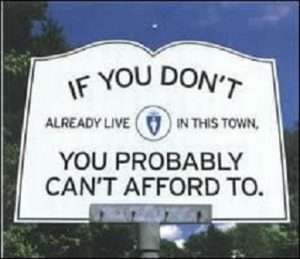
The final published version of my article "The Constitutional Case Against Exclusionary Zoning" (coauthored with Josh Braver) is now available for free download on SSRN. Here is the abstract:
We argue that exclusionary zoning—the imposition of restrictions on the amount and types of housing that property owners are allowed to build— is unconstitutional because it violates the Takings Clause of the Fifth Amendment. Exclusionary zoning has emerged as a major political and legal issue. A broad cross-ideological array of economists and land-use scholars have concluded that it is responsible for massive housing shortages in many parts of the United States, thereby cutting off millions of people – particularly the poor and minorities - from economic and social opportunities. In the process, it also stymies economic growth and innovation, making the nation as a whole poorer.
Exclusionary zoning is permitted under Euclid v. Ambler Realty, the 1926 Supreme Court decision holding that exclusionary zoning is largely exempt from constitutional challenge under the Due Process Clause of the Fourteenth Amendment, and by extension also the Takings Clause. Despite the wave of academic and public concern about the issue, so far, no modern in-depth scholarly analysis has advocated overturning or severely limiting Euclid. Nor has any scholar argued that exclusionary zoning should be invalidated under the Takings Clause, more generally.
We contend Euclid should be reversed or strictly limited, and that exclusionary zoning restrictions should generally be considered takings requiring compensation. This conclusion follows from both originalism and a variety of leading living constitution theories. Under originalism, the key insight is that property rights protected by the Takings Clause include not only the right to exclude, but also the right to use property. Exclusionary zoning violates this right because it severely limits what owners can build on their land. Exclusionary zoning is also unconstitutional from the standpoint of a variety of progressive living constitution theories of interpretation, including Ronald Dworkin's "moral reading," representation-reinforcement theory, and the emerging "anti-oligarchy" constitutional theory. The article also considers different strategies for overruling or limiting Euclid, and potential synergies between constitutional litigation and political reform of zoning.
This project is an exercise in cooperation across ideological and methodological lines. Josh is a progressive and a living constitutionalist. I'm a libertarian generally sympathetic to originalism. If we can nonetheless agree on this important issue, we hope others can too!
"This year, we will select a small number of first-year law students who have demonstrated academic excellence and an unwavering commitment to Jewish and American flourishing."
I am pleased to pass along the application for the Tikvah Legal Fellowship. I lecture at this program each year, and it is an amazing gathering. Here are details:
We are excited to announce that applications are now open for the Tikvah Legal Fellowship class of 2025. If you are an alumnus of the Tikvah Legal Fellowship or are not eligible for this program, we highly encourage you to nominate suitable candidates. Please respond to this email with nominations.
Since its founding, Tikvah has brought together young people to study great texts and consider pressing issues with experts in Jewish thought, the Western canon, and public affairs. Law school is a crucial gateway to effective advocacy of many of the causes Tikvah represents: religious liberty, freedom of speech, a strong alliance between the United States and Israel, school choice, and others.
Our alumni have made significant advances in these battles. They have attained Supreme Court clerkships and authored widely cited briefs on topics such as religious freedom and the Boycott, Divestment, and Sanctions movement targeting Israel. We are pleased that they have emerged as leaders in the fight for Jewish and American civic ideals.
This year, we will select a small number of first-year law students who have demonstrated academic excellence and an unwavering commitment to Jewish and American flourishing. Accepted candidates participate in a three-pillar program:
The Tikvah Legal Fellowship Retreat
This is a five-day, in-person conference with the Blackstone Legal Fellowship in early June 2025. Fellows will study the moral foundations and power of the law, receive mentorship from preeminent legal scholars, and meet with a vibrant and growing community of Christian law students — natural allies in the constitutionalist movement.
The Summer Internship
Fellows who have not already committed to a summer internship upon acceptance will be matched with opportunities in the legal field related to the preservation of civic liberty for Jews and other people of faith in America.
The Stipend Project
Fellows have the option to pursue a $2,000 stipend. It will be awarded to Fellows who complete a significant project with a partner organization aligned with our mission and values by the end of their first semester as second-year law students.
Please click here to apply. Applicants must submit a résumé, a headshot, two short personal statements, and the names of two references. Applications close on December 1st, 2024 at 11:59pm ET.
An excerpt from Magistrate Judge Jeffery Frensley's opinion Friday in Poe v. Lowe(M.D. Tenn.):
In the fall of 2020, Plaintiff Parker Poe enrolled as an undergraduate at Vanderbilt University. Plaintiff took a leave of absence from school in April 2022, during which time he and others anonymously made and shared posts on at least two social media websites concerning Roe. Some of those posts alleged that Roe had sexually assaulted women.
Roe disputed the allegations and filed a lawsuit to uncover the identities of the anonymous posters. Poe was revealed as one of the posters. Roe and members of his family provided this information to Vanderbilt officials who opened an investigation of Poe for apparent violations of several provisions of the Vanderbilt Student Handbook. After a nearly two-month investigation, university officials concluded that Poe had committed three violations of the Student Handbook. Plaintiff was accordingly suspended from school, among other sanctions. Poe's subsequent appeal of his sanctions was unsuccessful, and his suspension began in April 2023.
Plaintiff filed the present complaint in Tennessee state court in March 2024 against Defendants for their actions in investigating and sanctioning Plaintiff. He contemporaneously filed a motion to proceed pseudonymously, which the state court granted. Defendants removed this action [to federal court] in April 2024 and filed the motion to reconsider shortly thereafter. Plaintiff then filed his amended complaint wherein he made hundreds of references to Roe using Roe's legal name. The Court granted Roe's emergency motion to intervene, temporarily sealed the amended complaint, and ordered the parties to confer regarding Roe and Poe's pseudonymity. After failing to resolve the issue, Roe filed the "Motion to Protect," seeking to permanently seal the amended complaint and require the use of pseudonyms for references to himself and his family members for the duration of this litigation. Because both motions ask the Court to decide whether parties may proceed under a pseudonym, they will be analyzed together.
The court concluded that it wasn't bound by the state court order, and went on to decide the pseudonymity question for itself:
An Introduction To Constitutional Law Video Library: Prigg v. Pennsylvania (1842), U.S. v. Dewitt (1869), Hepburn v. Griswold (1870), Knox v. Lee (1871), U.S. v. E.C. Knight (1895), Champion v. Ames (1901), Hammer v. Dagenhart (1918), Schechter Poultry Corp. v. U.S. (1935), NLRB v. Jones & Laughlin Steel Corp. (1937), U.S. v. Darby (1941), Wickard v. FIlburn (1942), Heart of Atlanta Motel v. U.S. (1964), Katzenbach v. McClung (1964), South Dakota v. Dole (1987), U.S. v. Lopez (1995), U.S. v. Morrison (2000), Gonzales v. Raich (2005), NFIB v. Sebelius (2012)
I've long warned about the dangers of voter ignorance. But the Trump era and the current election reveal that, on one crucial point, I was actually too optimistic.
I've never been a big believer in the wisdom of voters. Indeed, I've devoted much of my academic career to writing about the dangers of widespread political ignorance, going all the way back to my first academic article. It was published in 1998, at a time when most experts tended to be relatively optimistic about voter competence. Since then, I published a book on the subject - Democracy and Political Ignorance- and many other articles exploring various dimensions of the problem, its implications for legal and political theory, and possible solutions.
Since the rise of Trump and similar right-wing nationalist politicians in other countries, academics and political commentators have become more aware of the dangers of public ignorance. I wish I could say my own take on the subject has been vindicated. But in one crucial respect, the Trump era has shown I wasn't pessimistic enough.
Though I have long argued that voter ignorance and bias are serious dangers, and that information shortcuts are overrated, I also asserted that shortcuts actually work well in one important way: democratic electorates will punish politicians who cause great harm in clear and obvious ways. For example, I cited economist Amartya Sen's famous finding that mass famines never or almost never occur under democracies, while they are all too common under dictatorship. Even ignorant and biased voters will notice a famine is going on, blame incumbent politicians for it, and punish them at the ballot box. Knowing this, democratic political leaders have strong incentives to avoid famines and other obvious disasters. And they generally do just that, at least when they have the necessary knowledge and resources (disasters can still happen if avoiding them is difficult).
"Retrospective voting" - rewarding and punishing incumbents for things that happen on their watch - often works poorly in less extreme and less clearcut cases. As explained in Chapter 4 of my book, voters often reward or punish office-holders for things they didn't cause (most notably short-term economic trends; but also things like droughts and even sports-team victories), while ignoring some that they are in fact responsible for. But retrospective voting is a great mechanism for punishing politicians for obvious large-scale awfulness, one that works very well.
Or so I thought, along with many other scholars. But Trump proved me at least partially wrong. I was too optimistic.
Trump's effort to use force and fraud to overturn the 2020 election was exactly the sort of obvious and blatant awfulness that retrospective voting theory predicts the electorate should decisively repudiate. Peaceful transitions of power are fundamental to democracy, and Trump's 2020 activities struck at the very heart of this norm. Had he succeeded, it would have severely damaged the basic structure of our liberal democratic institutions. Yet a large majority of GOP voters renominated Trump again this year. And he has roughly an even chance to win the general election this year. If he goes on to lose, it will probably be by a very narrow margin, not the kind of overwhelming repudiation that would vindicate the theory.
Some people who would otherwise vote GOP are punishing Trump for his 2020 behavior by voting for Harris, or at least abstaining. Mike Pence and former GOP Rep. Liz Cheney are not alone. Thanks in part to these defectors, Trump is doing worse than a Republican nominee untainted by 2020 probably would be. But the number of such voters is much smaller than optimistic versions of retrospective voting theory would predict.
Ignorance and bias are playing a huge role in Trump's relative success. Polls consistently show that a third or more of Americans - including a large majority of Republicans - believe Trump's lies about the 2020 election, despite the overwhelming evidence against them, including numerous court decisions rejecting Trumpian claims of voter fraud (including some written by conservative judges appointed by Trump himself). Ignorance and partisan bias are great enough that many millions of GOP base voters reject fairly obvious facts here. If you believe the 2020 election was "stolen" from Trump, then his reaction may well seem justified, or at least excusable.
But this isn't the full story. If Trump only had the support of voters who actually believe his lies about the 2020 election, he could still have won the 2024 GOP nomination. But he would be losing the general election in a landslide of about 60-40 or even more. He remains competitive with Kamala Harris because there are many voters (probably around 10-15% or so of the electorate) who reject his take on 2020, but prioritize other issues, such as the economy or immigration.
It's not unusual for voters to misallocate blame for ordinary bad developments or to misunderstand the impact of policies. But, for a large bloc of swing voters, this relatively conventional ignorance about price increases and the policies that cause them is enough to outweigh concerns about what Trump did in 2020. Bad conventional retrospective voting forestalls beneficial retrospective voting against Trump's extraordinary 2020 awfulness and the danger failing to punish it poses to the constitutional system.
What is true of price increases also applies immigration. Increased immigration is actually beneficial, not harmful, and the best way to deal with disorder at the border is to make legal migration easier, not harder (as Trump proposes to do). But even if you're more of a border hawk, it's hard to show that problems caused by migration are as pressing as threats to the constitutional order. At the very least, GOP primary voters could have picked one of several available highly restrictionist candidates who weren't involved in Trump's efforts to overturn the election. The belief that immigration is not just a policy problem but an "invasion" amounting to a huge crisis, is itself heavily linked to ignorance.
One possible way to reconcile optimistic retrospective voting theory with recent developments is to say what happened in 2020-21 wasn't really that bad, because Trump's plan to overturn the election failed and the "guardrails" held; thus, we need not worry too much about it. It's not clear if any significant number of voters continue to support Trump because of these sorts of considerations. But, if they do, it's very bad reasoning. Libertarian political philosopher Michael Huemer explains:
Let me tell you how I view this [argument]. Say you're on a bus ride on a winding mountain road. You see the driver suddenly swing the wheel to the right, trying to send the bus over the cliff. Fortunately, the guard rail on the side of the road holds, and the bus bounces back onto the road. The bus driver does this repeatedly during the drive, but every time, the guard rail holds the bus back.
When you finally get off the bus, one of your fellow passengers declares that this was an excellent bus driver. He proposes hiring this driver to drive the same group to another city.
"What are you, out of your f—ing mind?" you reply. "He tried to drive us off a cliff!"
"Oh that," says the other passenger. "The guard rail held, so what's the big deal? Don't worry, this next drive won't go by a cliff. Since the rest of his driving performance was fine, we should hire him…"
Do I have to spell it out…? Driving off a cliff is not the only bad thing a bus driver can do. There is an indefinite number of disasters a crazy person can cause. Anyone who would try to drive a bus off a cliff can never be trusted with a bus, or indeed anything else, and if you think he's an acceptable driver, you're as crazy as he is.
I would add that a driver who tried to drive off a cliff once could do so again. And even a small chance of the guardrails failing is an enormous danger when the stakes are the future of constitutional democracy. Moreover, failing to punish politicians who seek to overturn elections by force and fraud incentivizes more such behavior. And some of those who attempt it in the future might be more successful than Trump was.
This isn't the first time large numbers of people failed to retrospectively penalize truly awful policies and candidates because of a combination of belief in lies and flawed ordinary retrospective voting. The horrific calamity of World War I should have led Europeans to repudiate the expansionist nationalism that caused it. Some did. But many Germans actually doubled down on nationalism and imperialism because of the "stab in the back" myth that held that Germany only lost the war because of betrayal by Jews, leftists, and others.
Later, the combination of the stab-in-the-back myth and conventional retrospective voting against the Weimar Republic government that presided over the Great Depression helped bring the Nazis to power. In the US, the political consequences of the Depression were less bad. But ignorance did lead voters to embrace a range of harmful policies that actually made the crisis worse.
The Great Depression, at least, was a horrendous crisis that caused truly enormous suffering. Today's price increases and border problems pale by comparison. If even the latter can lead many voters to forego punishing truly awful political leaders, that means retrospective voting is much less effective than I and others gave it credit for.
Recent developments don't prove that retrospective voting is totally useless. Amartya Sen is, I think, still right about democracy and famines! Democracy is still better than dictatorship. But the threshold for reliable and accurate retrospective political punishment is higher than I and some others previously believed. A mass famine may be enough. But a blatant threat to the foundations of liberal democracy doesn't necessarily cut it. All too many people are easily persuaded that the threat was actually justified, or that it is at least outweighed by relatively ordinary policy issues.
Voter ignorance and bias are far from limited to the right side of the political spectrum. I've previously written about left-wing examples (e.g. - here). But the Trump situation is the most dramatic proof that the problem is worse than even relative voter-knowledge pessimists - like me - previously thought.
The election could yet invalidate my new more pessimistic view. If, contrary to what polls indicate, Trump loses by a large margin, that would indicate he may be paying a higher political price for 2020 than I currently expect. But if he wins, or only loses narrowly, then the increased pessimism is warranted.
Be that as it may, recent developments strongly suggest the problem is even worse than I previously believed. That makes the need for solutions even more pressing.
From the motion, in Drake University v. Des Moines Community College Foundation:
On July 8, 2024, Drake filed a Motion for Preliminary Injunction requesting the Court temporarily enjoin Defendants' use of certain trademarks, namely a standalone "D" and dark blue/light blue/white color scheme in connection with post-secondary educational services ….
While the Drake Brand is comprised of several elements, of particular importance is Drake's live mascot, Griff II, who frequently appears in public on behalf of Drake wearing outfits featuring elements of the Drake Brand. While Griff II is represented pictorially in the record, his true effectiveness as an ambassador of the Drake Brand lies in his physical presence.
Yesterday's Complaint in this case essentially alleges that CBS's editing of the 60 Minutes Harris interview was "false, deceptive, or misleading," and thus a violation of Texas's consumer protection law. But states generally can't impose liability for misleading or even outright false political speech. To quote the Washington Court of Appeals in WASHLITE v. Fox News, where plaintiff unsuccessfully sued Fox for allegedly false statements about COVID,
[T]he Supreme Court in U.S. v. Alvarez (2012) disavowed the principle that false expressions in general receive a lesser degree of constitutional protections simply by virtue of being false. The court stated that its precedent restricting the value or protections afforded objectively false statements
all derive from cases discussing defamation, fraud, or some other legally cognizable harm associated with a false statement, such as an invasion of privacy or the costs of vexatious litigation. In those decisions the falsity of the speech at issue was not irrelevant to our analysis, but neither was it determinative. The Court has never endorsed the categorical rule the Government advances: that false statements receive no First Amendment protection.
The court went on to explain that,
[w]ere the Court to hold that the interest in truthful discourse alone is sufficient to sustain a ban on speech, absent any evidence that the speech was used to gain a material advantage, it would give government a broad censorial power unprecedented in this Court's cases or in our constitutional tradition.
WASHLITE's allegations that the challenged statements are false and recklessly made simply cannot overcome the protections afforded speech on matters of public concern under the First Amendment, even in the face of the State's undoubtedly compelling interest in the public dissemination of accurate information regarding threats to public health.
The First Amendment's guarantee of free speech does not extend only to categories of speech that survive an ad hoc balancing of relative social costs and benefits. The First Amendment itself reflects a judgment by the American people that the benefits of its restrictions on the Government outweigh the costs. Our Constitution forecloses any attempt to revise that judgment simply on the basis that some speech is not worth it.
United States v. Stevens (2010).
"If there is a bedrock principle underlying the First Amendment, it is that the government may not prohibit the expression of an idea simply because society finds the idea itself offensive or disagreeable." Texas v. Johnson (1989). Although WASHLITE pursues the meritorious goal of ensuring that the public receives accurate information about the COVID-19 pandemic, the challenged statements do not fall within the narrow exceptions to the First Amendment's protections. We affirm the trial court's conclusion that, however laudable WASHLITE's intent, its CPA claim is barred by the First Amendment.
The order granting rehearing was just filed today, so the court will reconsider the case in the coming months. Here's an excerpt from the now-vacated panel majority opinion (Judge Jane Stranch, joined by Judge Stephanie Davis), which deals with school policies that "prohibit students from repeatedly and intentionally using non-preferred pronouns to refer to their classmates":
Tinker v. Des Moines Ind. Cmty. Sch. Dist. (1969) … does not require school authorities to wait for a disturbance before regulating speech, nor does it "require certainty that disruption will occur." Even this limited preliminary injunction record contains evidence of the substantial disruption that repeated, intentional use of non-preferred pronouns to refer to transgender students can cause. The PDE parent-members themselves "understand[]" that use of non-preferred pronouns "will be considered 'insulting,' 'humiliating,' 'dehumanizing,' 'derogatory,' and 'unwanted' to those who want to go by different pronouns."
PDE also attached to its preliminary injunction motion an article containing a therapist's explanation that students who "have been misgendered all day" often become "traumatized," "humiliated," and "cry after school." This evidence dovetails with a study, cited by the district court, collecting literature on the "measurable psychological and physiological harms" that can be caused by use of non-preferred pronouns. And it supports the conclusion that transgender students experience the use of non-preferred pronouns as dehumanizing and that, as a result, the repeated use of such pronouns can have severely negative effects on children and young adults….
PDE … asserts that by preventing the use of non-preferred pronouns, the District's policies unconstitutionally discriminate based on viewpoint. Depending on the speech's forum, the government may sometimes enact content-based restrictions on speech, but "viewpoint discrimination"—that is, "regulating speech when the specific motivating ideology or the opinion or perspective of the speaker is the rationale for the restriction"—is typically "presumed impermissible." Rosenberger v. Rector (1995).
If you're in law school, take a Choice of Laws class (often called Conflicts of Laws); these issues come up in a huge range of cases, both involving state law and involving the law of foreign countries, and if you don't know the basics of choice of laws, you often won't even be able to know enough to do the necessary research. Here's how it plays out in a particularly lurid case, Steiner v. Ebay, Inc. (D. Mass.); an excerpt from today's decision by Judge Patti Saris (for more, see this post about the civil case and this one about the criminal prosecution):
In this extraordinary and troubling case, eBay, an e-commerce company, conducted a campaign to silence Ina and David Steiner, a married couple living in Natick, Massachusetts, through harassment, stalking, and threats. The Steiners own and operate a trade publication [EcommerceBytes] that published critical coverage of eBay. In response, as alleged, eBay's top executives and employees made online threats, signed the Steiners up for over fifty unwanted email subscriptions, and sent disturbing packages to their home, including fly larvae, spiders, a bloody pig mask, and a funeral wreath.
The planning for this illegal campaign originated in California, where much of the online activity also took place, but other actions, like the surveillance and vandalism of the Steiners' home, occurred in Massachusetts. As a result of the harassment campaign, seven individuals involved in the conspiracy were criminally charged and have since pleaded guilty. The Steiners filed this civil suit against multiple defendants, including eBay. Now, both eBay and the Steiners have moved for partial summary judgment on the issue of whether Massachusetts or California law will govern the question of punitive damages….
The parties agree that Massachusetts law governs questions of liability and compensatory damages but disagree on whether this Court should apply Massachusetts or California law to the issue of punitive damages for six of the Steiners' remaining claims against eBay. The parties and the Court also agree that California and Massachusetts law conflict: punitive damages are available under California law but not under Massachusetts law for the relevant causes of action. Compare Pine v. Rust (Mass. 1989) ("Punitive damages are not favored in Massachusetts, and we have long followed the principle that, absent statutory authorization, punitive damages may not be awarded."), with Haigler v. Donnelly (Cal. 1941) ("If … the action is one in tort, exemplary damages may be recovered upon a proper showing of malice, fraud or oppression ….")….
On Tuesday, in Hanson v. District of Columbia, a panel of the U.S. Court of Appeals for the D.C. Circuit divided over whether to grant an injunction against enforcement of D.C.'s magazine cap, which limits a magazine to ten bullets. Judge Millett and Senior Judge Ginsburg joined a per curiam opinion for the court. Judge Walker wrote a lengthy dissent.
Here is the introduction to the per curiam majority:
After the Supreme Court's landmark ruling in District of Columbia v. Heller, 554 U.S. 570 (2008), the District of Columbia revised its firearms laws to cap the capacity of firearm magazines at "10 rounds of ammunition." D.C. Code § 7-2506.01(b). Over a decade ago, applying the then-prevailing intermediate scrutiny standard of review, we held the magazine cap did not violate the right to bear arms secured by the Second Amendment to the Constitution of the United States, which provides: "A well regulated Militia, being necessary to the security of a free State, the right of the people to keep and bear Arms, shall not be infringed." SeeHeller v. District of Columbia (Heller II), 670 F.3d 1244, 1264 (D.C. Cir. 2011). Since then, the Supreme Court has rejected "means-end scrutiny in the Second Amendment context," in favor of asking whether a challenged restriction is consistent with "the Nation's historical tradition of firearm regulation." N.Y. State Rifle & Pistol Ass'n v. Bruen, 597 U.S. 1, 19, 24 (2022).
Seeing a new opening, the Appellants have charged once more unto the breach. They argue the District's magazine cap is unconstitutional under the test set forth in Bruen and moved the district court for a preliminary injunction to prohibit enforcement of the magazine cap. The district court denied the motion. Because the Appellants have failed to make the "clear showing" required for a preliminary injunction on this early and undeveloped record, Winter v. Nat. Res. Def. Council, 555 U.S. 7, 22 (2008), we affirm the denial of their motion.
Judge Walker's dissent opens with a simple syllogism.
In District of Columbia v. Heller, the Supreme Court held that the government cannot categorically ban an arm in common use for lawful purposes. Magazines holding more than ten rounds of ammunition are arms in common use for lawful purposes. Therefore, the government cannot ban them.
And here is how he concludes:
Mark Twain once told a story about an evening at church. He said that at first the sermon was so inspiring that he planned to put $400 into the collection plate: "I wanted to give that and borrow more to give." But then his opinion of the sermon tapered off: "My enthusiasm went down, down, down — $100 at a time, till finally when the plate came round I stole 10 cents out of it."
I agree with most of what the majority says in the first 18 pages of its clear, concise, and eloquent opinion. I agree that plus-ten magazines are likely "'Arms' within the meaning of the Second Amendment," "in common use" for the lawful purpose of "self-defense," and covered by "the Second Amendment's plain text." And I agree that a ban on plus-ten magazines is not analogous to regulations about the storage of gunpowder; or to restrictions on the time, place, and manner of carrying arms; or to state laws from the Prohibition Era directed at machine guns.
But then I part ways with the majority in two respects.
First, the majority reads Heller to leave open the question of whether the government can ever ban an arm in common use for lawful purposes. In contrast, I read Heller to answer that question. It held that "a complete prohibition of their use is invalid."
Second, even assuming that the validity of those bans is an open question, the majority gets the answer wrong. D.C. has failed to "demonstrate that [its] regulation is consistent with this Nation's historical tradition of firearm regulation."
The majority's contrary conclusion depends on two types of regulations. But neither of them is analogous. The first of them — a "handful" of laws enacted nearly a century after the Second Amendment's ratification in two outlier states and a territory — did not cover arms kept at home or carried while traveling; in addition, those laws are too little and too late to establish a historical tradition. As for the second purported analogue, it covered only "unusual" arms — not arms in common use for lawful purposes. So neither demonstrates a tradition of laws imposing a burden comparable to D.C.'s complete ban on commonly possessed plus-ten magazines.
Because D.C.'s law violates the right to keep and bear arms guaranteed by the Second Amendment, I would reverse the district court's decision and direct it to enter a permanent injunction.
I respectfully dissent.
Both opinions are lengthy, the dissent especially so (and it includes 233 footnotes).
The Court is likely to take another gun case in the near future, either concerning the sorts of weapons that may be prohibited or (as here) concerning limitations on magazine size. If the latter piques the Court's interest, perhaps this could be the vehicle -- if not in this preliminary posture, than on the merits.