
Puerto Rico Stole Roberto Clemente's Trademark. The Supreme Court Should Make It Pay.
Property rights are no less worthy of protection just because intangible property is at stake.


Property rights are no less worthy of protection just because intangible property is at stake.

The local government sought to use eminent domain to block a housing project local NIMBYs objected to.
It explains how to better use both existing state constitutional provisions, and constitutional amendments. Based on a longer academic article, coauthored with Joshua Braver.
It is the first comprehensive analysis of how to use state constitutional law to combat exclusionary zoning. Coauthored with Josh Braver.

Plus: San Francisco slashes affordable housing mandates, wide support for streamlining environmental review, and Mamdani's rent ripoff report.

Leonard Hoffmann and his neighbors in North Dakota went to court to fight for fair market value—as the Constitution promises—after WBI Energy Transmission said it would take their land at a discount.

Gov. J.B. Pritzker signed a bill that promises property owners will receive the surplus proceeds when the government seizes their home to satisfy a tax debt.
I took part along with Deborah La Fetra of the Pacific Legal Foundation (who helped litigate the case).

The government cannot force private property owners to allow guns on their land. But the Supreme Court rightly ruled today that it also cannot impose a presumption of exclusion.

Fair market value often fails to fully compensate property owners for their losses. This makes the Supreme Court's recent decision allowing compensation below fair market value even worse.
The Pung family of Isabella County, Michigan, maintained they were entitled to fair market value. The high court disagreed, but with a twist.
The Court ruled that local goverments may pay compensation far below fair market value for property seized in tax foreclosures.
His plan to expropriate rental housing violates the Takings Clause, and would exacerbate the City's housing crisis rather than alleviate it.
The plan to seize 50% of AI firms' stock violates the Takings Clause of the Fifth Amendment. It would also create dangerous government control over a vital industry, in ways similar to Trump's policies.

Vicki Baker is more fortunate than several other similarly situated victims. But it took a very long time to get there.

Historic preservation laws often violate constitutional property rights, and block construction of new housing.

The owners of the house that Marilyn Monroe died in claim in a lawsuit that the city took their property when it landmarked it.

Two petitions ask the Supreme Court to uphold the remedy required by the Fifth Amendment.

The Fifth Amendment's Takings Clause promises "just compensation" when private property is taken for public use. But some courts have ruled that it does not always apply when police are involved.

It argues that the right to use property is central to both the value of property rights generally, and the property rights protected by the Takings Clause of the Fifth Amendment.

Most of the discussion was focused on the wrong issue. What matters under the Takings Clause is not the "fairness" of the process by which the owner's house was taken, but whether he got adequate "just compensation."
Harvard law Prof. Maureen Brady uncovers relevant evidence from late-nineteenth century state constitutional conventions.

It is yet another ruling that shields the government from liability for damages caused by law enforcement.
Contributors include Eugene Volokh and myself, among many others.
I wrote it (with help from others) on behalf of the Cato Institute and a group of takings and property scholars.
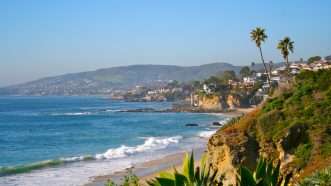
A recent 11th Circuit decision rightly ruled that mandatory Covid beach closures violated the Takings Clause. But the court overlooked the key issue of how to assess the "police power" exception to Takings Clause liability.
The Eleventh Circuit concludes "there is no COVID exception to the Takings Clause."

Landlords argue that rent caps on vacant units prevent them from financing the costs of legally mandated renovations.

I participated along with James Burling (Pacific Legal Foundation), Prof. Peter Byrne (Georgetown), and Prof. Sara Bronin (George Washington University).

Law enforcement launched 30 tear gas canisters into Amy Hadley's home, smashed windows, ransacked furniture, destroyed security cameras, and more. The government gave her nothing.
This one addresses the issue of whether the owner of a home foreclosed for nonpayment of debt is entitled to "fair market value" compensation, or only whatever the government gets from auctioning off the property, minus the debt owed.

By calling the Manchester Road Corridor “blighted,” the city can now use eminent domain to clear the way for a $436 million project.
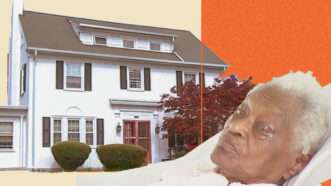
Gloria Gaynor had almost finished paying off her house in Upper Darby, Pennsylvania. But she will not see a dime in equity.

The mayor abandoned the plan after it aroused strong political resistance and threats of litigation.
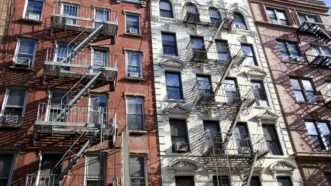
They have done so banning or severely restricting low-cost "single-room occupancy" (SRO) housing.
Rent control would only make the housing crisis worse. Zoning reform would make things better.

In a rare and significant decision, a federal court ruled Brandon Fulton can sue directly under the Takings Clause—without Congress creating a specific remedy.

Victims of uncompensated takings can sue directly under the Constitution. The case involved uncompensated seizure of horses.
After a public outcry, the scheduled vote on the plan to use eminent domain has been postponed indefinitely. If the Town of Toms River does try to condemn the church, there is likely to be a major legal battle.

Years after home equity theft was ruled unconstitutional, Michigan keeps looking for ways around the ruling.

The state just cracked down on a form of state-sanctioned robbery, where governments seized and sold homes over minor tax delinquencies—and then pocketed the profits.

A new lawsuit alleges that the city's Mandatory Housing Affordability program unconstitutionally penalizes property owners just for trying to build housing.

Academics are supposed to discover nonobvious, counterintituitive truths. But, especially in recent years, much of my work involves defending positions that seem obvious to most laypeople, even though many experts deny them.

But Justice Clarence Thomas wrote a strong dissent to denial of certiorari.

In recent years, exclusionary zoning and other regulatory restrictions have begun to block housing construction in areas where it was once relatively easy.
The panelists included Peter Byrne (Georgetown), Wesley Horton (counsel for New London in the case), Timothy Sandefur (Goldwater Institute), and myself.
On this anniversary, I have posted two new articles related to one of the Supreme Court's most controversial decisions.
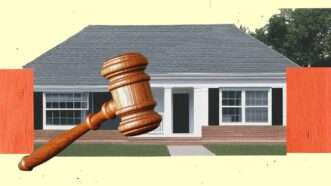
But now his case against the government can move forward.
Celebrate your independence with a subscription to Reason magazine, your most trusted source of honest, insightful news and analysis.




