
Friday Open Thread
What's on your mind?

Mostly law professors | Sometimes contrarian | Often libertarian | Always independent | Est. 2002

What's on your mind?
Judge Ho addresses Trump v. J.G.G.
Today, a divided panel of the Fifth Circuit granted a writ of mandamus in a death penalty case. In this case, the district court improperly exercised jurisdiction over a clearly moot case, and then refused to dismiss the case. Mandamus seems plainly warranted.
Judge Ho wrote a concurrence that speaks directly to controversies of the day:
Our dissenting colleague asks: What's the rush? Even assuming that the district court erred, the dissent contends that there's no need for immediate relief—just let things play out through "[t]he typical appellate process." Post, at _ (Haynes, J., dissenting).
But that's cold comfort to the millions of voters who took the time to participate in the democratic process, only to see their legitimate efforts unlawfully undone by a single district judge.
If a district judge abuses the legal process in a hurried effort to thwart the lawful political choices of the electorate, appellate courts are well within their right to intervene and grant emergency relief.
The Supreme Court did just that last week in Trump v. J.G.G., _ U.S. _ (2025). There (as here), a district court presumed to seize control over a case of profound public interest that it had no lawful business deciding, because it belonged in another court. So the Supreme Court intervened and took the case away from the district court. See id. at _ ("Challenges to removal under the [Alien Enemies Act] . . . must be brought in habeas. . . . [J]urisdiction [in habeas cases] lies in only one district: the district of confinement. The detainees are confined in Texas, so venue is improper in the District of Columbia.") (cleaned up).
Like our dissenting colleague here, the dissenting Justices in J.G.G. urged delay. The dissent agreed with the majority that the only thing at stake was deciding which district court had the authority to decide the case. See id. at _ (Sotomayor, J., dissenting) (noting that the dispute merely concerned "which procedural vehicle is best situated for the Plaintiffs' injunctive and declaratory claims"). But the dissent maintained that there was no need for appellate courts to "rush" in and "decide the issue now"—just wait for an appeal in the "ordinary course." Id. at _ (Sotomayor, J., dissenting).
The Supreme Court rejected the dissent's plea for delay. The majority understood that waiting for an appeal in the "ordinary course" would inadequately protect the government from the indignity of litigating in the wrong proceeding—not to mention unduly delay the expressed will of the people. As the Court put it, "[w]e see no benefit in such wasteful delay." Id. at _.
I most certainly concur. When a district judge acts hastily, yet appellate courts are told not to "rush in," that's not a plea for judicial sobriety—it's a recipe for district judge supremacy.
I made similar points in a post last month, titled Article III Inverted: The Supreme Court Surrenders to Inferior Court Supremacy.
Yet, in recent weeks, there has been a change: District Court judges are in charge. In case after case, federal district court judges have issued a series of non-appealable orders, whether styled as "administrative stays" or temporary restraining orders. Courts of appeals have then declined to disturb those rulings, finding that TROs can only be challenged through mandamus, and administrative stays are unappealable altogether. At that point, the federal government is forced to run to the Supreme Court seeking emergency relief. And what has the Supreme Court done? They have kicked the issue back down to the lower court, hoping that someone else makes the tough decisions. Who is running the show here?
Jack Goldsmith calls these tactics "temporizing." That is, the Supreme Court is simply trying to bide its time to find other ways of resolving the issues. That may be right in the short run, but I think we are witnessing an inversion of Article III. The Supreme Court is no longer Supreme. Rather, the federal government is now subject to inferior court supremacy. Lower court judges are now confident they can issue any order they wish against the executive branch, and the Supreme Court will not stop them. This is the judiciary run amok.
It is often joked that being a District Court Judge is the closest thing to being a god. I think federal judges in the beltway should read Judge Ho's concurrence a few times.
The aftermath of President Eisenhower sending in federal troops is not a model of success.
Today the Fourth Circuit denied the government's motion for an emergency stay in Garcia v. Noem. Here, I will not focus on the merits of the appeal. Rather, I want to highlight how Judge Wilkinson's opinion invokes a defining moment from the Civil Rights Era:
It is in this atmosphere that we are reminded of President Eisenhower's sage example. Putting his "personal opinions" aside, President Eisenhower honored his "inescapable" duty to enforce the Supreme Court's decision in Brown v. Board of Education II to desegregate schools "with all deliberate speed." Address by the President of the United States, Delivered from his Office at the White House 1-2 (Sept. 24, 1957); 349 U.S. 294, 301 (1955). This great man expressed his unflagging belief that "[t]he very basis of our individual rights and freedoms is the certainty that the President and the Executive Branch of Government will support and [e]nsure the carrying out of the decisions of the Federal Courts." Id. at 3. Indeed, in our late Executive's own words, "[u]nless the President did so, anarchy would result." Id. . . .
It is, as we have noted, all too possible to see in this case an incipient crisis, but it may present an opportunity as well. We yet cling to the hope that it is not naïve to believe our good brethren in the Executive Branch perceive the rule of law as vital to the American ethos. This case presents their unique chance to vindicate that value and to summon the best that is within us while there is still time.
Judge Wilkinson treats the story of the Little Rock 9 in a very John-Roberts fashion: it tells a beautiful story about judicial supremacy where everyone did what what the federal court said, and everything worked out for the best. The history tells a different story.
The general story of the Little Rock Nine is known, but the legal posture is not. Randy and I discuss this history in the essay on Cooper v. Aaron in 100 Cases. Please watch the video to catch up. Eisenhower's speech is in there.
For those who do not like to watch videos, you can read the summary, though I think the video footage is compelling:
In 1955, the Little Rock, Arkansas, school board approved a plan for gradual integration. However, the so- called "massive resistance" spread to Arkansas. Citizens approved an amendment to the state constitution that opposed Brown and desegregation. Based on that amendment, a state court judge issued an injunction against members of the Little Rock school board. They were ordered to stop the implementation of the federal court's integration plan at Central High School.
From today's Fourth Circuit opinion in Abrego Garcia v. Noem, written by Judge J. Harvie Wilkinson and joined by Judges Robert King and Stephanie Thacker:
Upon review of the government's motion, the court denies the motion for an emergency stay pending appeal and for a writ of mandamus. The relief the government is requesting is both extraordinary and premature. While we fully respect the Executive's robust assertion of its Article II powers, we shall not micromanage the efforts of a fine district judge attempting to implement the Supreme Court's recent decision.
It is difficult in some cases to get to the very heart of the matter. But in this case, it is not hard at all. The government is asserting a right to stash away residents of this country in foreign prisons without the semblance of due process that is the foundation of our constitutional order. Further, it claims in essence that because it has rid itself of custody that there is nothing that can be done.
This should be shocking not only to judges, but to the intuitive sense of liberty that Americans far removed from courthouses still hold dear.
The last May case was argued by Brett Kavanaugh.
Today the Supreme Court set oral argument for the birthright citizenship cases on May 15:
Consideration of the application (24A884) for partial stay presented to The Chief Justice and by him referred to the Court is deferred pending oral argument. Consideration of the application (24A885) for partial stay presented to Justice Kagan and by her referred to the Court is deferred pending oral argument. Consideration of the application (24A886) for partial stay presented to Justice Jackson and by her referred to the Court is deferred pending oral argument. The applications are consolidated, and a total of one hour is allotted for oral argument. The applications are set for oral argument at 10 a.m. on Thursday, May 15, 2025.
May and June oral arguments are quite rare. (I do not count regularly-scheduled cases from the April sitting that spill into May.) In 2017, I tracked three such cases in recent decades:
1. Raines v. Byrd (1996) involved the Line Item Veto Act. This bill had a direct appeal from D.D.C. D.D.C resolved the case on April 10, and the Court noted probably jurisdiction two weeks later on April 23. It was argued on May 27, and decided on June 26.
2. Felker v. Turpin (1996) involved the constitutionality of the newly-enacted Antiterrorism and Effective Death Penalty Act (AEDPA). The 11th Circuit denied a stay of execution for Felker on May 2. That day, Felker filed an application for a stay of execution with Circuit Justice Kennedy. On May 3, it was referred to the whole Court and granted. The briefs were to be filed two weeks later on May 17 , reply briefs on May 28. Oral arguments were set for June 3, 1996.
Justice Stevens, joined by Justices Souter, Ginsburg, and Breyer, dissented, noting that this case shouldn't be so rushed:
In my opinion, it is both unnecessary and profoundly unwise for the Court to order expedited briefing of the important questions raised by the petition for certiorari and application for a writ of habeas corpus. Even if the majority were right that this petition squarely presents substantial constitutional questions about the power of Congress to limit this Court's jurisdiction, our consideration of them surely should be undertaken with the utmost deliberation, rather than unseemly haste. Accordingly, I respectfully dissent from the entry of the foregoing order.
The case was resolved on June 28–two days after Raines v. Byrd. (That was a busy June!).
3. Swidler & Berlin v. U.S. (1998) involved the Independent Counsel's request for handwritten notes from Vince Foster's attorney. The D.C. Circuit found that the privilege does not survive death. Certiorari was filed on December 31, 1997, and cert was granted on March 30, 1998. The case was set for expedited arguments on June 8 (by Brett Kavanaugh), and decided on June 25. The New York Times reported that "the High Court agreed to hear the case unusually quickly."
And who argued Swidler & Berlin? Brett Kavanaugh, who was working for the Independent Counsel.
Update: A colleague reminded me that the Court heard oral arguments in May 2020 during the "remote" Zoom hearings. The last such case, Chiafalo v. Washington, was argued on May 13.
But one of the pro-pseudonymity decisions on which the court relies (which also involved a lawsuit alleging anti-Semitic behavior) was actually reversed two weeks ago.
From today's decision by Judge Jeannette Vargas (S.D.N.Y.) in Haggai v. Kiswani:
Plaintiffs … filed this suit against Nerdeen Kiswani, individually and as the representative of Within Our Lifetime-United For Palestine, Maryam Alwan, individually and as the representative of Columbia Students For Justice In Palestine, Cameron Jones, individually and as the representative of Columbia-Barnard Jewish Voice For Peace, and Mahmoud Khalil, individually and as the representative of Columbia University Apartheid Divest, Columbia Students For Justice In Palestine, and Columbia-Barnard Jewish Voice For Peace, ("Defendants") under the Antiterrorism Act ("ATA"), 18 U.S.C. § 2333(d), and the Alien Tort Statute ("ATS"), 28 U.S.C. § 1350….
Plaintiffs in this action are alleged victims of Hamas, a terrorist organization with the goal of destroying the State of Israel. The catalyst of this action are the terrorist attacks of October 7, 2023, when Hamas led an incursion into Southern Israel and murdered more than 1,200 people. In addition to the lives lost, Hamas took more than 200 hostages back to Gaza. In this instant action, Plaintiffs allege that Defendants in this case "are Hamas' propaganda arm in New York City and on the Columbia University campus." Plaintiffs further allege that Defendants' acts done "in furtherance of their goals to assist Hamas have included terrorizing and assaulting Jewish students, unlawfully taking over and damaging public and university property on Columbia's campus, and physically assaulting Columbia University employees." …
Under Rule 10(a) of the Federal Rules of Civil Procedure, a "complaint must name all the parties." This requirement "serves the vital purpose of facilitating public scrutiny of judicial proceedings and therefore cannot be set aside lightly." A district court has discretion to grant an exception to the "general requirement of disclosure of the names of parties" to allow a party to proceed under a pseudonym…. "[P]seudonyms are the exception and not the rule, and in order to receive the protections of anonymity, a party must make a case rebutting that presumption." …
Has any other president in US history taken so many actions "substantially likely" to have been illegal in his first 100 days? Or, for that matter, in his entire term?
On Tuesday, the district court in Rhode Island, following the lead of numerous other recent court decisions[*], enjoined further implementation of the "funding freeze" announced in Executive Order 14,154 ("Unleashing American Energy"), which directed all federal agencies to "immediately pause the disbursement of funds appropriated through the Inflation Reduction Act of 2022 (IRA) or the Infrastructure Investment and Jobs Act (IIJA)."
The opinion by district judge McElroy - a Trump appointee, as it happens - is well-written and well-reasoned - worth reading, I think, within the whirlwind of court decisions flying this way and that out there. From the introductory summary:
The Nonprofits[**] argue that the Government—in summarily freezing billions of dollars in IIJA and IRA funding—ran afoul of three Administrative Procedure Act ("APA") provisions: its requirement that agency actions (1) are not "arbitrary and capricious," (2) are not "in excess" of the authority that Congress granted the agencies, and (3) are not otherwise contrary to law. The Nonprofits now move for a preliminary injunction—a temporary court order requiring the agencies to turn the funding spigots back on, at least while their case is pending.
The Nonprofits' Motion is GRANTED…. [T]he Court holds that the Nonprofits have demonstrated a strong likelihood of success on two of their three APA claims. First, they have adequately shown at least three ways that the sudden, indefinite freeze of all already-awarded IIJA and IRA money was arbitrary and capricious: it was neither reasonable nor reasonably explained, and it also failed to account for any reliance interests. Second, the broad powers that OMB, the NEC Director, and the five Agencies assert are nowhere to be found in federal law.
The Agencies likely possess narrower powers related to individualized funding pauses and terminations, but in cases of vast economic and political significance—like this one—the Supreme Court has urged lower courts to be skeptical of agencies' sweeping claims of power. That is to say: those narrower powers cannot justify the broad exercise of authority that OMB, the NEC Director, and the Agencies asserted here. . . .
[That is a nice rhetorical touch, no? For many years, conservative jurists, including several now sitting on the Supreme Court, have been urging courts to be "skeptical of [executive] agencies' sweeping claims of power." Judge McIlroy appears to suggest that skepticism is just as appropriate now, when the agencies are in Republican hands, as it was when they were controlled by Democrats. Justice Gorsuch, wouldn't you agree?]
The Liberty Justice Center and I filed the case on Monday.
Bloomberg Law and Forbes recently posted podcasts in which I was interviewed about the lawsuit the Liberty Justice Center and I filed on Monday on behalf of five US businesses harmed by Trump's "Liberation Day" tariffs. I think the Bloomberg interview may be my best one about this topic. It is available here (the interview with me runs from about 1:00 to 13:15).
And here is the Forbes podcast:
I should note I was not the one who came up with the title of the Forbes podcast. I'm not "the lawyer behind the lawsuit," but just one part of a team. And we covered much more in the inteview than just timelines.
4/17/1978: Penn Central Transportation Corporation v. New York argued.
I was interviewed by Caleb Brown of Cato.
The Cato Institute just posted this podcast in which I was interviewed about the lawsuit the Liberty Justice Center and I filed on Monday on behalf of five US businesses harmed by Trump's "Liberation Day" tariffs.
The podcast was recorded before we filed the suit. Nonetheless, I think I was able to give a helpful overview of the issues. Here it is:
They challenge both the "Liberation Day" IEEPA tariffs, and earlier ones imposed on Canada, Mexico and China.

Today, the state of California filed a lawsuit challenging Donald Trump's massive new tariffs. The complaint is available here. The arguments California makes are in many ways similar to those advanced in the case the Liberty Justice Center and I filed on Monday on behalf of five US businesses harmed by the tariffs.
Like us California argues that the International Emergency Economic Powers Act of 1977 (IEEPA) doesn't authorize tariffs at all, and that Trump administration's position runs afoul of the "major questions doctrine" and constitutional nondelegation rules. Interestingly, California's complaint doesn't use the terms "major questions" and "nondelegation," both of which have negative connotations for some on the left. But they cite the relevant precedents and make the relevant points. Personally, I think the substance of the arguments matters more than terminology.
Our complaint, however, makes some additional points that the California one doesn't cover, such as that the bilateral trade deficits that supposedly justify the "Liberation Day" tariffs are not an "unusual and extraordinary threat" (which IEEPA says must be present to allow invocation of the law).
On the other hand, California's suit goes beyond ours in challenging not only the "Liberation Day" tariffs (imposed on almost every country in the world), but also the earlier IEEPA tariffs imposed on Canada, Mexico, and China, justified by the supposed threat of fentanyl. I argued that these tariffs are also illegal in a February post where I first developed the idea of challenging IEEPA tariffs under the nondelegation and major questions doctrines.
California's case is therefore broader than our case, or the other two lawsuits challenging Trump's IEEPA tariffs: that brought by the New Civil Liberties Alliance (challenging tariffs against China), and one brought by members of the Blackfeet Nation Native American tribe (challenging tariffs against Canada).
One issue likely to come up in the California lawsuit is standing, which require plaintiffs who bring a case to have suffered a "particularized harm" caused by the action they are challenging. Our clients have an obvious case for standing because they directly import goods subject to the tariffs, and therefore must pay those tariffs themselves. The California complaint indicates that the state government imports many goods from abroad. If they also directly have to pay tariffs, they can qualify for standing on the same basis as our clients. If not, they might still be able to get standing based on more indirect harms (e.g. - the state having to pay higher prices for goods purchased from contractors), or based on the "special solicitude" on standing extended to state governments in the Supreme Court's ruling in Massachusetts v. EPA (2007).
But indirect harms are a more debatable basis for standing than direct ones (though I personally believe they should qualify). And in recent years, the Supreme Court has often essentially ignored "special solicitude" arguments. Nonetheless, I hope and expect that California will get standing one way or another.
I have my differences with the California state government on various issues. But I supported their strong stance on immigration "sanctuary" issues during the first Trump Administration, and I am pleased to welcome them to this fight. People across the political spectrum - including the conservatives at the NCLA, liberals like the California state government, and libertarians like myself - should be able to agree that the Trump IEEPA tariffs are both illegal and extremely harmful.
Judge Boasberg will likely anoint a special prosecutor to investigate the Trump Administration, bring us back to Muellergate.
Last week, predicted that the next phase in Trump litigation will involve contempt proceedings:
The third phase, I predict, will be hostile contempt proceedings where district court judges try to reassert their authority over the executive branch, even in the face of SCOTUS reversals. We may not have a special counsel like Robert Mueller to launch inquisitions against the Trump Administration, but district court judges in D.C. and Maryland will gladly assume that role. Soon enough, we will be talking about "obstruction of justice" all over again. We might spend the next four years inquiring about what Trump knew about the airplanes. This very well might form the basis of future articles of impeachment. It is 2017 all over again.
And so it has come to pass. Judge Boasberg found that the Trump Administration likely engaged in criminal contempt. There will be a hearing that will likely make the judge even more angry. And he will find that criminal contempt is appropriate.
Federal Rule of Criminal Procedure 42(c)(2) provides:
(2) Appointing a Prosecutor. The court must request that the contempt be prosecuted by an attorney for the government, unless the interest of justice requires the appointment of another attorney. If the government declines the request, the court must appoint another attorney to prosecute the contempt.
The United States Attorney for the District of Columbia will not prosecute the case, and may ultimately become a fact witness. So Judge Boabserg will anoint a new special prosecutor to investigate the Trump Administration. I hear Jack Smith has some free time on his hands?
We are back in the first Trump Administration with Robert Mueller. Anything that Trump or anyone else does will be considered "obstruction" which could trigger further indictments. The special prosecutor will try to interview the President himself. But unlike with Mueller, Trump would have no power to effect the removal of the special prosecutor. This will become the basis of some future impeachment hearing.
I agree with Justice Gorsuch in the Donziger case. The court appointed special prosecutor violates the separation of powers. Get ready for more "officer stuff"!
4/16/1962: Justice Byron White takes oath.
What's on your mind?
The Supreme Court ruled they administration must "facilitate" the return of an illegally deported migrant imprisoned in El Salvador at its behest. They have responded by doing virtually nothing to comply.
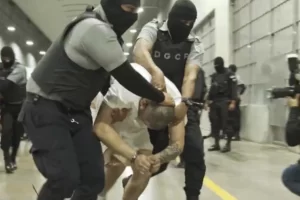
When the Supreme Court ruled that the Trump Administration must "facilitate" the return of Kilmar Abrego Garcia, a Salvadoran migrant illegally deported to imprisonment in El Salvador, I noted it was an important victory for immigrant rights, but also warned the administration might try to weasel its way out of compliance by applying a very narrow definition of "facilitate" that licenses near-total inaction. Sadly, this is exactly what happened.
When the case was remanded back to the district court, Judge Paula Xinis issued an order instructing the defendants to "take all available steps to facilitate the return of Abrego Garcia to the United States as soon as possible." The government indefensibly interpreted this as merely requiring it to remove "domestic" obstacles to his return, making no effort to get the Salvadoran government to release him from prison. That makes no sense in a context where the Salvadorans had imprisoned Abrego Garcia at the behest of the US, and the Trump Administration could easily secure his release simply by demanding it. As conservative legal commentator Ed Whelan puts it: "The administration is clearly acting in bad faith… The Supreme Court and the district court have properly given it the freedom to select the means by which it will undertake to ensure Abrego Garcia's return. The administration is abusing that freedom by doing basically nothing."
The Administration coupled this bad-faith failure to follow the Supreme Court's and district court's orders with unsubstantiated claims that Abrego Garcia was a member of the MS 13 drug gang. They have no evidence for that. And if they did, the proper course of action is to charge him with it in court, rather than deportation and imprisonment without due process.
Judge Xinis appears to agree with Whelan's assessment. In an order issued today, she chastizes the the Administration for doing "nothing" to bring Abrego Garcia back to the US and rejects the assumption they need only remove "domestic" impediments:
Defendants… remain obligated, at a minimum, to take the steps available to them toward aiding, assisting, or making easier Abrego Garcia's release from custody in El Salvador and resuming his status quo ante. But the record reflects that Defendants have done nothing at all. Instead, the Defendants obliquely suggest that "facilitate" is limited to "taking all available steps to remove any domestic obstacles that would otherwise impede the alien's ability to return here…." The fallacy in the Defendants' argument is twofold. First, in the "immigration context,….." facilitating return of those wrongly deported can and has included more extensive governmental efforts, endorsed in prior precedent and DHS publications. Thus, the Court cannot credit that "facilitating" the ordered relief is as limited as Defendants suggest.
Second, and more fundamentally, Defendants appear to have done nothing to aid in Abrego Garcia's release from custody and return to the United States to "ensure that his case is handled as it would have been" but for Defendants' wrongful expulsion of him. Abrego Garcia, 604 U.S.— , slip op. at 2 [citing Supr. Thus, Defendants' attempt to skirt this issue by redefining "facilitate" runs contrary to law and logic.
Judge Xinis goes on to order extensive expedited discovery regarding the defendants' conduct, to determine more fully what the the government has done and could do to facilitate Abrego Garcia's release. We shall see whether the defendants' compliance is as flawed as it has been with previous judicial orders. If they have not yet quite openly refused to follow judicial orders, they certainly have been trying to circumvent them in bad faith.
I think Judge Xinis should have ordered still stronger measures against the defendants, such as requiring them to formally demand Abrego Garcia's release from Salvadoran custody under threat of termination of the agreement under which the Salvadoran regime imprisons US deportees for money. The entire arrangement is an unconstitutional violation of the Due Process Clause of the Fifth Amendment (the deportees are imprisoned without ever having any opportunity to defend themselves in court). Maintaining it is therefore not a legitimate foreign policy interest within the prerogrative of the executive branch.
Much is at stake in this case. If the Administration is able to get away with circumventing or defying court orders, it would severely undermine all constitutional constraints on government power, including those that protect US citizens. And as prominent conservative Judge Harvie Wilkinson noted in his opinion in the Fourth Circuit ruling in this case, it is extremely dangerous if the government can deport people to imprisonment in a foreign state without any due process or any meaningful obligation to return them:
The facts of this case thus present the potential for a disturbing loophole: namely that the government could whisk individuals to foreign prisons in violation of court orders and then contend, invoking its Article II powers, that it is no longer their custodian, and there is nothing that can be done. It takes no small amount of imagination to understand that this is a path of perfect lawlessness, one that courts cannot condone.
I would add that this danger isn't limited to recent immigrants. It applies to US citizens, as well. The threat to US citizens' rights is no longer just theoretical, since the president is openly considering the possibility of deporting and imprisoning US citizens in El Salvador.
This slippery slope must be stopped before we go any further down it. Courts must do their part. And the rest of us must give them strong political support in doing so. That can help deter the administration from further rampant illegality.
The Trump Administration changed the name of the body of water between Florida and Texas to the Gulf of America. The Associated Press still calls it the Gulf of Mexico. In response, the Trump Administration excluded the wire service from White House press events. The AP sued three officials within the Trump Administration, seeking to restore access to the Oval Office and other spaces.
In this case, District Judge McFadden ruled against the Trump Administration. But he did not issue an unappealable TRO. Rather, after deliberate briefing and proceedings, on April 8, the court issued a detailed preliminary injunction order requiring the AP to be admitted to press events. (Eugene wrote about the First Amendment issues here.) And unlike some of his colleagues, Judge McFadden stayed his order so that the government could take an appeal to the D.C. Circuit. The stay would expire on April 13.
On April 10, the government filed an appeal to the D.C. Circuit. DOJ sought an emergency motion for a stay and an immediate administrative stay:
The government therefore respectfully requests that this Court enter a stay pending appeal, as well as an immediate administrative stay while the motion is under consideration. At a minimum, the government requests that the Court stay the district court's order through April 20, 2025, in order to permit the Solicitor General time to seek relief from the Supreme Court.
On April 13, the panel (Pillard, Katsas and Rao) ordered oral argument to be set for April 17. But the panel did not rule on the motion for an administrative stay. By the end of April 13, the district court's stay lapsed, and the order went into effect.
Yesterday, on April 14, DOJ submitted a letter to the Court renewing the application for an administrative stay so the Solicitor General could seek emergency relief from the Supreme Court:
Yesterday, the Court scheduled oral argument on the government's emergency motion for a stay pending appeal. We are grateful that the Court is providing us with the opportunity to present argument in support of our motion and appreciate the priority the Court has afforded this matter. The Court has not, however, yet ruled on our request for an administrative stay. Because the district court's stay of its own order expired on Sunday, April 13, that order has now taken effect. As of this morning, the President of the United States is subject to an order imposing terms on which he must admit individuals to the Oval Office and other restricted spaces. In light of the magnitude of this intrusion, a continued stay is warranted until this Court can reach the merits of the government's motion. We accordingly respectfully reiterate our request for an administrative stay. The administrative stay should continue through the time the Court decides the emergency motion and, if that motion is denied, we ask that the stay be extended an additional seven days in order to provide the Solicitor General with an opportunity to seek relief from the Supreme Court.
Also on April 14, the White House apparently excluded the AP from coverage of President Bukele's visit to the Oval Office.
I have a several thoughts.
First, I think DOJ's position is that any injunction running against the administration should be administratively stayed long enough to seek Supreme Court review. President Trump has been fairly consistent in saying that he will follow Supreme Court rulings, though perhaps he thinks "inferior" courts should not be in the business of superintending the executive branch.
Second, DOJ drew what could possibly be the most favorable panel possible on the D.C. Circuit with Judges Katsas and Rao. They chose to not grant an administrative stay. Indeed, the district court order was issued by a well-regarded judge, also appointed by Trump. I am skeptical that Circuit Justice Roberts will vote differently.
Third, as soon as Judge McFadden's order expired, the three named defendants were subject to an injunction: Chief of Staff Susan Wiles, Deputy Chief of Staff Taylor Budowich, and White House Press Secretary Karoline Leavitt. If any of these three defendants took action to block the A.P. from accessing the Oval Office, or if they directed their subordinates to deny access to the A.P., I think it is possible they could be held in contempt of court. But I'll concede that holding officials in contempt while the legal ruling is on appeal has some problems.
Fourth, it is possible that the decision to exclude the A.P. from Bukele's visit was not performed directly or indirectly by these three named defendants. If so, those other officials could not be held in contempt. Government officials who are not subject to an injunction cannot defy it. And Cooper v. Aaron, for all of its warts, only asserted the judicial supremacy of the Supreme Court, not of the lower courts. I'm also not certain that other officials in the White House, if sued, would be denied qualified immunity, as the case was still pending on appeal.
Fifth, I think we need to be careful when asserting that Trump, or the administration, ignored a court order. Judgments run against named parties, not collectives. Generations of lawyers incorrectly asserted that President Lincoln ignored Chief Justice Taney in Ex Parte Merryman. Scholars were desirous of seeing President Lincoln ignore a Supreme Court order, so they misstated the posture of Merryman. But Seth Barrett Tillman has debunked that myth--no order ran against Lincoln, so there was no order for him to ignore. Here too, the media and critics are desirous of seeing President Trump ignore a judicial order, so they misstate the posture of Budowich. Trump was not a party to the Budowich case, and we have no clue if he was even aware of the exclusion during the Bukele visit. (Though I'm sure some future impeachment committee will try to figure out what he knew and when he knew it.)
Issues are usually more complex than they seem.
Update: On Tuesday evening, it was reported that the White House eliminated the permanent spot for wire services in the press pool:
The White House said Tuesday that it has eliminated a permanent spot for wire services in the White House press pool, ending a long-standing tradition that allowed the outlets to have expanded access to the president's public activities.
According to a White House official, the pool will consist of one print journalist to serve as print pooler; one additional print journalist; a television network crew; a secondary television network or streaming service; one radio journalist; one "new media/independent journalist"; and four photographers.
The wire services in the pool usually included the Associated Press, Bloomberg News and Reuters. Until recently, all three outlets were typically permitted to enter all White House pooled events. But since February, the Associated Press had been banned from White House events over the outlet's decision to continue using the name Gulf of Mexico rather than Gulf of America.
On Tuesday, an AP reporter was permitted to attend a White House event for the first time since Feb. 11 as the president presented the Commander-in-Chief's Trophy to the U.S. Naval Academy football team.
The White House official said that wire services "will be eligible for selection as part of the Pool's daily print-journalist rotation." They added that White House press secretary Karoline Leavitt "reserves the right to add additional journal[ists] to an expanded Pool based on capacity and day-to-day needs."
"Although eligible outlets will generally rotate through these slots, the White House press secretary shall retain day-to-day discretion to determine composition of the pool," the official said. "This is necessary to ensure that the President's message reaches targeted audiences and that outlets with applicable subject-matter expertise are present as events warrant."
The White House did not say when the changes will start.
I'm not sure how this policy affects the ongoing litigation. I also don't know if this policy was in effect when the AP was excluded from President Bukele's visit.
We knew it was coming, yes?
The intended scope of the term "effectuate" in the District Court's order is, however, unclear, and may exceed the District Court's authority. The District Court should clarify its directive, with due regard for the deference owed to the Executive Branch in the conduct of foreign affairs.
"(1) the current physical location and custodial status of Abrego Garcia;
(2) what steps, if any, Defendants have taken to facilitate Abrego Garcia's immediate return to the United States; and
(3) what additional steps Defendants will take, and when, to facilitate his return."
A useful reminder from the U.S. Court of Appeals for the D.C. Circuit to read circuit rules before filing.
One of the lessons I learned when clerking on the U.S. Court of Appeals for the D.C. Circuit is that it is always important to consider Article III standing when suing the federal government, even if the government does not raise standing as a defense. I can still recall an oral argument at which one of the judges effectively told a litigant they could sit down if they could not explain the basis upon which they were invoking the jurisdiction of a federal court. This is particularly important in the D.C. Circuit given its rules.
Today, in Entergy Arkansas v. FERC, Judge Randolph provides a reminder of why it is always important to brief standing. His opinion begins:
In this consolidated case, a series of Entergy companies petition for review of three Federal Energy Regulatory Commission orders. FERC had rejected tariff changes proposed by Midcontinent Independent System Operator, reasoning that the new tariff would give Entergy too much market power. Entergy urges us to find that FERC's decisions were arbitrary and capricious.
We do not reach the merits of this dispute. Entergy lacks standing. The company's opening brief failed to discuss standing, thereby forfeiting any arguments in support of this jurisdictional prerequisite. Entergy's omission of standing also ran afoul of Circuit Rule 28(a)(7). Given both the forfeiture principles inherent in Rule 28(a)(7) and our court's past practice, dismissal is the appropriate consequence. Even if we were to consider the standing arguments Entergy now belatedly advances, the company has not demonstrated the necessary concrete, imminent, and redressable injury.
In the body of the opinion, Judge Randolph explains that forfeiture applies to standing, and it is not sufficient to address standing for the first time in a reply brief. Indeed, this is codified in D.C. Circuit rule 28(a)(7), which provides:
In cases involving direct review in this court of administrative actions, the brief of the appellant or petitioner must set forth the basis for the claim of standing. This section, entitled "Standing," must follow the summary of argument and immediately precede the argument. When the appellant's or petitioner's standing is not apparent from the administrative record, the brief must include arguments and evidence establishing the claim of standing. See Sierra Club v. EPA, 292 F.3d Rule 28895, 900-01 (D.C. Cir. 2002). If the evidence is lengthy, and not contained in the administrative record, it may be presented in a separate addendum to the brief. If it is bound with the brief, the addendum must be separated from the body of the brief (and from any other addendum) by a distinctly colored separation page. Any addendum exceeding 40 pages must be bound separately from the brief.
The petitioner here did not follow this rule, and thus they find themselves on the losing side. From Judge Randolph's opinion:
Entergy's opening brief provided neither argument, nor analysis, nor evidence to support its standing. The words "standing," "injury," "traceability," and "redressability" do not appear in the document. In its responsive brief, FERC argued that Entergy lacked standing. Only then, in the reply brief, did Entergy argue that "the bases for Entergy's standing [were] readily apparent." Reply Br. 3 n.1. But even if the bases and evidence were there, the argumentation was not. No reasonable reader of the principal Entergy brief would walk away with a clear understanding of petitioners' precise injuries, the chain of causation, and how a decision of this court could redress those harms. Its brief was about an APA challenge, not standing.
As Judge Randolph notes, the failure to demonstrate standing is grounds for dismissal.
The opinion goes on to explain why Entergy's late-made arguments for standing were still insufficient, but that does not lessen the larger point: Brief standing and pay attention to circuit rules.
Celebrate your independence with a subscription to Reason magazine, your most trusted source of honest, insightful news and analysis.




