
The NIH Plan To Strengthen 'Replication and Reproducibility' Will Not Check Anything
The world’s largest research funder asked its grantees whether it should audit them. Guess what they said.


The world’s largest research funder asked its grantees whether it should audit them. Guess what they said.

A GAO report notes that the Controlled Substances Act does not define "potential for abuse" or "accepted medical use."

On Clarkson's Farm, the Top Gear star runs afoul of local government.

The BLT—a delicious celebration of the power of markets—exemplifies political attacks on the free movement of goods and people.

The FDA says it can't license Regenative Lab's overseas sales today because it might change its regulations tomorrow. Now, the company is suing.

Don't expect much from Zohran Mamdani’s Commission on Government Efficiency.

Clark Neily discusses the Supreme Court, executive authority, and why federal prosecutors wield too much power.

The Supreme Court has "no shortage of tools" to enforce the separation of powers, Justice Neil Gorsuch notes. "The only real question is whether we will use them."

Because the agency has banned most peptides, products from overseas labs dominate the market. How does that protect Americans?

The FDA's burdensome regulatory process has throttled sunscreen innovation.

The state requires that people prove certain businesses are needed. How to do that is another question entirely.

Mayor Zohran Mamdani’s COGE sounds like DOGE, but New Yorkers should not expect the mayor to shrink the city’s bureaucracy.


An armed IRS agent roaming the streets should send shivers down the spine of any freedom-loving American.

It’s a vestigial role that has morphed into a national annoyance.

The commission has tormented property owners and localities ever since it was created in 1976. Finally, legislative and legal efforts are undoing some of its abuses.

The Supreme Court justice discusses the Declaration of Independence, how unchecked power threatens liberty, and what the Founders can teach future generations.

California politicians’ policy choices are making the state unaffordable and unattractive.

Red tape issued by bureaucrats outstrips the impact of legislation.

The case could give the Court a chance to clarify what a "closely regulated" business is and what constitutional protections it enjoys.

"If we can do this for a dog, why aren't we rolling this out to all humans with cancer?"

We don’t really need intrusive laws and regulations to govern lunar mining and space exploration.

These bureaucratic maneuvers are making it harder for immigrants to work, learn, and live in the United States.

The constitutionally anomalous status of broadcasting invites government meddling.
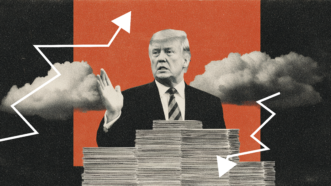
The president is making real progress on deregulation, but he needs to get Congress involved.

While Europe and Asia have had Stellest glasses for years, the FDA finally approved them for the U.S. in 2025.
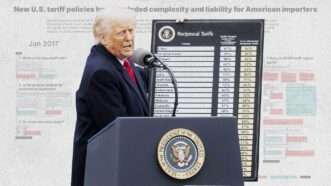
Oh, so now the Trump administration is worried about the complexity of its tariff polices?

Tony Gilroy examines how Andor portrays authoritarian power as a bureaucratic system, the moral compromises of life under surveillance, and the role ordinary people play in enforcing oppressive systems.

The D.C. Superior Court found Empower still in contempt of court despite updating its software-as-a-service agreement and will reconvene in January.
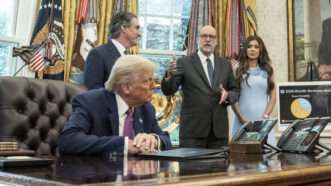
Civil servants are normally temporarily furloughed during shutdowns. The White House insists the current funding lapse empowers them to permanently fire workers.

There are plenty of private alternatives to the employment report put out by the Bureau of Labor Statistics.

In Shin Godzilla, scientists must cut through red tape to save Tokyo.

A quiet push to declare “no safe level” of drinking has officially fizzled.

Biosafety advocates worry the administration is backtracking on its promise to implement meaningful restrictions on the type of research that likely caused the COVID-19 pandemic.
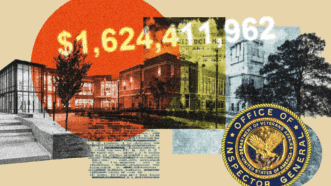
Department of Veterans Affairs
What began as a simple hospital project has become yet another example of bureaucratic failure at the Department of Veterans Affairs

Crackdowns on AI chatbots over perceived risks to children's safety could ultimately put more children at risk.

Guatemalans don't wait for the government's permission. They build their own markets through voluntary exchange.

A federal court concluded the official was entitled to qualified immunity in a case that united two unlikely allies.

Air traffic control is simply too important to leave up to the politicians.

In FY 2024, over 200,000 Freedom of Information Act requests were backlogged, according to the Government Accountability Office.

Nobody complained about the company, so federal bureaucrats launched their own crusade.

The ruling upholds protections afforded to officers of the "quasi legislative or quasi judicial agencies" created by Congress.

The widely resented and ridiculed policy, which the U.S. was nearly alone in enforcing, never made much sense.

Plus: Cuomo has a hard time taking no for an answer, a pro-party manifesto, Trump's about-face on Ukraine, and more...

After criticizing the agency for being ineffective for months, the Trump administration now plans to reform it to supplement state disaster response efforts.

The hawkish defender of Guantanamo Bay and the post-9/11 security state worries President Donald Trump's immigration crackdown is threatening civil liberties.

Bureaucratic requirements impose burdens only on people not inclined to break the law.

Without Newsom's efforts, major reforms to California's stifling environmental laws would have died on the vine.
Celebrate your independence with a subscription to Reason magazine, your most trusted source of honest, insightful news and analysis.




