
This Supreme Court "Deserves Our Celebration, Not Our Condemnation"
Prof. William Baude on the Supreme Court and the false promise of court reform.

Prof. William Baude on the Supreme Court and the false promise of court reform.
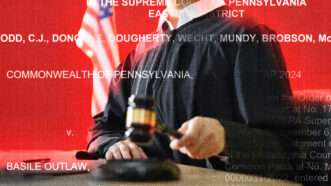
The single, vulgar comment didn't obstruct the court proceedings enough to support a criminal contempt conviction, the court ruled.
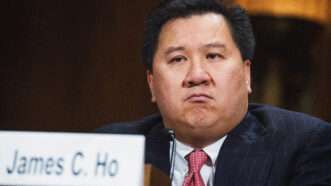
The potential SCOTUS nominee qualifies his longstanding position that the U.S.-born children of unauthorized immigrants are citizens under the 14th Amendment.
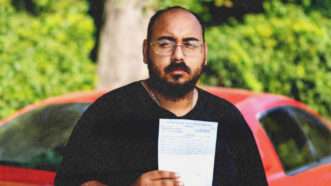
Federal appeals courts rejected qualified immunity for cops and a judge who flouted longstanding constitutional principles.
Frustrated by the children's resistance to a parental custody decision, Judge Eric Eighmy locked them in cells until they became more cooperative.
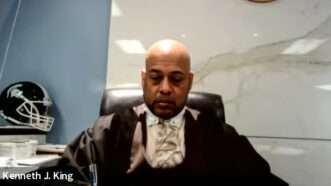
The Court of Appeals for the 6th Circuit ruled that judicial immunity did not cover Kenneth King's "scared straight" approach to a sleepy 15-year-old.

The judge contradicted Supreme Court precedents by ruling that a student's "privacy interests" trumped "the severe constitutional presumption" against prior restraints.

The decision rebukes the DOJ for demanding "private and sensitive" information about Georgia election workers "with no legitimate law enforcement purpose."
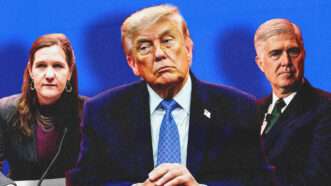
The Supreme Court has "no shortage of tools" to enforce the separation of powers, Justice Neil Gorsuch notes. "The only real question is whether we will use them."
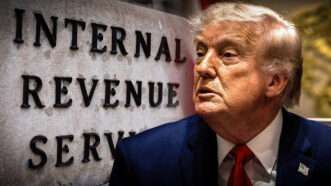
The DOJ's unilateral abandonment of the Anti-Weaponization Fund "makes it crystal clear that these parties were never adverse," the former judges argue.
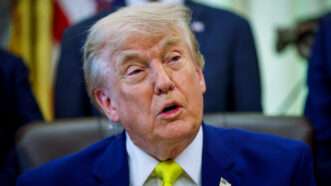
The president has repeatedly argued that courts have no business deciding whether his actions are legal.
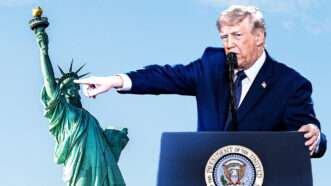
It's the latest example of Justice Department attorneys claiming broad and unreviewable powers for the president.

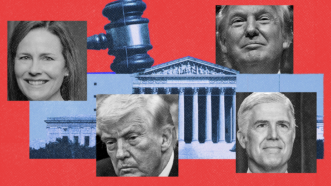
The president says federal courts should not make decisions based on partisan considerations unless it benefits him.
Her cert petition to the Supreme Court presents the important jurisdictional question of whether the Judicial Disability Act bars all judicial review of a decision by her fellow judges to remove her from active service.
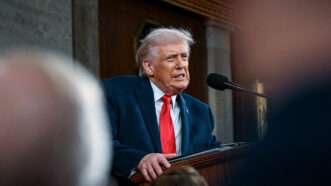
The president's wildly inaccurate ideological labels are no more meaningful than his other ad hominem attacks on people who disagree with him.
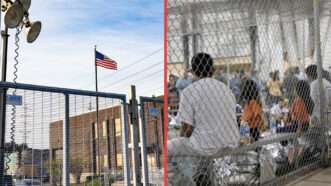
More habeas corpus petitions were filed over the last year than in the past three administrations combined because of the administration's mass detention policy.
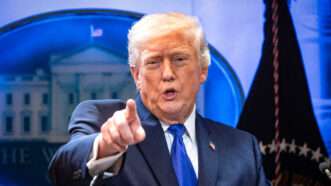
The president neither understands nor appreciates the vital role of judicial independence in upholding the rule of law.
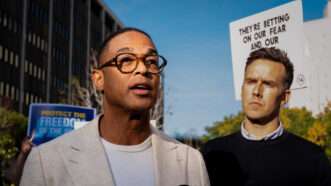
A federal indictment accuses him and another journalist of conspiring with protesters who disrupted a St. Paul church service.
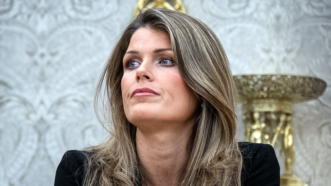
The lawyer, who delivered the grudge-driven indictments that the president demanded, refused to relinquish her job after another judge ruled that her appointment was illegal.

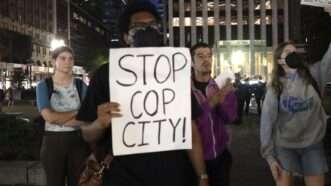
Two years after the state attorney general charged dozens of protesters with racketeering, a judge found the case unconvincing.
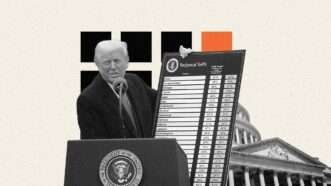
Donald Trump's claim that the appeals court ruled against him for partisan or ideological reasons is hard to take seriously.
The D.C. Circuit declines to reach the merits of many of the serious underlying constitutional questions.
The judges on the U.S. Court of Appeals for the Sixth Circuit split over whether they should write about the reasons for their splitting over en banc review.

No matter how John O'Keefe died, the government failed here on multiple levels.

Michael Mendenhall wants the Supreme Court to reconsider a precedent that allows home invasions based on nothing but hearsay.
The president treats legal constraints as inconveniences that can be overridden by executive fiat.
Stephen Miller's understanding of the Constitution is dubious for several reasons.
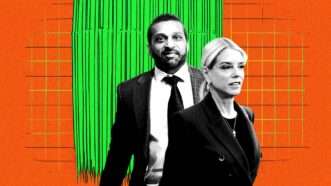
The Wisconsin judge is charged with obstruction of justice and concealing an undocumented alien to prevent his arrest.
Plus: A listener asks why some American libertarians seem to unquestioningly accept everything Vladimir Putin says.
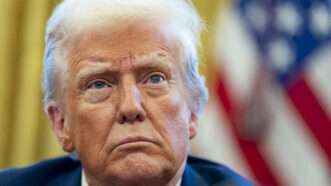
To justify the immediate deportation of suspected Venezuelan gang members, the president is invoking a rarely used statute that does not seem to apply in this context.
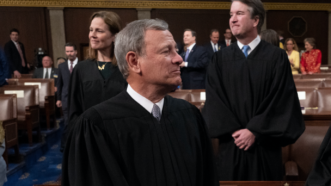
"Impeachment is not an appropriate response to disagreement concerning a judicial decision," Roberts noted after Trump said federal judges who impede his agenda should be fired.

A Trump administration official admits that there is little specific evidence tying some deportees to any crime—and argues that the lack of evidence should be taken as proof of criminality.
Plus: Texas midwife arrested for violating abortion ban, JFK files, Gaza bombings, astronauts finally rescued, and more...
Threats to impeach federal judges who rule against the government are a naked attack on their constitutionally crucial function.

"I know they are guilty," otherwise "they would not be in front of me," said town justice Richard Snyder, who resigned in December.

But that shouldn't detract from the many worthy people who received commutations after spending years on home confinement.

He’ll be around to protect our freedom for a few more years.
The justices, including Trump's nominees, have shown they are willing to defy his will when they think the law requires it.

The three defendants remain under indictment for racketeering, along with 58 others.

Judge Kenneth King is facing a lawsuit for punishing a 15-year-old who visited his courtroom with his "own version of Scared Straight.''
Fewer laws and less government would be a better solution to judicial warfare.
His criticism of President Joe Biden’s proposed Supreme Court reform is hard to take seriously.

The decision agreed with Trump that Special Counsel Jack Smith was improperly appointed, which could have positive downstream effects for the rest of us, as well.
Contrary to progressive criticism, curtailing bureaucratic power is not about protecting "the wealthy and powerful."


New from Reason: a look into what Javier Milei has accomplished and what it will take to make the most of Argentina’s window for real change. Out now for subscribers.