
Trump's War With Iran Is Unjustified and Unpopular
Plus: Congress is reluctant to assert its war powers, the Pentagon brands Anthropic a national security threat, and a listener asks whether regime change is ever morally defensible.


Plus: Congress is reluctant to assert its war powers, the Pentagon brands Anthropic a national security threat, and a listener asks whether regime change is ever morally defensible.

Plus: AI for mass surveillance, Alaskan lawsuit to decriminalize prostitution, "enhanced" British regulation of streaming services, and more…


OpenAI has entered a contract with the Defense Department allowing all lawful use of ChatGPT after Anthropic refused to remove its restrictions on domestic mass surveillance and fully autonomous weapons systems.

Robby Soave and Christian Britschgi discuss why AI data centers spark joy, their favorite Black Mirror episodes, and libertarian skepticism of the Epstein files release.

Dario Amodei penned a public letter explaining the danger of the Defense Department's request to remove certain constraints from Claude, and refusing them outright.

Plus: AI layoffs, Paramount wins Warner Bros., and the Trump-Mamdani bromance.
Plus: Minnesota Medicaid funds, AI vs. jobs, Taylor Lorenz's libertarian moment, and more...

Pete Hegseth has threatened to invoke the Defense Production Act to force Anthropic to come around.

Panic over guns drives government officials to propose restricting popular technology.

The plan recognizes that public opinion is what's holding data centers back the most.

Plus: The U.S. could be going to war with Iran, the 2026 Winter Olympic Games, and why AI surveillance is worrying civil libertarians

The Trump administration will start collecting social media account information on immigration forms.

Plus: U.S. Olympic hockey team wins the gold medal and Mexico kills cartel boss "El Mencho."
Michael Shermer examines the psychology behind pattern seeking, the limits of suspicion, and how the Epstein files fuel conspiracy thinking.


Tara Palmeri insinuated that Michael Tracey disagrees with her because he's paid by Epstein associates. That's a lie.

When former LSD kingpin Seth Ferranti was pulled over in Nebraska, police claimed a traffic violation.

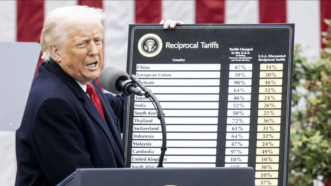
Plus: The FCC targets Disney and Comcast, new Epstein associates revealed, and Trump’s tariffs cause growing rifts with U.S. allies.
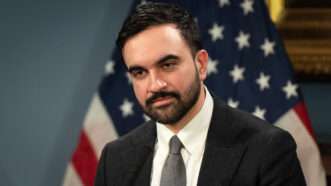
New York City's own past policies are to blame for much of the gig economy drama, which Mayor Mamdani will further exacerbate.

Chairman Andrew Ferguson continues the Federal Trade Commission’s crusade against free speech with an official letter to Apple CEO Tim Cook.

The move is a rare win for privacy, both for users and their neighbors.

"My wife and I have received many threatening and malicious emails, texts, and voicemails the past several days."

The Department of Justice released subpoenas for personal information on two anonymous commenters claiming to have inside knowledge about Jeffrey Epstein's death.

Australia’s experience shows what happens when governments play online parent

The EPA under the Obama and Biden administrations invoked that finding to adopt strict and costly regulations aiming to reduce emissions.

Search Party uses AI to detect lost pets, but some worry about the Ring program's potential use by law enforcement.

Delphi-2M was trained on the world's most comprehensive biomedical database with health information from over 400,000 people.

The commission has targeted the news rating company with onerous record demands and a merger condition aimed at cutting off its revenue.

“Both abstinence and excessive use can be problematic,” researchers suggest.

The ruling makes it less likely for copyright suits involving generative AI to be dismissed, discouraging use of the technology with the specter of costly legal fees.
The job of scientists isn't to manufacture alarm. It's to communicate the truth.

Is this small modular nuclear power’s moment?

It seems likely the FDA would do well to accept more Bayesian reasoning in medical research.

Plus: a partial shutdown over ICE funding, Kevin Warsh to lead the Fed, and Moltbook’s AI society

Viral posts about devious chatbots on a robot Reddit haven't held up under scrutiny.

If Anyone Builds It, Everyone Dies is an extreme proposal to effectively outlaw promising AI progress.

A new bill in Wyoming aims to defend Americans against the U.K.’s online regulators.
A Soho Forum debate on artificial intelligence's potential to deliver widespread societal benefits

FBI Director Kash Patel pays lip service to the First and Second Amendments while casting suspicion on people who exercise their First or Second Amendment rights.

Here's why I believe TikTok.

In the first social media addiction case to reach a jury, K.G.M. claims TikTok, YouTube, and other platforms are responsible for her depression, anxiety, and poor self esteem.

The Trump administration is reportedly moving to ban TP-Link routers, but experts say they're no less secure than other devices.

AI slop and enshittification are making the public social commons unbearable. The alternative pathways are more accessible than you think.

The equal-time rule is an antiquated regulation that becomes more obsolete with each passing year.

Should it matter whether a song was made by a human or a machine?

AI-powered medical wearables and software are flourishing following the FDA’s new regulatory guidance.
Celebrate your independence with a subscription to Reason magazine, your most trusted source of honest, insightful news and analysis.




